PRACTICAL GUIDE↗
ABS vs ASA: Choose for Your Printer and Part
Start with sunlight exposure, then check the exact formulation and the process your printer supports.
Explore the guideChoose for the part’s exposure, prepare the exact filament and separate drying problems from printing conditions.

Start with sunlight exposure, then check the exact formulation and the process your printer supports.
Explore the guideBrand-specific drying cycles, spool checks and a clear distinction between moisture and warping.
Explore the guideSeparate weather exposure from the difficulty of printing the chosen material.
Explore the guidePlan temperature control, equipment compatibility and emissions handling together.
Explore the guideUse the timing of the lift to choose between surface, calibration, cooling and geometry checks.
Explore the guideSeparate weather-exposed ASA projects from sheltered PETG uses before comparing individual rolls.
Explore the guideSelect a formulation around repeatable printing, surface appearance and the spool format you actually use.
Explore the guideFour ASA candidates, with attention to color, warping and the setup that makes the roll usable.
Explore the guideEncouraging enclosed-printer results make Bambu ABS a candidate for an established ABS workflow; feed interruptions remain a reason to inspect the roll.
Read the reviewELEGOO black ABS has encouraging repeat-use and color-consistency feedback, while a less-clean finish in a contrary comparison keeps a small calibration print worthwhile.
Read the reviewA potentially straightforward ASA on a suitable enclosed printer, but the black four-pack has conflicting adhesion and warping feedback.
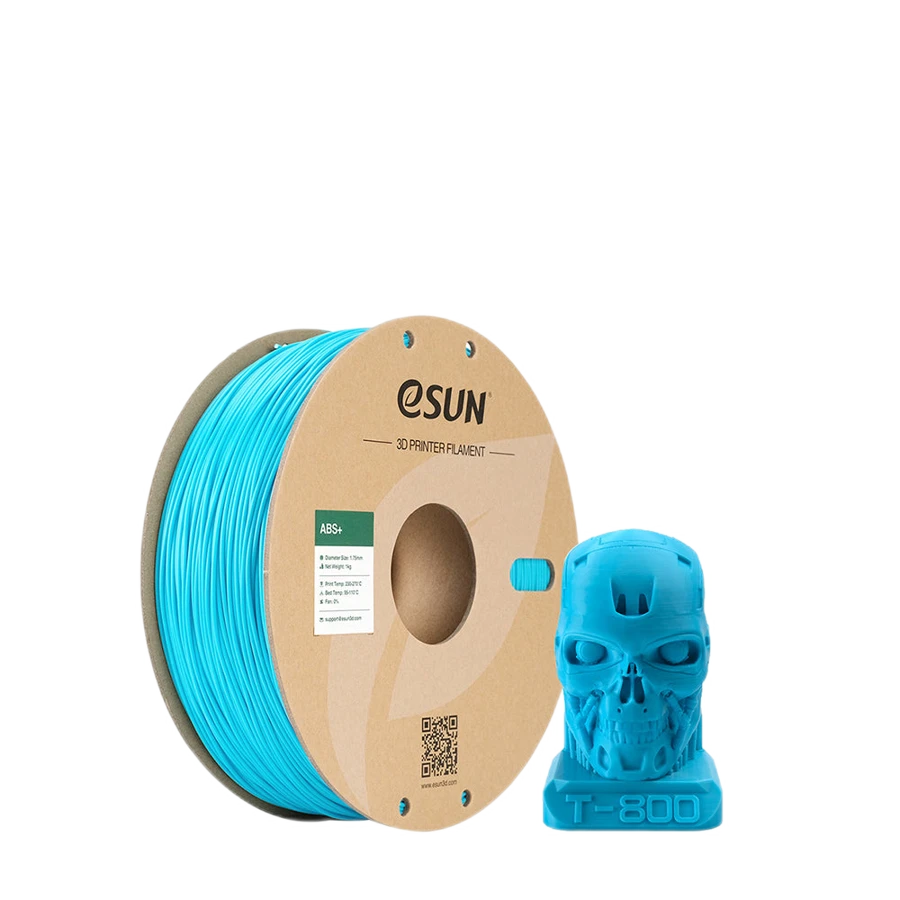
Read the revieweSUN ABS+ is attractive for a matte black finish and functional hobby prints, but its positive results coexist with a serious feeding complaint and enclosure-dependent layer bonding.
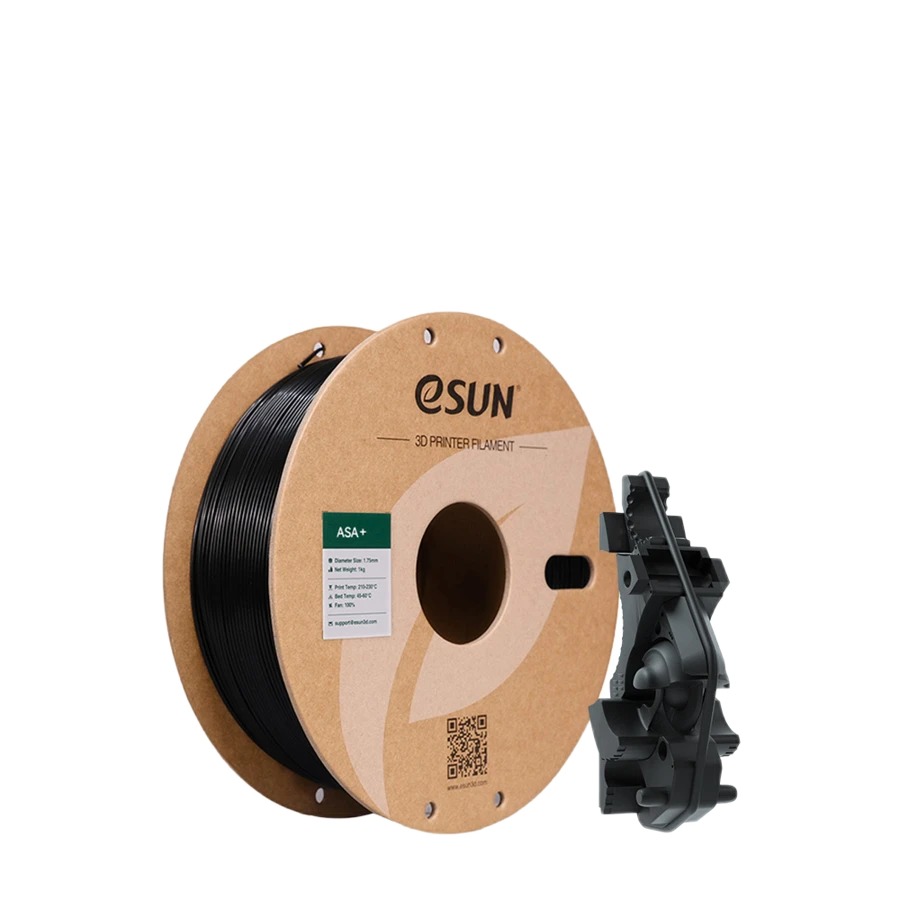
Read the revieweSUN ASA+ has positive printing feedback, but sharply different cold-white results and a qualified grey experience make a small project trial more useful than a broad no-warping…
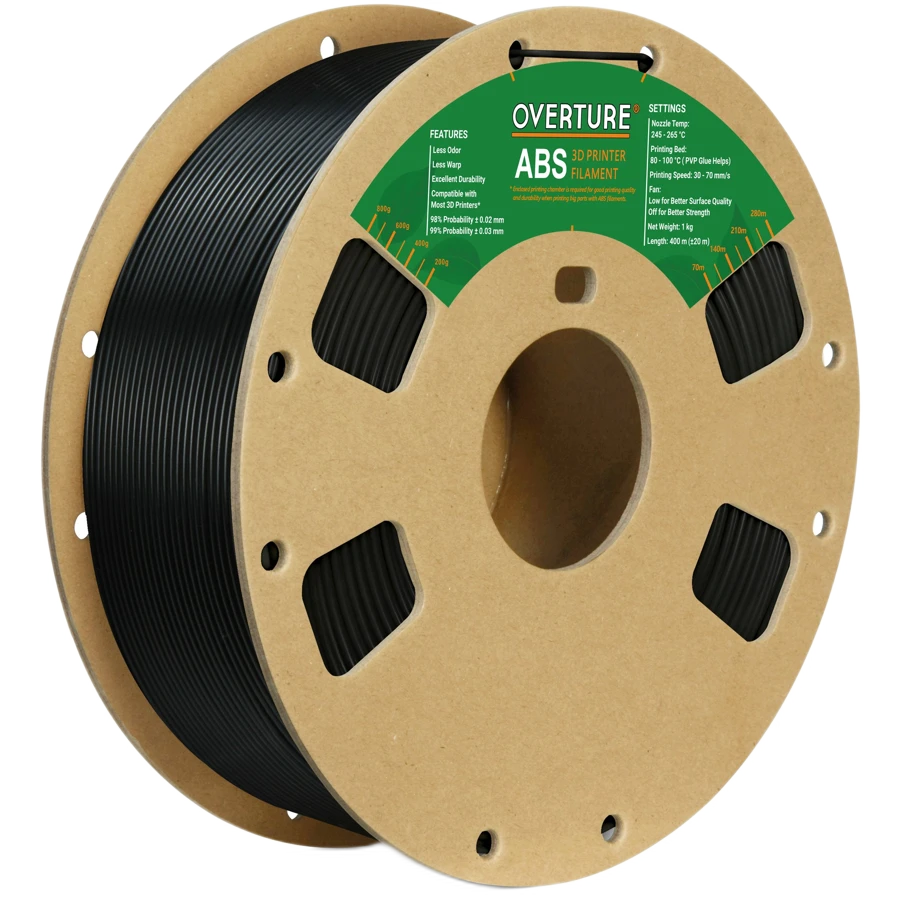
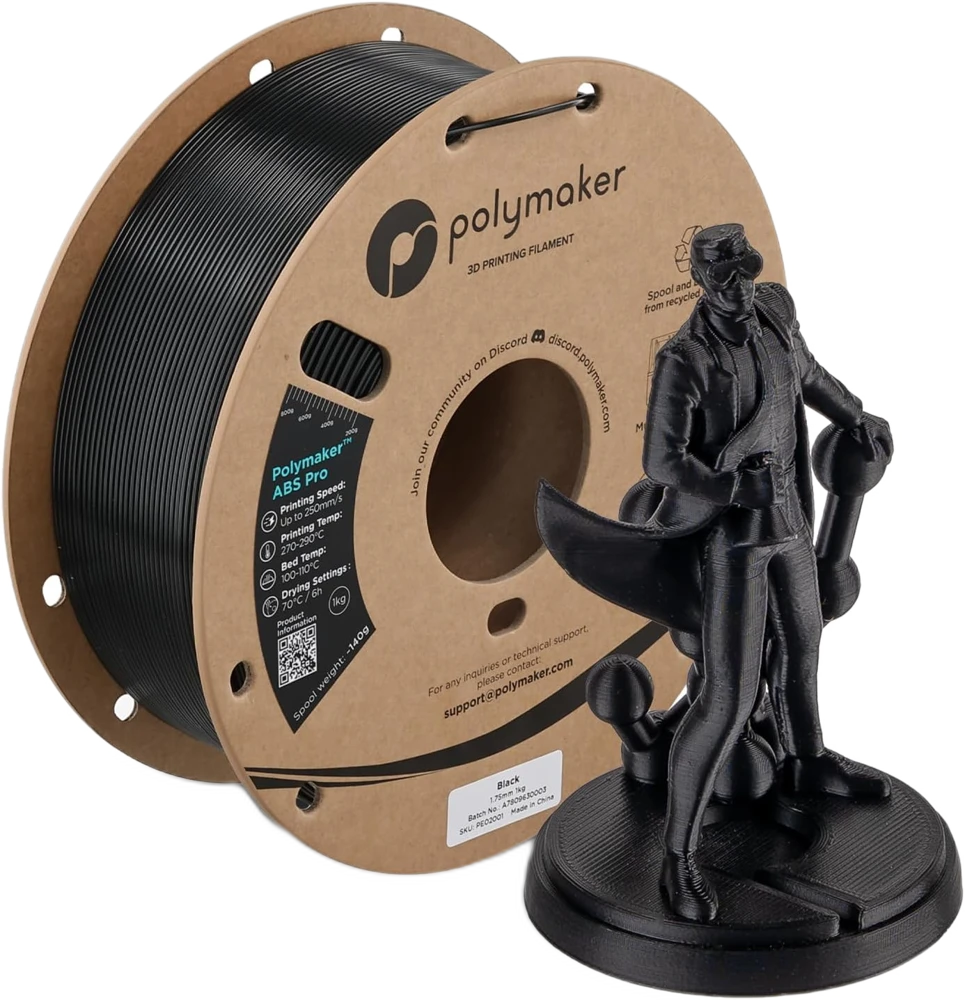
Read the reviewOverture black ABS has useful repeat-printing and winding feedback for functional hobby parts. Its shinier surface, occasional warping and mixed strength impressions make it a choice to…
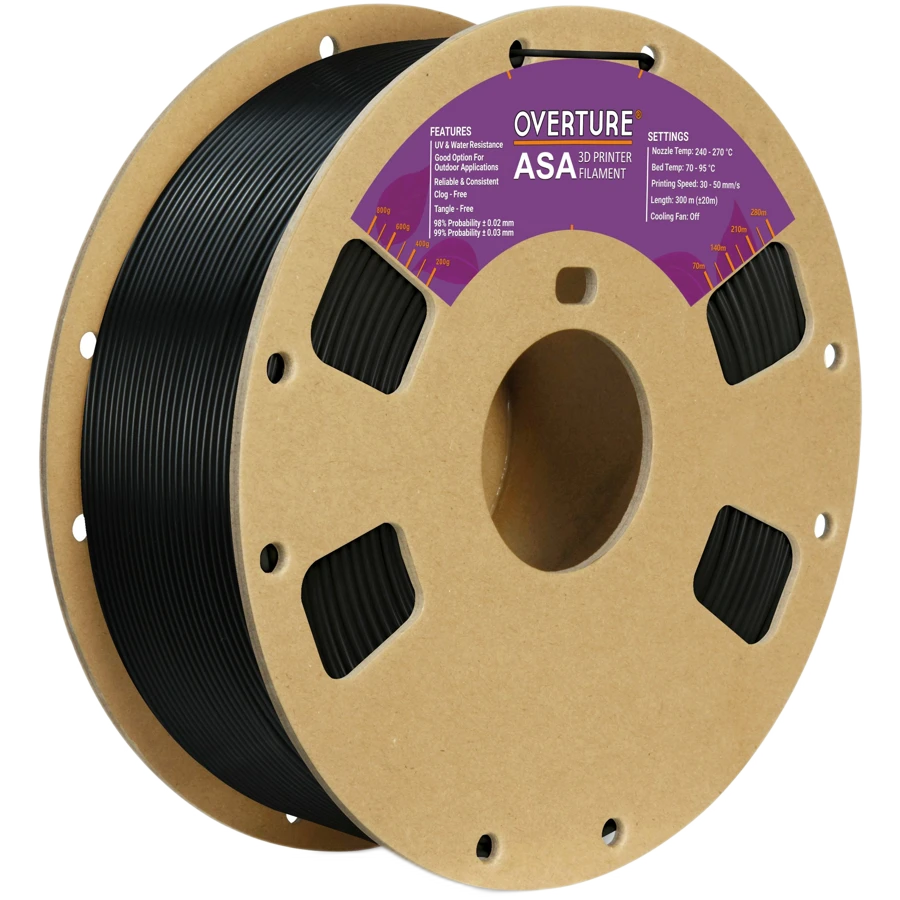
Read the reviewA credible candidate for non-critical outdoor and warm-environment parts, provided the printer can handle ASA and the black finish passes inspection.
Read the reviewClean black parts and a workable enclosed profile are encouraging; adhesion remains the main unresolved tradeoff in matching feedback.
Read the reviewA practical candidate for outdoor parts on an ASA-capable setup, with warping, color matching and spool handling to qualify before a long job.
Read the reviewBlack-roll feedback supports useful functional printing; feeder clearance and small-part adhesion still deserve a trial.
Read the reviewNatural ASA is worth considering when clear material documentation matters, but the brief customer feedback does not establish a premium performance advantage.
Read the reviewSUNLU High Speed ABS has encouraging black-spool feedback for smooth output and orderly feeding, but the high-speed label does not remove build-plate and warping work.
Read the reviewUse the ABS versus ASA guide when choosing a material. Use the combined drying guide when you already have a spool and need its preparation workflow.
No. The guide keeps each manufacturer attached to its settings and identifies equipment and spool checks. Modified formulations need their own instructions.