
OVERTURE ASA review: useful outdoor-part reports, with a black-finish caveat
At a glance
A credible candidate for non-critical outdoor and warm-environment parts, provided the printer can handle ASA and the black finish passes inspection.
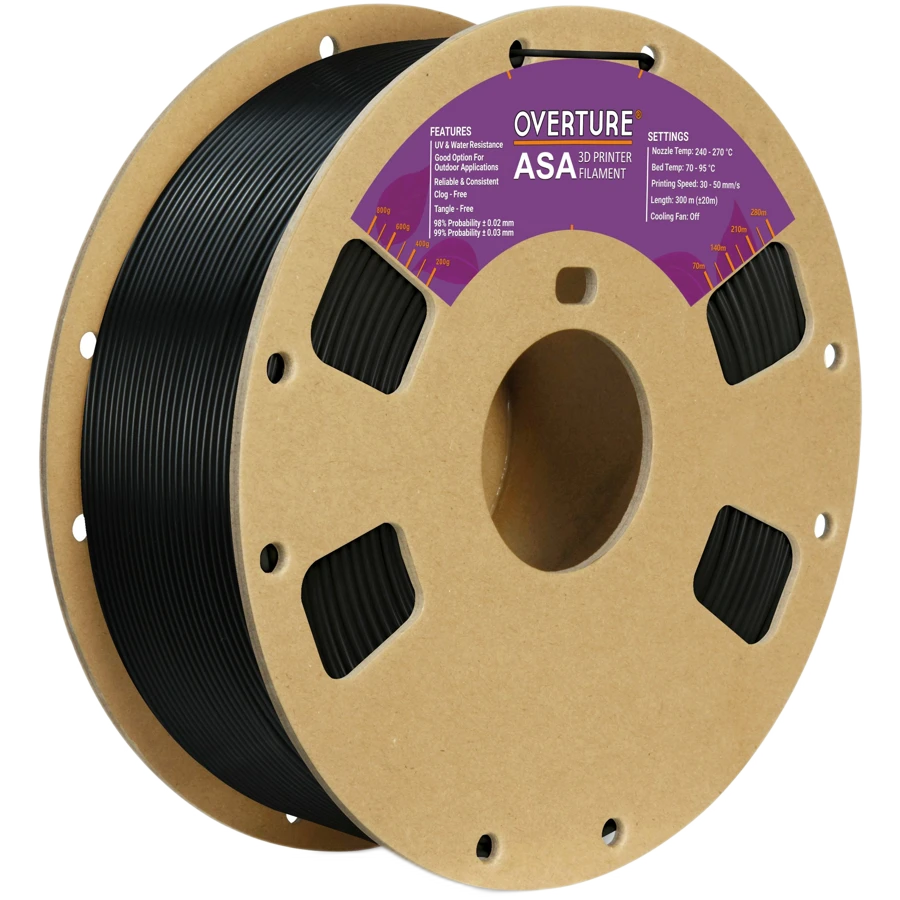
The setup
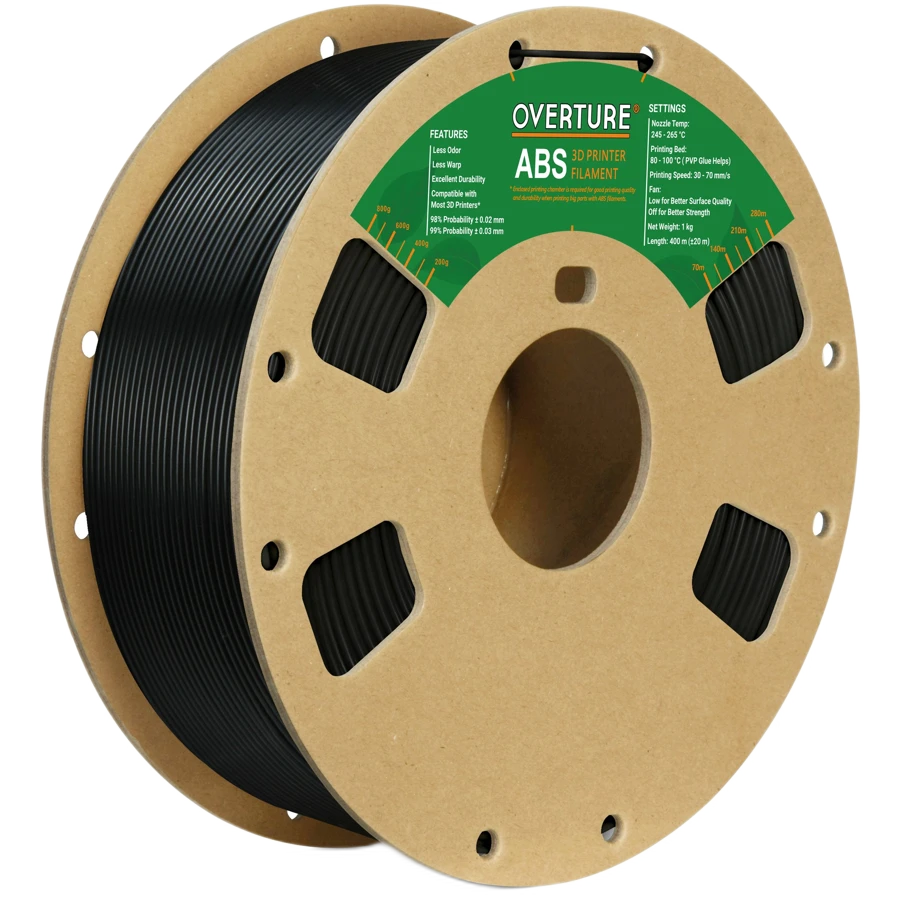
- Selected black 1 kg ASA spool.
- Manufacturer: enclosed printing; keep dry.
- Published drying guidance: 75°C for 7 hours.
Why consider it
- Useful reports of shape retention in demanding everyday environments.
- Good print finish after material-specific preparation.
What to weigh up
- Black color consistency has a specific contrary report.
- The successful setups often required ASA-specific thermal preparation.
Where the practical case is strongest
The useful feedback describes outdoor pieces and non-critical automotive accessories retaining their shape where a PLA trial had distorted. That gives OVERTURE ASA a concrete use beyond a general claim of being “strong.” It does not certify an operating temperature, a service life or suitability for safety-critical components.
Two different reasons to run a sample
Check the printing environment
Positive results often involved deliberate bed, chamber and drying choices. ASA is not a direct replacement for an easy PLA routine on an open machine.
Inspect the visible black surface
A contrary account describes lighter and darker bands within a single black spool despite otherwise nice printing. That matters if the part will remain unpainted.
Use documented settings before copying a hot profile
The manufacturer lists a 240–270°C nozzle range, a 70–95°C bed range and enclosed printing. Some customer setups used a 110°C bed, which is outside that published bed range. Those successful anecdotes are not a reason to exceed the limits of your plate or machine.
Pros & Cons Analysis
Based on supplied customer reviews and verified product documentation
Pros
- The application evidence goes beyond a calibration print. The reports include accessories exposed to hot and cold conditions, with favorable shape retention. This supports a non-critical application trial but cannot establish a universal temperature or lifetime rating.
- Good surfaces are attainable with a suitable process. Detailed accounts describe drying, bed adjustments and slower printing where appearance mattered. Their value is showing a workable routine, not supplying a universal speed profile.
Cons
- Unpainted black parts may need extra scrutiny. Lighter and darker striations are reported within a spool. If visual uniformity is part of the requirement, inspect a tall sample before committing a large enclosure or a matching set.
- The printer must be prepared for ASA. Thermal and ventilation requirements add work compared with routine PLA. Customer temperatures beyond current published guidance should remain setup-specific anecdotes.
Choose it for the environment, then check the finish
OVERTURE ASA is a useful candidate for non-critical functional parts exposed to sunlight or warmth. Select it with an enclosed, appropriately ventilated workflow and verify the black surface if the part will be visible.
The part will be painted or hidden
Tonal variation may matter less, while dimensional fit and adhesion still need checking.
The part has a safety-critical job
These customer experiences do not qualify that application. Use the relevant engineering validation instead.
Frequently Asked Questions
Does a car-use report establish a maximum service temperature?
No. Geometry, load, exposure and mounting conditions differ. The account is not a standardized thermal test.
Should I automatically use a 110°C bed?
No. The current manufacturer page gives 70–95°C. Match the material, plate and printer limits before changing settings.
Technical Specifications
| Product type | ASA filament |
|---|---|
| Reviewed formulation | OVERTURE ASA |
| Nominal filament diameter | 1.75 mm; manufacturer tolerance ±0.02 mm |
| Manufacturer diameter tolerance | Not verified for the selected offer |
| Package format | Black 1 kg |
| Nozzle guidance | 240–270°C; bed: 70–95°C; customer 110°C anecdotes are not substituted |
| Material care | 75°C for 7h per manufacturer; avoid excessive drying and respect spool limits |
| Variant / handling limit | Enclosed printer required; appropriate ventilation |
| Build plate guidance | 70–95°C; customer 110°C anecdotes are not substituted |
| Printing environment | Enclosed printer required; appropriate ventilation |
| Service limits | Customer printing experiences do not establish a rated service temperature, structural qualification or outdoor lifetime |
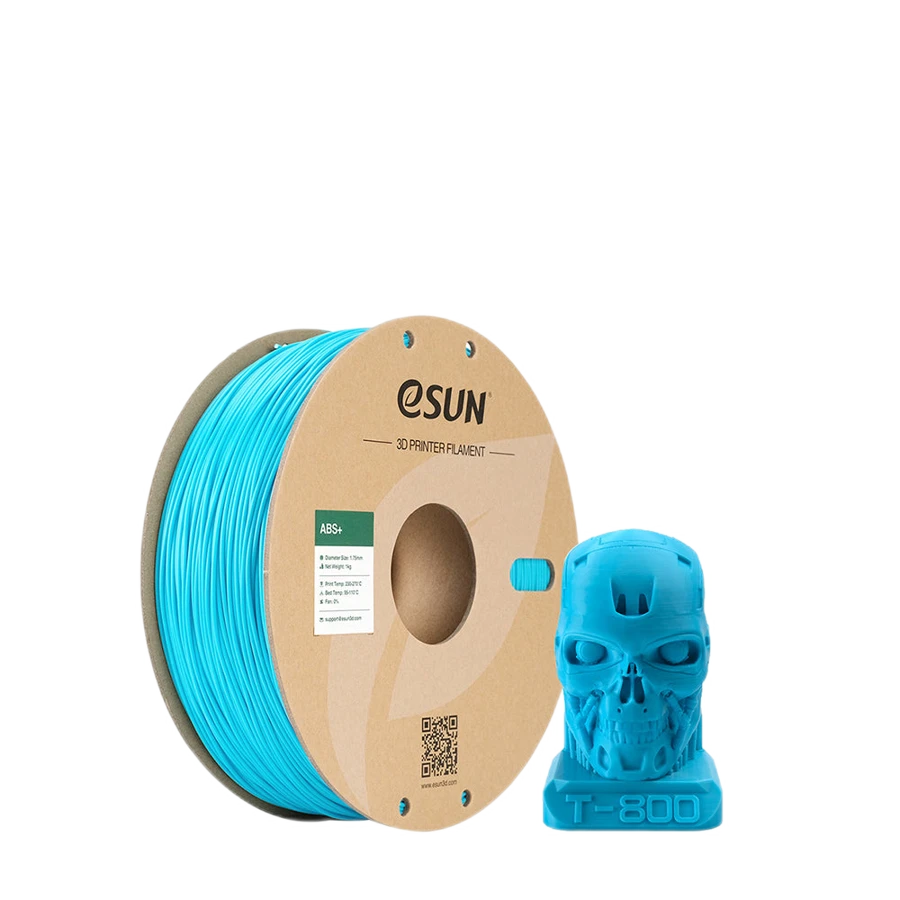
eSUN ABS+
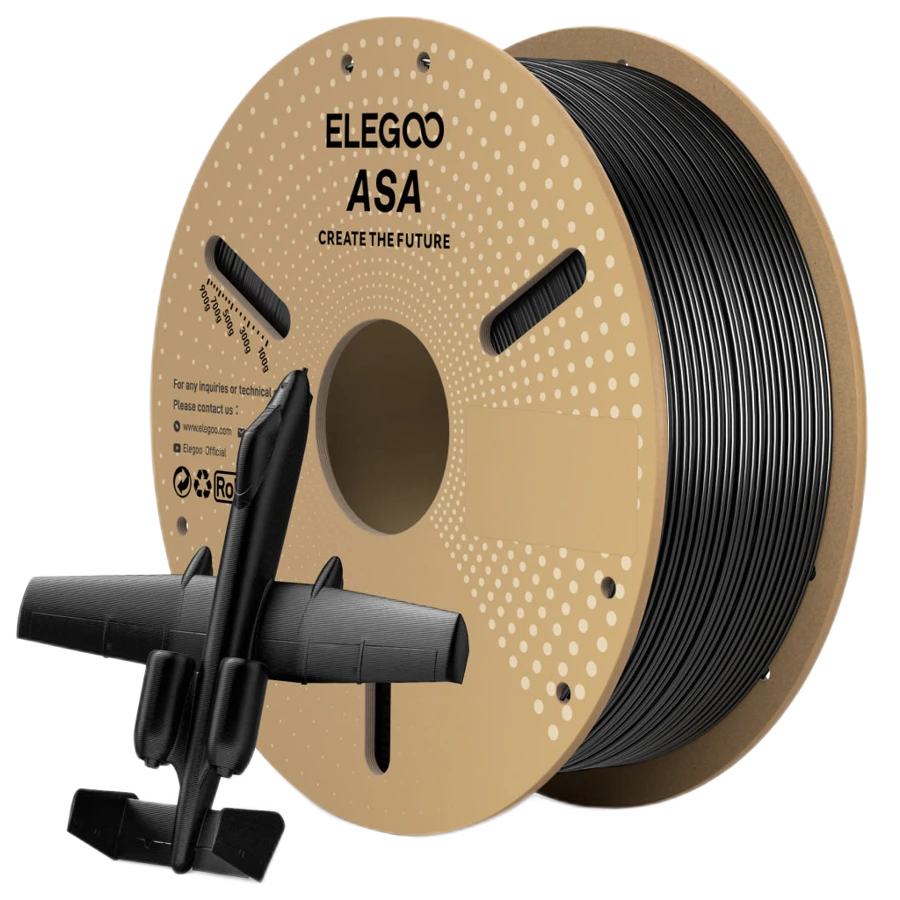
ELEGOO ASA
Prusament ASA
Overture ABS