
ELEGOO ASA review: test edge stability before committing to the four-pack
At a glance
A potentially straightforward ASA on a suitable enclosed printer, but the black four-pack has conflicting adhesion and warping feedback.
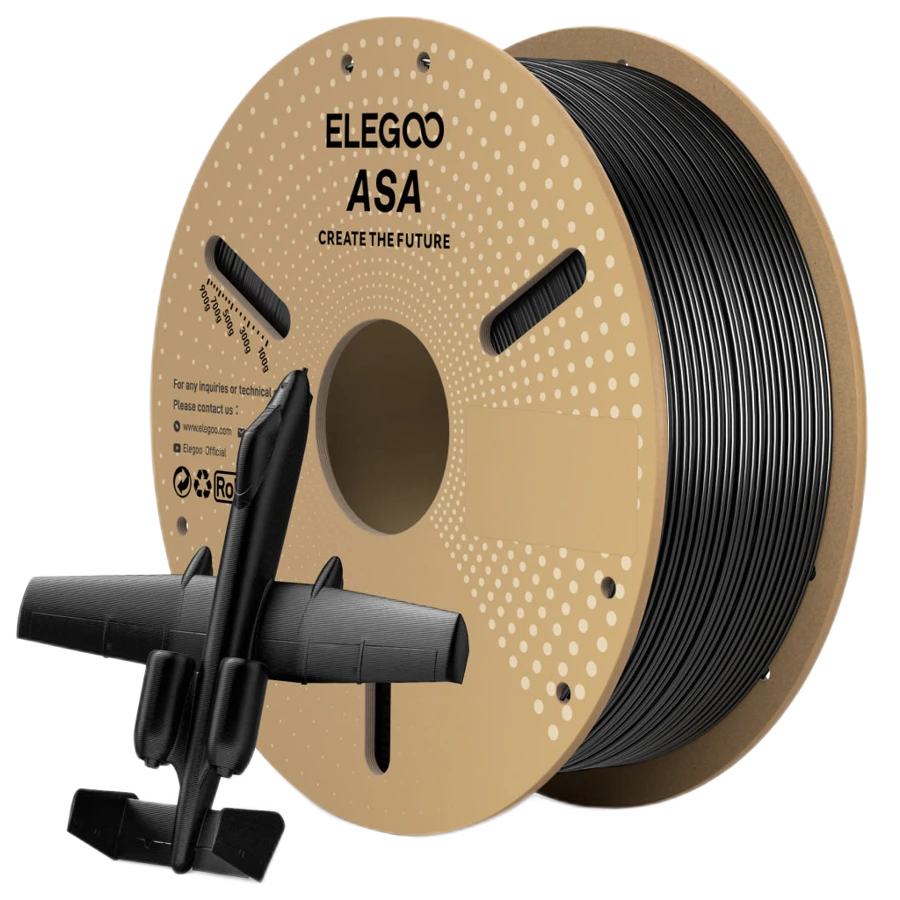
The setup
- Selected deep-black four-roll, nominal 4 kg offer.
- ASA, 1.75 mm; distinct from ASA-CF.
- Manufacturer specifies enclosed printing and plate glue.
Why consider it
- Straightforward printing reported on suitable setups.
What to weigh up
- A matched black-bundle account reports repeated edge lift.
- Four rolls are a larger commitment before profile qualification.
The decision with ELEGOO ASA is whether a four-roll order fits an already dependable ASA workflow. Favorable deep-black feedback includes ordinary default-profile printing, but a detailed P2S failure describes lifting and curled edges that persisted through adjustments. For a buyer making wide panels, that conflict matters more than a collection of short positive comments.
Would a failed corner ruin the job?
Choose your project
Small recurring ASA parts
Successful repeat prints of the actual design, with normal plate preparation.
A wide enclosure or panel
A full-footprint result with flat corners after cooling; a calibration cube does not answer this.
An urgent replacement part
A profile already qualified for this material. Otherwise, a familiar ASA avoids adding an untested variable to the deadline.
Keep the diagnosis separate from the purchase
The adverse result does not prove contamination. Its low humidity reading also does not measure moisture within the filament. A hotter bed helped only partly, so repeatedly changing temperature is not a complete explanation for that print.
If another ASA already works for the same geometry, keep that result as a reference. Compare the completed, usable parts rather than the bundle’s nominal kilograms: an inexpensive order is less attractive if it adds unsuccessful long jobs and repeated setup work.
Pros & Cons Analysis
Based on supplied customer reviews and verified product documentation
Pros
- A working setup can be uncomplicated. The default-setting and Bambu reports support trying the material without assuming extensive tuning is inevitable. The printer and profile details are limited, so this does not promise universal plug-and-print behavior.
Cons
- Large-part adhesion deserves its own test. The specific P2S account reports repeated lifting, with only partial improvement from a hotter bed. Test the geometry that matters instead of treating a successful small print as proof for all footprints.
- Discounted stock is only useful if it becomes usable parts. A four-pack can tie up material while a troublesome profile is investigated. Start with one roll and retain the remaining packages until the workflow is established.
Qualify the shape before you stock up
Best fit: recurring ASA work with time to qualify the deep-black bundle. The case is weaker for a first ASA purchase or a deadline-critical wide part. Do not open all four rolls simply because a small model succeeds.
When would I stop trying to make the bundle work?
If the intended footprint still curls after the documented material and printer setup is checked, keep the known-working material for the job and use the supplier's support route. A bulk purchase should earn its place through usable output.
Frequently Asked Questions
Does the low humidity reading prove the spool was dry?
No. Chamber relative humidity is not a direct measurement of moisture inside the filament.
Is the warping complaint proof of contamination?
No. Contamination is a suspicion in the account, not a verified cause.
Technical Specifications
| Product type | ASA filament |
|---|---|
| Reviewed formulation | ELEGOO ASA; not ASA-CF |
| Nominal filament diameter | 1.75 mm |
| Manufacturer diameter tolerance | Not verified for the selected offer |
| Package format | Deep Black 4 kg bundle |
| Nozzle guidance | 240–270°C; bed: 90–100°C; plate dependent |
| Material care | 80±5°C for 8h in current family guidance; check spool and dryer limits |
| Variant / handling limit | Enclosure required; manufacturer chamber guidance 45–60°C; ventilate area |
| Build plate guidance | 90–100°C; plate dependent |
| Printing environment | Enclosure required; manufacturer chamber guidance 45–60°C; ventilate area |
| Service limits | Customer printing experiences do not establish a rated service temperature, structural qualification or outdoor lifetime |
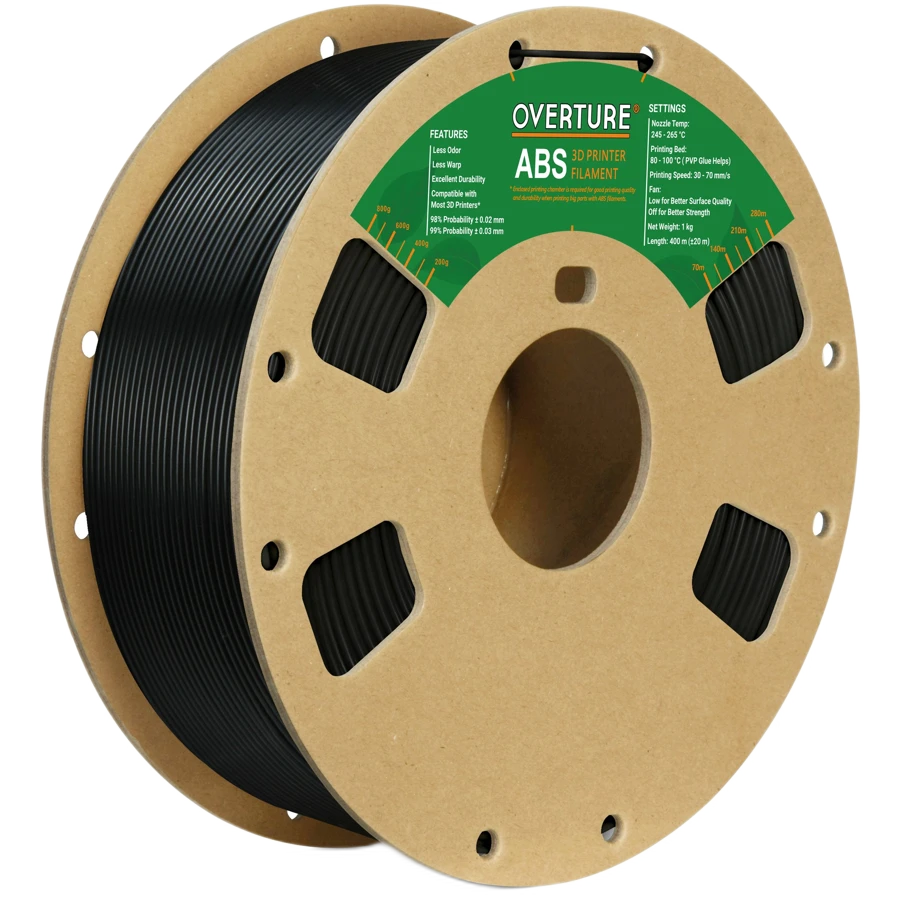
Overture ABS
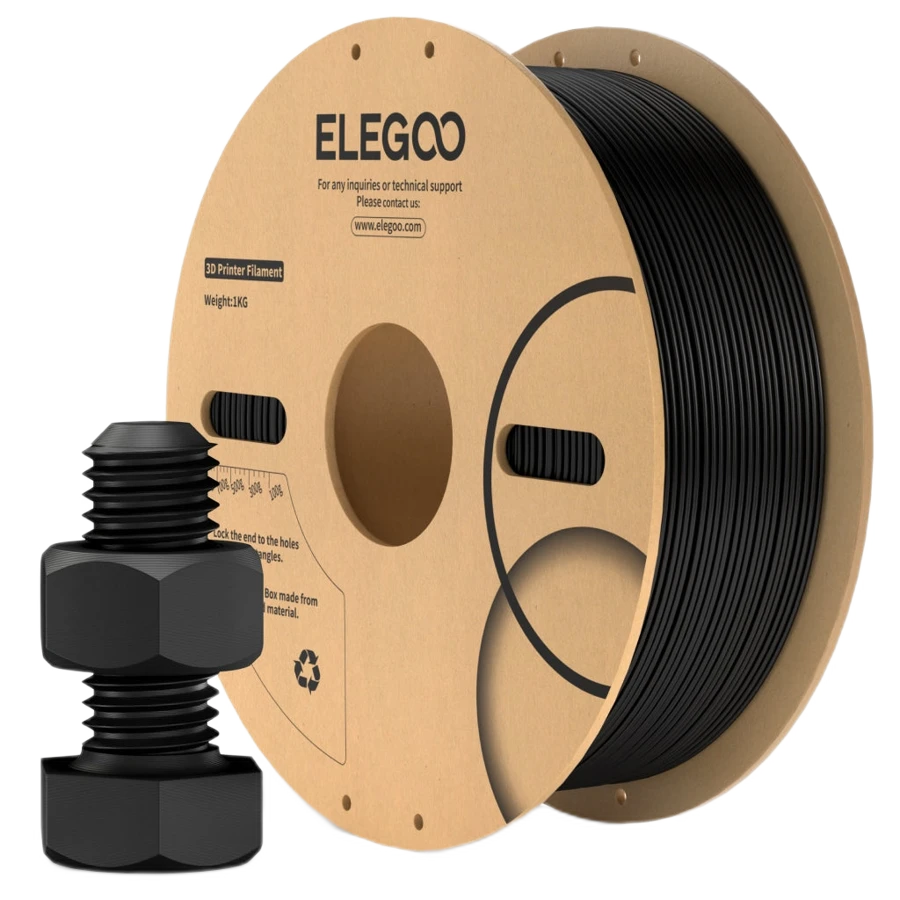
ELEGOO ABS
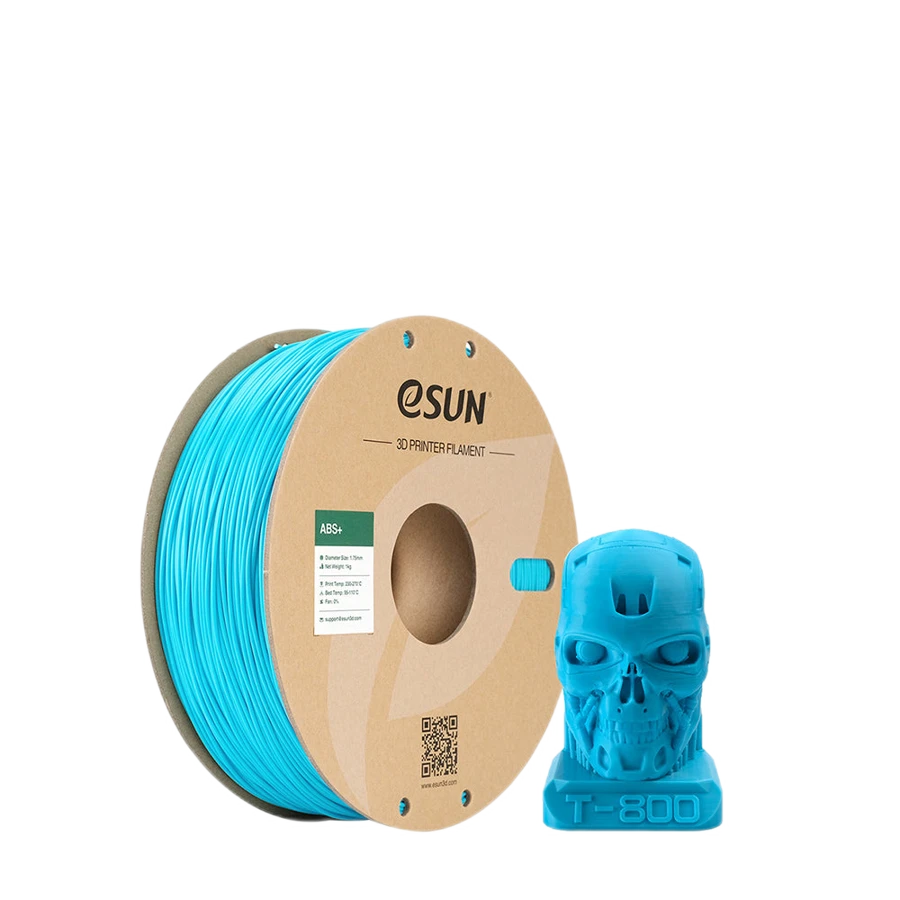
eSUN ABS+
SUNLU High Speed ABS