
Polymaker ABS Pro review: faster ambitions still start with bed adhesion
At a glance
Clean black parts and a workable enclosed profile are encouraging; adhesion remains the main unresolved tradeoff in matching feedback.
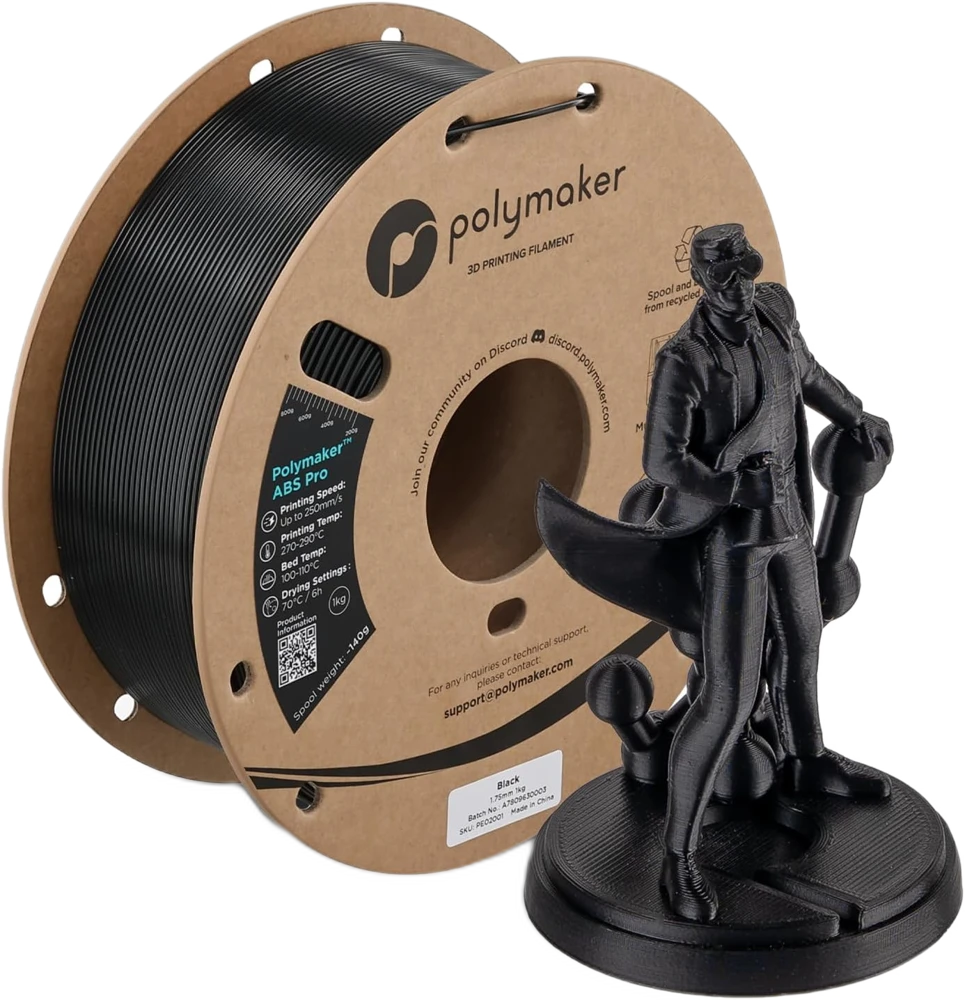
The setup
- Engineering-grade ABS Pro formulation
- Selected black 1.75 mm, 1 kg
- Designed for enclosed printing; manufacturer advertises up to 250 mm/s
Why consider it
- Smooth, deep-black parts in matching feedback.
- A material-specific profile can provide a practical starting point.
What to weigh up
- Bed adhesion remains a substantial concern.
- Advertised thermal properties do not qualify a finished part.
ABS Pro is appealing if an enclosed ABS workflow is already part of your setup and you want clean functional parts at useful speed. Its customer evidence does not support treating the Pro label as a cure for first-layer or corner-lift problems.
The adhesion decision comes first
| What the trial shows | Next decision |
|---|---|
| Clean surface, stable footprint | Check the required fit and loading before increasing the job size. |
| Good extrusion, lifting corners | Resolve the surface and thermal setup using documented guidance. |
| Repeated failure despite a suitable setup | Reconsider the roll or material rather than committing more project time. |
Matching black feedback includes both straightforward successful printing and troublesome adhesion. The green Pro experience is also unfavorable, but should not be presented as proof that every color or production run behaves alike.
Read thermal numbers with their load attached
Polymaker reports heat-deflection temperatures at specified loads. Those figures help characterize the material; they are not a universal safe temperature for every printed part. Geometry, orientation and service conditions still need qualification.
For an exposed outdoor part, review the PETG and ASA material tradeoffs before treating the ABS Pro name as a weathering qualification.
Pros & Cons Analysis
Based on supplied customer reviews and verified product documentation
Pros
- Surface quality is an observable attraction. Black Pro accounts describe clean printing and a dark finish. Adhesion problems in some of the same feedback prevent a blanket easy-printing conclusion.
- ABS Pro is not only a marketing speed claim. An explicitly identified Pro account obtained promising initial prints with a supplied profile. Early test parts do not establish long-job reliability or measured throughput.
Cons
- Pro does not remove the ABS setup burden. Black Pro feedback includes repeated difficulty keeping prints on the bed; a green Pro account describes persistent curling. Conditions differ, so this is a buying caution rather than a failure-rate estimate.
- Use the right measurement basis. Manufacturer heat-deflection figures are load-dependent material data. They should not become an unrestricted service-temperature claim for an arbitrary printed bracket.
Keep the trial centered on adhesion
ABS Pro deserves a small, representative trial on a suitable enclosed printer. Its clean-black finish is attractive, but stable bed adhesion is the first condition for recommending a larger commitment.
- Prove the intended footprint before increasing speed.
- Keep color-specific failures in context.
- Qualify heat and load requirements separately.
Frequently Asked Questions
Does ABS Pro eliminate warping?
No. Matching feedback includes adhesion and curling problems as well as successful prints.
Is a heat-deflection figure the maximum service temperature?
No. It is a test result under a specified load and method. A finished part’s operating conditions need separate assessment.
Technical Specifications
| Product type | ABS filament |
|---|---|
| Reviewed formulation | Polymaker ABS Pro; black |
| Nominal filament diameter | 1.75 mm |
| Manufacturer diameter tolerance | Not verified for this exact formulation |
| Package format | 1 kg spool |
| Nozzle guidance | Follow current ABS Pro profile and printer temperature limits |
| Material care | Store dry; follow the current exact-material drying instructions |
| Variant / handling limit | Not standard PolyLite ABS; customer modifications are not operating instructions |
| Build plate guidance | Captured manufacturer listing recommends preheating the bed at 100–110°C for 10 minutes; check the plate and printer limits. |
| Printing environment | Use an ABS-suitable enclosed setup and the manufacturer’s ventilation instructions |
| Service limits | No rated structural performance or service temperature established by these customer accounts |
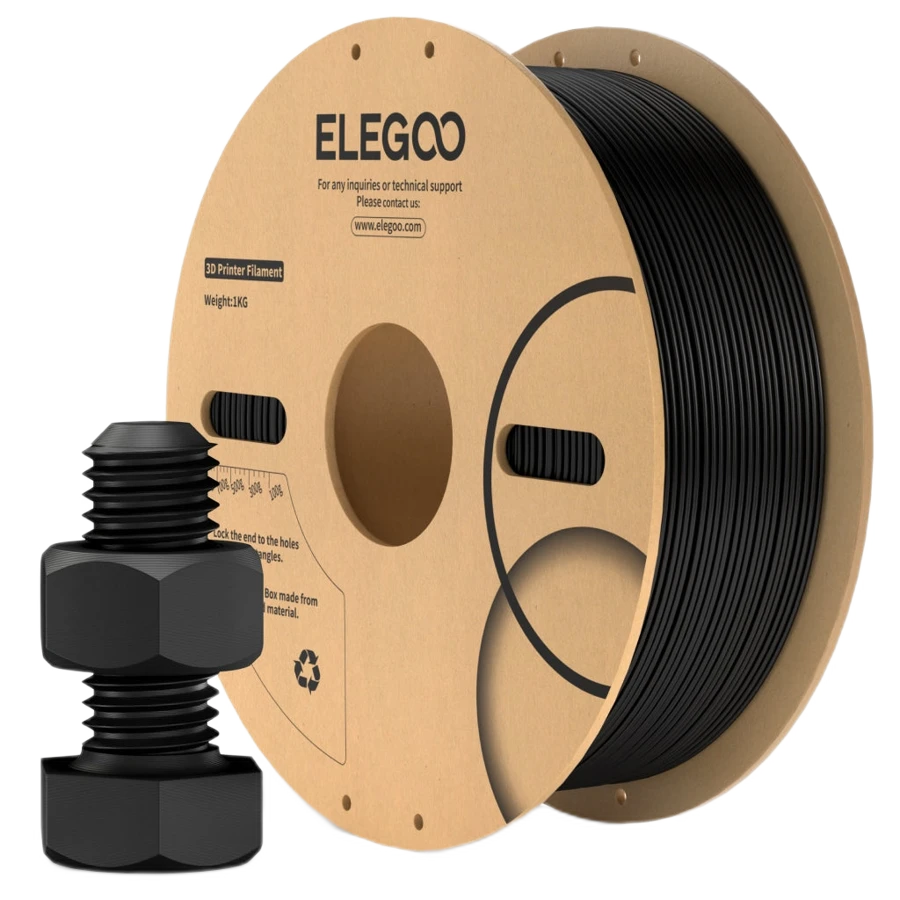
ELEGOO ABS
SUNLU High Speed ABS
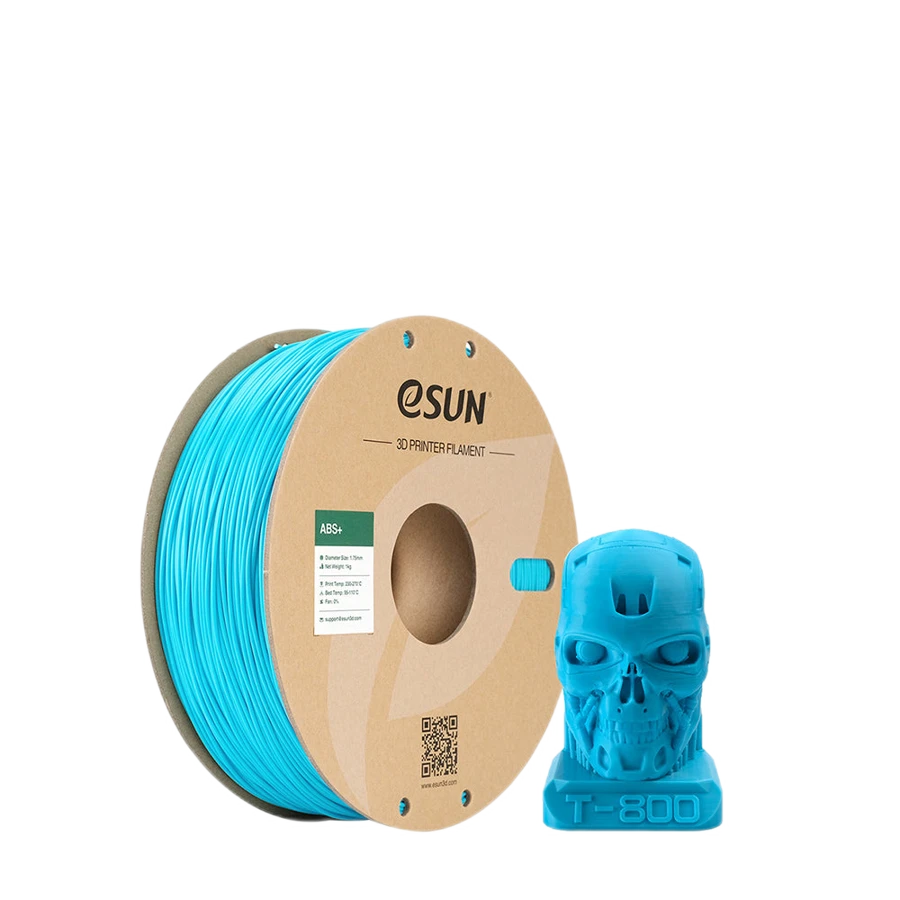
eSUN ABS+
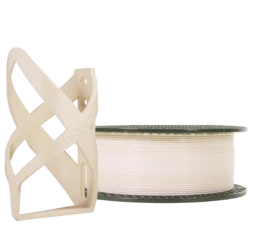
Prusament ASA