
Polymaker PolyLite ABS review: practical enclosed printing, with a spool-fit check
At a glance
Black-roll feedback supports useful functional printing; feeder clearance and small-part adhesion still deserve a trial.
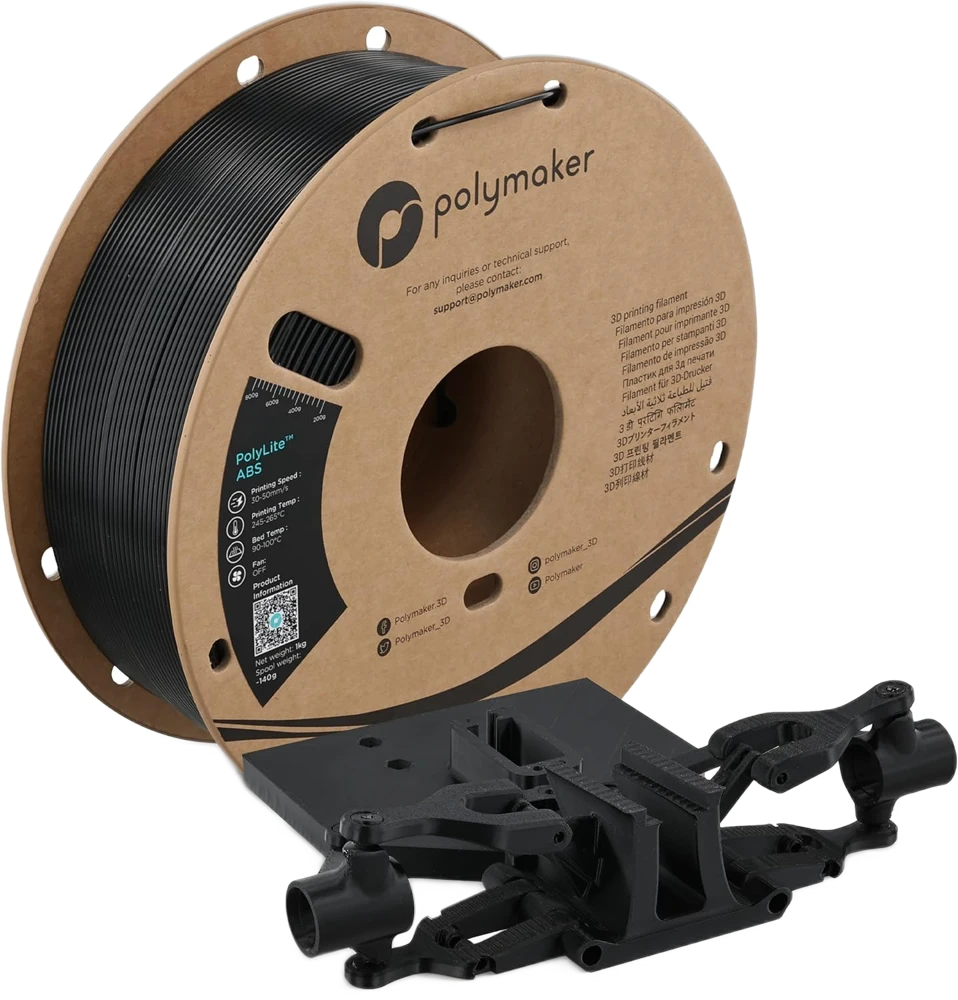
The setup
- Standard PolyLite ABS formulation
- Selected black, 1.75 mm, 1 kg
- Manufacturer recommends enclosed printing
Why consider it
- Useful black functional parts in a prepared enclosure.
- Familiar profiles can produce clean surfaces.
What to weigh up
- A full reel can conflict with feeder accessories.
- Small parts can still need adhesion work.
PolyLite ABS makes sense as a standard ABS choice for a printer already prepared for enclosed printing. The black-roll evidence includes a substantial functional project, not only a small demonstration model. The next buying checks are the build footprint and the reel’s fit in your feeding equipment.
Start with the hardware you already use
- Enclosure: confirm the current material profile is within the machine’s documented limits.
- Feeder: inspect the full spool with any adapters or accessories installed.
- Build plate: include the smallest contact area used by the real project in the trial.
A metallic-blue account describes interference in an accessory-equipped AMS. That is a different problem from the ABS itself adhering or extruding poorly. Fixing settings will not create physical clearance for a reel that catches.
What the black-roll project establishes
The reported speaker adapters and amplifier rack show a plausible use for a prepared enclosed workflow. They do not establish a heat rating, long-term vehicle life or safety-critical suitability. Those requirements need material data and design-specific qualification.
Where bed preparation is the obstacle, distinguish an adhesion aid from a release layer instead of adding coatings indiscriminately.
Pros & Cons Analysis
Based on supplied customer reviews and verified product documentation
Pros
- The application evidence is concrete. A matched black-roll account completed speaker adapters and an amplifier rack with substantial material use. It supports a trial for functional printing, not a universal vehicle-temperature qualification.
- The setup can be manageable. Standard-ABS accounts describe good layer and bed adhesion with appropriate settings. The results rely on prepared machines, rather than proving suitability for every open printer.
Cons
- Check the actual clearance. Metallic-blue feedback describes a full roll interfering with an AMS accessory arrangement. This is a reason to test lid clearance and rotation, not to copy a lid modification or assume every black spool has the issue.
- Success on larger objects does not settle tiny footprints. A white-spool workflow reports minor small-part adhesion trouble despite otherwise clean printing. Use the intended geometry in the first trial.
A practical standard ABS trial for an established setup
Choose PolyLite ABS when the printer and project already suit ABS. Check full-reel clearance and the smallest footprint before committing a long job.
- Keep the black-roll project evidence in scope.
- Do not transfer a metallic-spool fit issue to every color.
- Qualify service conditions independently.
Frequently Asked Questions
Is this the same as ABS Pro?
No. This review covers standard PolyLite ABS, with the selected listing labeled ABS 1 kg.
Does a low-odor description establish safe indoor exposure?
No. Follow the material and printer safety guidance; odor is not an exposure measurement.
Technical Specifications
| Product type | ABS filament |
|---|---|
| Reviewed formulation | PolyLite ABS; selected black |
| Nominal filament diameter | 1.75 mm |
| Manufacturer diameter tolerance | Not verified for this exact formulation |
| Package format | 1 kg spool |
| Nozzle guidance | Manufacturer range: 245–265°C nozzle; cooling fan off. Use a suitable enclosed ABS workflow. |
| Material care | Manufacturer drying guidance: 70°C for about 6 hours; verify the supplied spool tolerates the cycle, then store dry. |
| Variant / handling limit | Not ABS Pro; metallic-color feeder finding is conditional |
| Build plate guidance | Manufacturer bed range: 90–100°C; follow the build-surface preparation and release instructions. |
| Printing environment | Use an ABS-suitable enclosed setup and the manufacturer’s ventilation instructions |
| Service limits | No rated structural performance or service temperature established by these customer accounts |
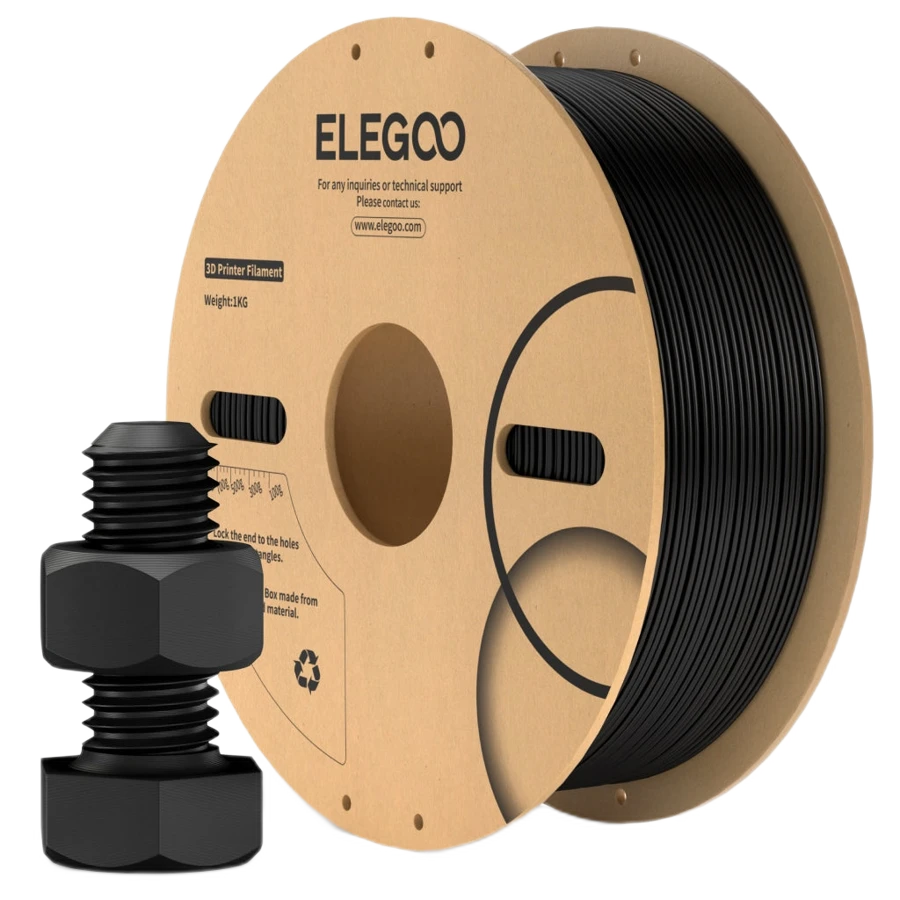
ELEGOO ABS
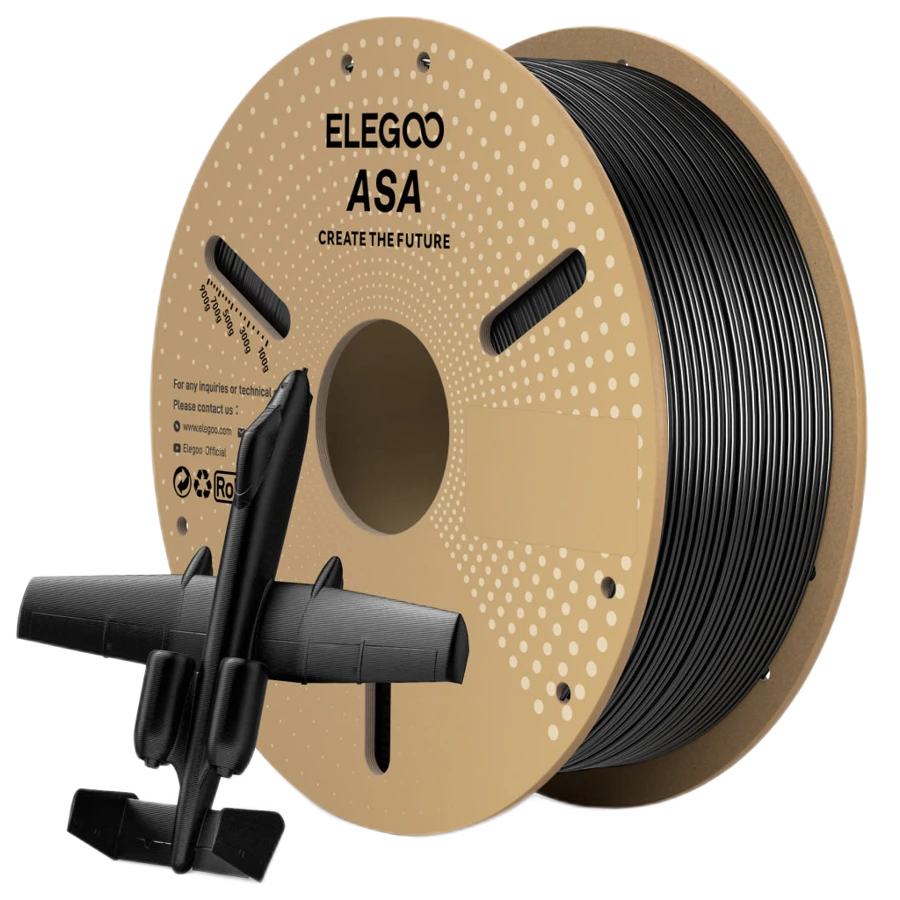
ELEGOO ASA
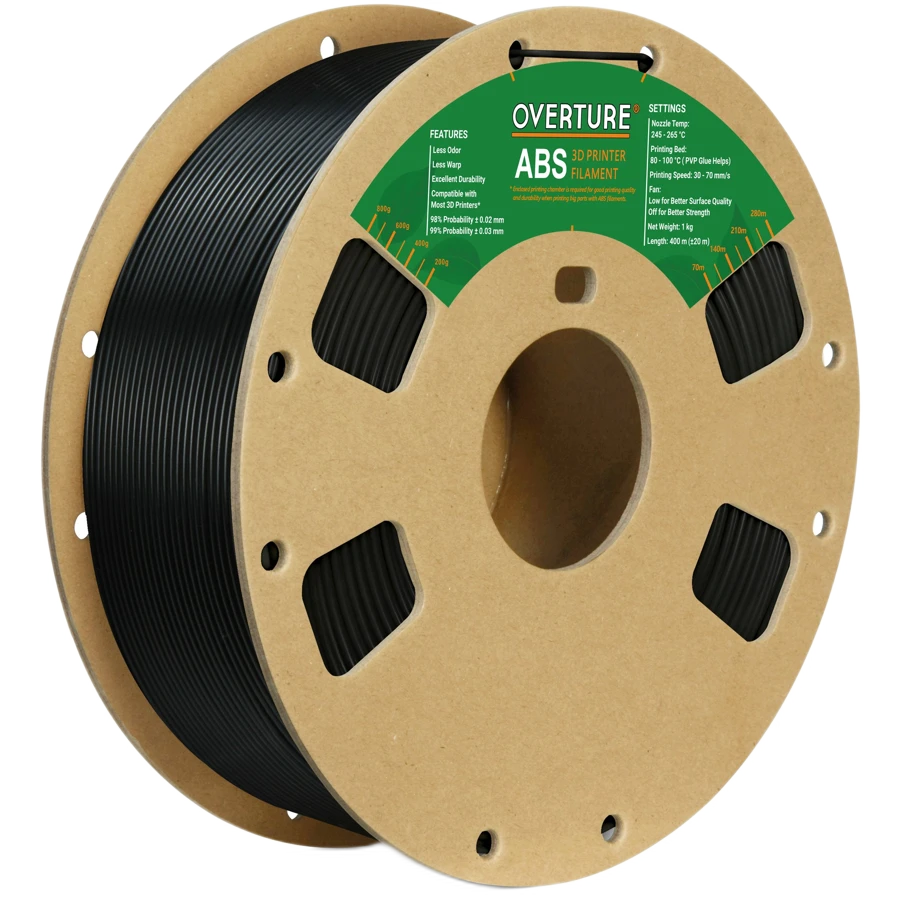
Overture ABS
eSUN ABS+