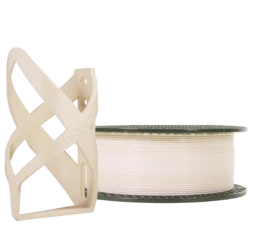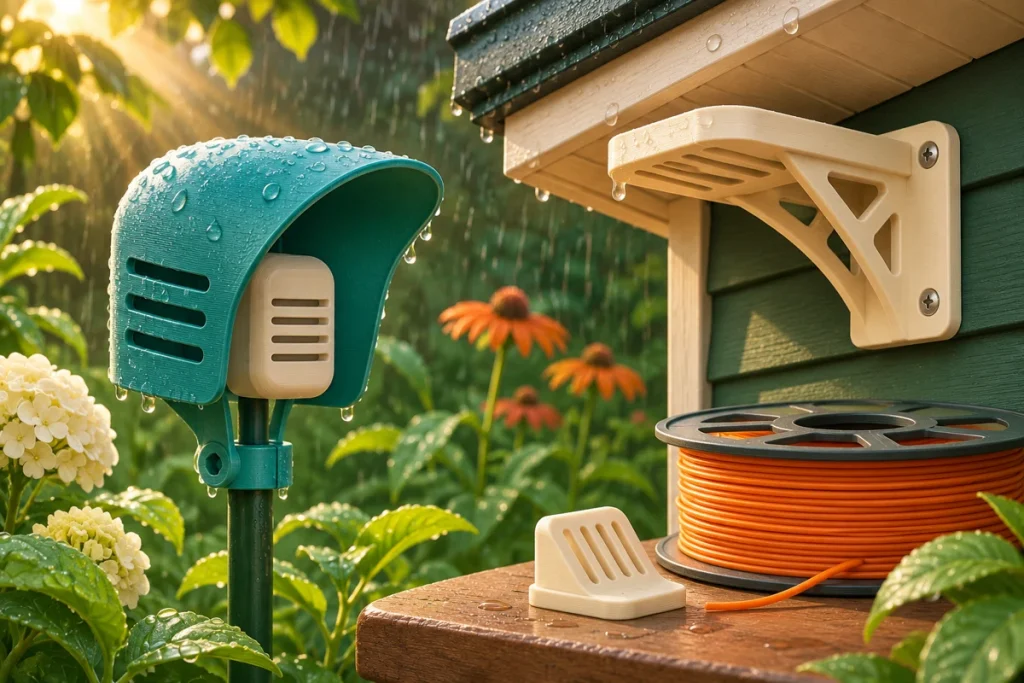
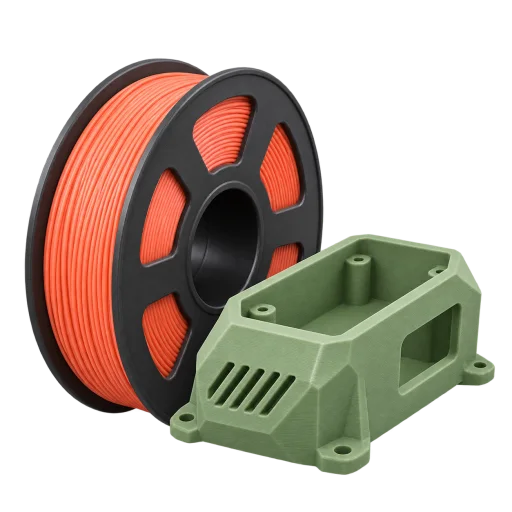
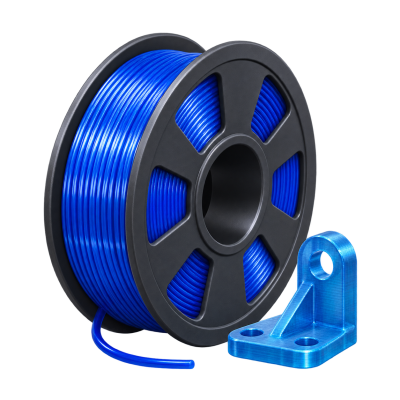
A filament name does not qualify a finished outdoor part. Sun, temperature, water, load and inspection access all matter; customer examples do not establish a service-life guarantee.
Where will the part live?
| Situation | Starting direction | Reason to reconsider |
|---|---|---|
| Weather-exposed, noncritical object with an ASA-ready printer | Polymaker ASA or Prusament ASA | Large-part warping or an unsuitable printing environment |
| Sheltered, modest-temperature, noncritical object | Qualified PETG such as Prusament or Bambu PETG HF | Sustained heat, direct exposure or a demanding load |
| Load-bearing, safety-critical or difficult-to-inspect installation | A validated material/design process | A consumer shortlist alone is insufficient qualification |
Use a real exposure brief
- Record whether the object gets direct sun or stays under cover.
- Identify the warmest expected location, including trapped heat near a surface.
- Decide whether failure is merely inconvenient or could damage property or injure someone.
- Plan how you will inspect and replace it.
ASA’s weather-oriented role is a reason to investigate it, not permission to skip geometry and load checks. PETG can be useful for a less demanding sheltered task, but a successful indoor print is not an outdoor qualification. The PETG versus ASA guide develops that material decision.