
Bambu Lab ABS review: a sensible enclosed-printer choice, with spool checks still worthwhile
At a glance
Encouraging enclosed-printer results make Bambu ABS a candidate for an established ABS workflow; feed interruptions remain a reason to inspect the roll.
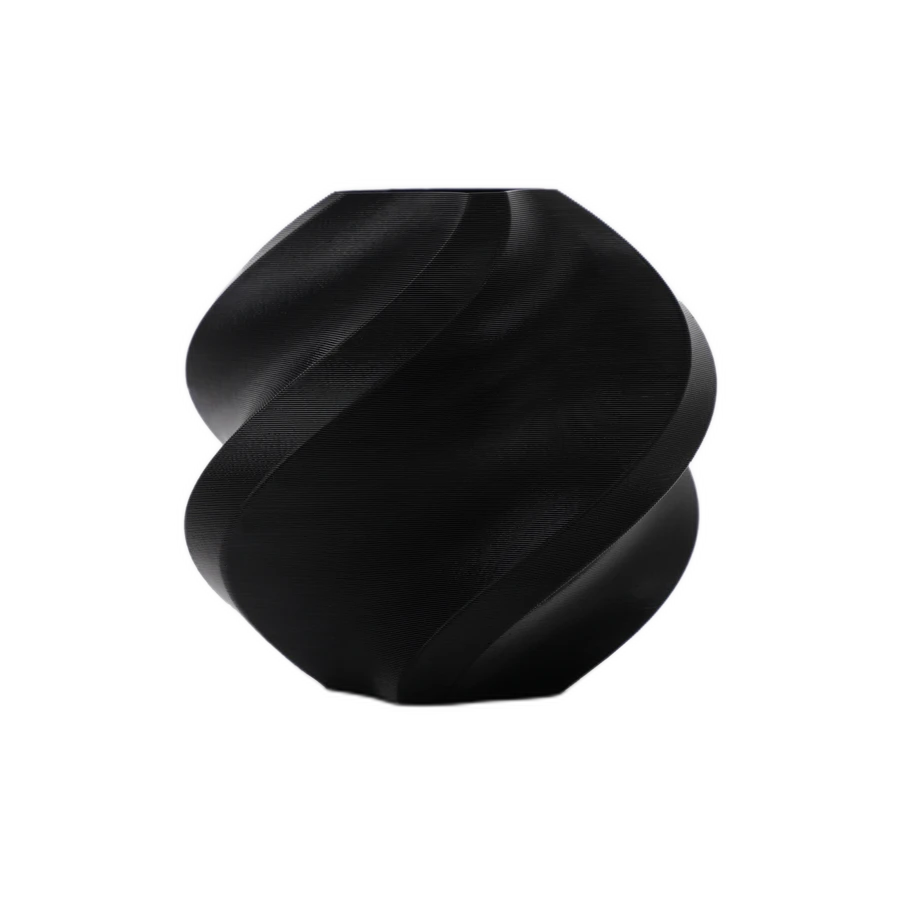
The setup
- Bambu ABS formulation, separate from ABS-GF.
- Selected Amazon offer: black 1 kg refill.
Why consider it
- Good layer appearance and adhesion in matched ABS experiences.
- Positive results on enclosed Bambu printers.
What to weigh up
- A reported tangle problem interrupted repeated prints.
- Refill installation and an ABS-suitable setup still matter.
Bambu Lab ABS makes most sense when you already have a suitable enclosed printing setup and want to use the manufacturer’s material workflow. The useful feedback concerns completed ABS prints on enclosed Bambu machines and consistent-looking parts. It does not establish that ABS becomes a plug-and-play material on every printer.
Separate print quality from spool delivery
The positive experiences describe clean layers, uniform color and straightforward adhesion. The strongest contrary report concerns repeated tangles that stopped jobs. Those are different questions: a material can produce a good part when fed correctly while a particular roll causes trouble before the nozzle.
Check
Why it belongs in the first run: Confirms the selected surface and ABS profile work for this footprint.
Why it belongs in the first run: Exposes a feed problem before a longer job consumes more material.
Why it belongs in the first run: Tests the finish you actually need rather than relying on a general material reputation.
A refill changes the preparation
The selected offer is a black refill. Confirm that you have the appropriate reusable spool and follow its installation instructions before releasing the restraints. Keep the loose end secured whenever the roll is off the printer. A tangle complaint does not establish whether manufacturing, installation or later handling caused every crossing.
Does automatic material recognition remove calibration?
It can simplify selecting a material workflow, but it does not inspect your spool, establish bed adhesion or prove that a large part will behave like a small one. Treat the first representative print as a practical check.
Bambu requires an enclosed printer and a well-ventilated location for this material. Enclosure suitability and ventilation are separate checks; automatic material recognition does not resolve either.
Who should pause before buying?
- A buyer with an open printer who has not checked the manufacturer’s ABS suitability guidance.
- Someone choosing ABS only because a customer comment mentions easy PLA printing.
- A production user who needs a quantified failure rate or certified mechanical performance from these reports.
The first-page evidence includes mismatched material language, so broad brand praise is not a substitute for exact ABS performance. Use the matched enclosed-printer experiences as a reason for a trial, not a guarantee for every machine or roll.
Pros & Cons Analysis
Based on supplied customer reviews and verified product documentation
Pros
- Presentable parts without a finishing detour. Consistent color and clean layers appear in the matched material feedback. That supports trying an exposed part, while leaving dimensions and load capacity to the actual design requirements.
- A familiar workflow for an enclosed Bambu setup. P1S and P2S ABS experiences are favorable. The value is most relevant to that established workflow; it does not settle suitability for an open machine.
Cons
- A good profile cannot solve a blocked roll. Repeated tangles and stopped prints appear in the contrary evidence. Inspect unwinding during the first job, without turning a single reported roll into a product-wide defect rate.
- The offer is not a ready-mounted spool. This black refill needs a compatible reusable spool. Installation is part of the purchase decision, especially when comparing it with a complete spool from another seller.
An enclosed workflow first, a bulk purchase later
Bambu ABS is worth a one-roll trial on a suitable enclosed system. The positive print-quality evidence is useful, but it does not justify skipping the feeding check.
- Already set up for ABS? Confirm the refill and reusable spool match, then test a representative part.
- Moving from PLA? Establish machine suitability and the ABS process before choosing a bulk bundle.
The first part looks good—am I ready for a long job?
Also confirm smooth unwinding and a stable first layer across the footprint of the longer job. Appearance alone does not check those failure points.
Frequently Asked Questions
Does the selected offer include a reusable spool?
The captured offer is a refill. Confirm the current package before ordering and use the compatible reusable spool.
Do the favorable reviews eliminate tangle risk?
No. Favorable printing experiences coexist with a report of repeated tangles. Check your actual roll and keep its end controlled.
Technical Specifications
| Product type | ABS filament |
|---|---|
| Reviewed formulation | Bambu Lab ABS; not ABS-GF |
| Nominal filament diameter | 1.75 mm ±0.03 mm |
| Manufacturer diameter tolerance | Not verified for the selected offer |
| Package format | Black, 1 kg refill; compatible spool required |
| Nozzle guidance | 240–270°C; bed: 80–100°C with glue |
| Material care | 80°C for 8 hours in a suitable blast drying oven; sealed storage below 20% RH; check spool/equipment limits |
| Variant / handling limit | Manufacturer: enclosed printer required; AMS compatible, AMS lite not compatible |
| Build plate guidance | 80–100°C with glue |
| Printing environment | Manufacturer: enclosed printer required; AMS compatible, AMS lite not compatible |
| Service limits | Customer printing experiences do not establish a rated service temperature, structural qualification or outdoor lifetime |
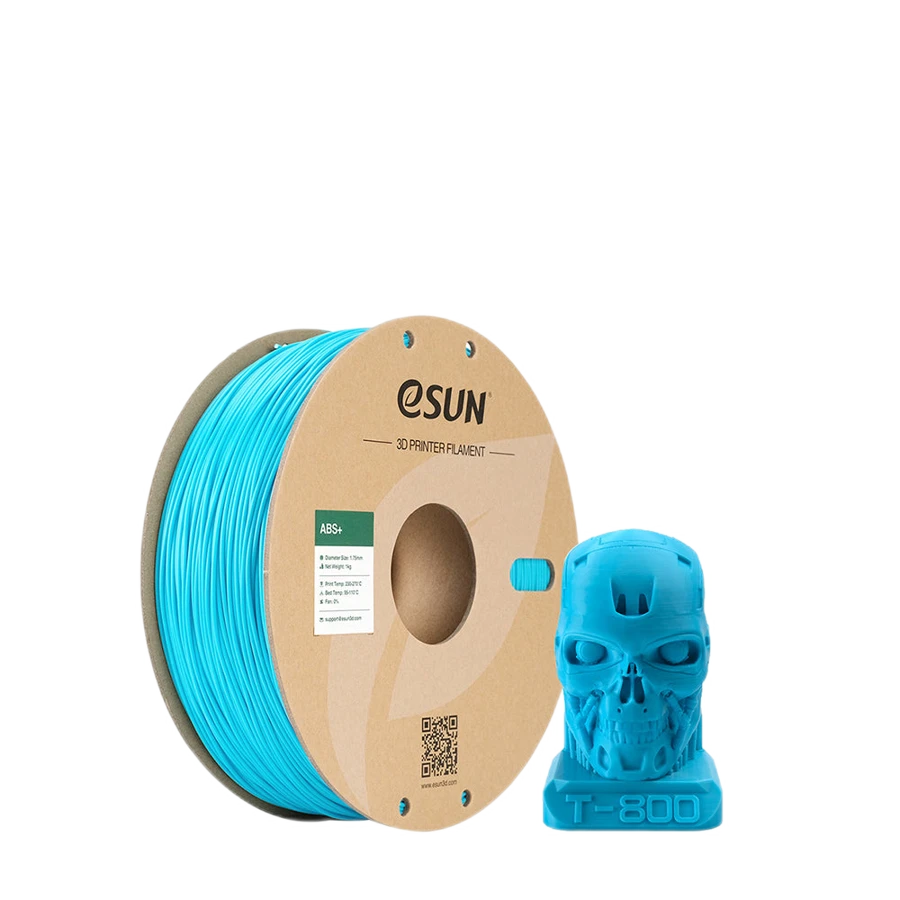
eSUN ABS+
Prusament ASA
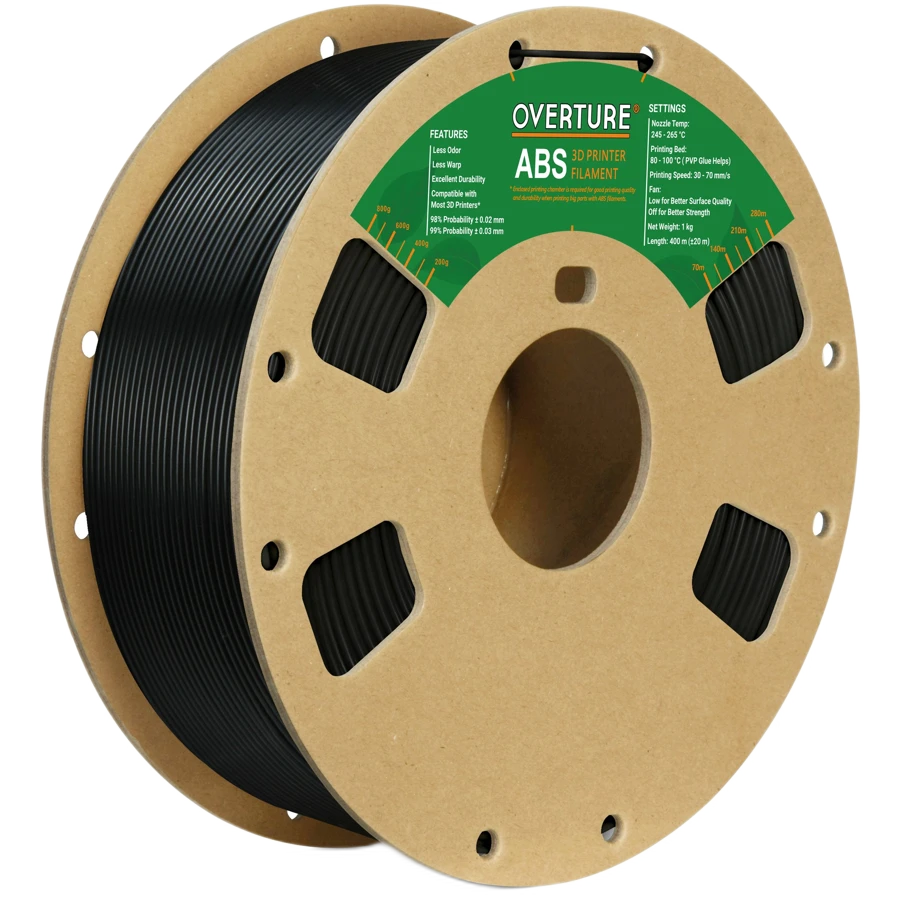
Overture ABS
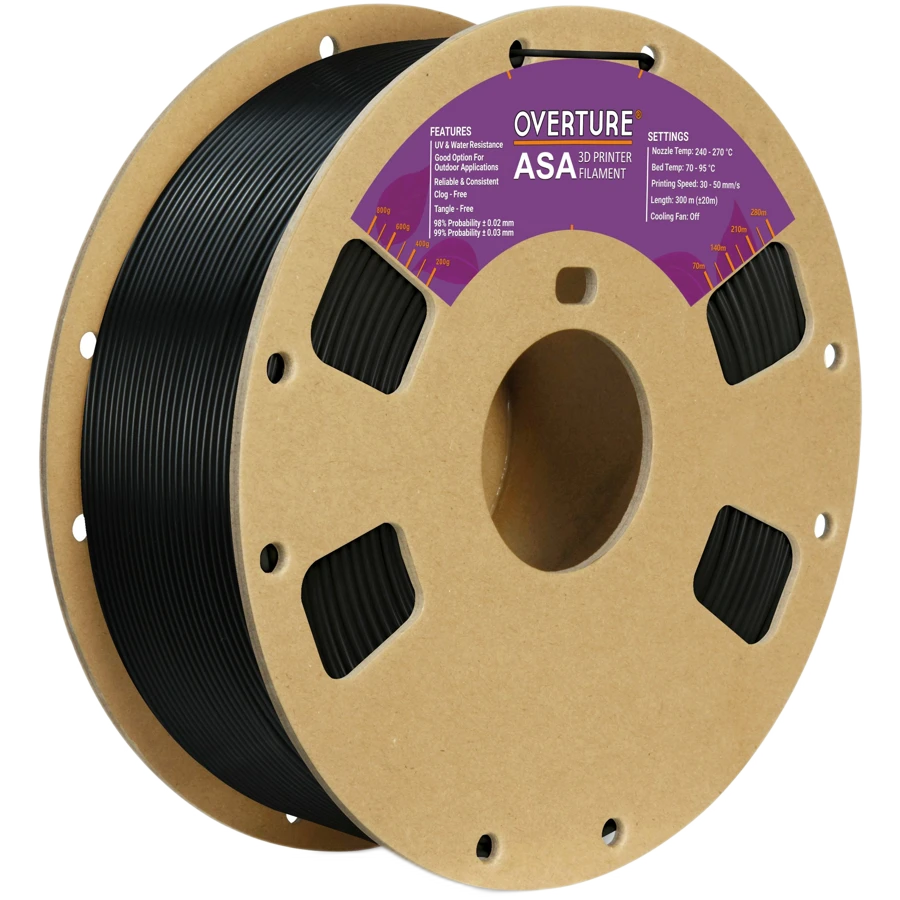
OVERTURE ASA