
Overture TPU 95A review: useful flexibility after the feed-path check
At a glance
A candidate for flexible model parts, with tuning and feed consistency to evaluate before a long print.
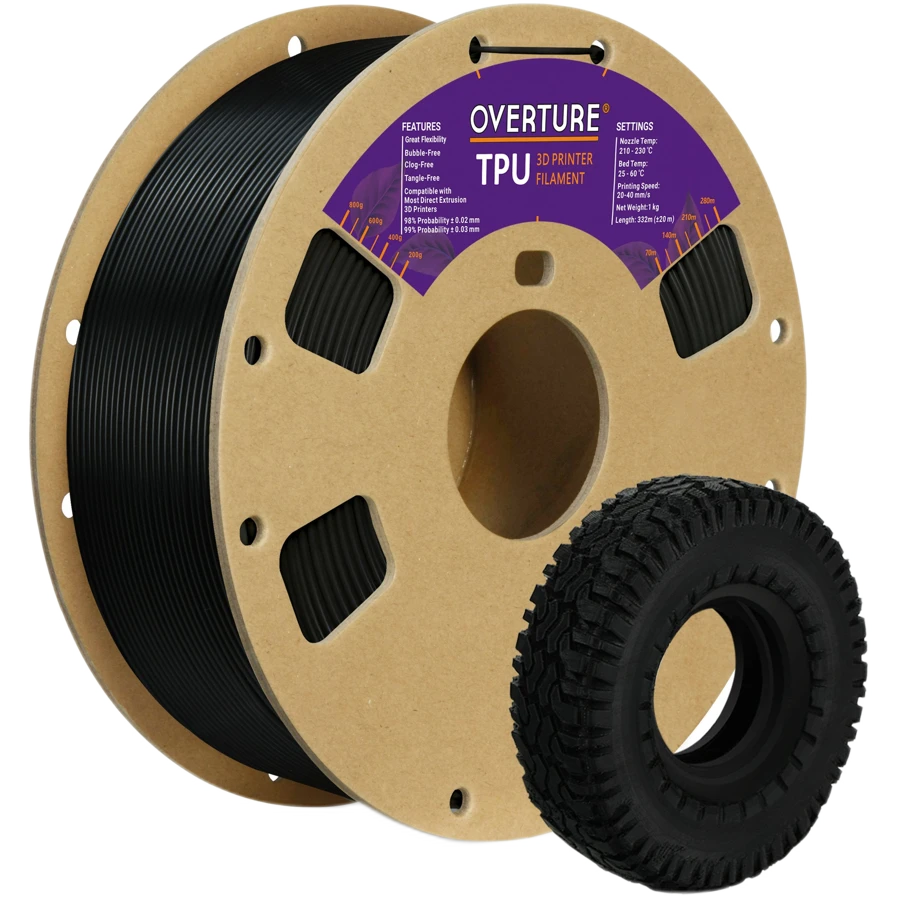
The setup
- Standard Overture TPU 95A, not HS TPU or Upgrade TPU
- Black 1 kg selected offer
- Use an appropriate external feed route
Why consider it
- Encouraging results for model tires and small flexible parts.
- Clean output is reported once the setup works.
What to weigh up
- Profile and feed-path tuning may be necessary.
- Jams and inconsistent surface sheen appear in contrary feedback.
Overture TPU 95A is a candidate for model tires and other small flexible parts when you are prepared to establish a separate printing routine. The useful question is whether your printer can feed it consistently and whether the finished part bends the way you need.
Flexible is not the same as stretchy
The black-spool feedback includes successful model tires and thin flexible pieces. It also distinguishes pliability from rubber-band-like stretch. A Shore hardness label alone cannot tell you how a thick wall or a heavily filled part will behave.
What you need
A flexible model tire
What to check first: Try the actual wall and infill arrangement; judge compression and fit together.
A highly stretchable band
What to check first: Do not infer the required extension from the TPU or 95A label. Test the geometry before buying for that task.
A neat visible outer surface
What to check first: Inspect a sample: the black feedback includes both matte and shiny descriptions.
Expect a profile decision, not just a spool change
Some black-spool accounts describe good results after adjusting their settings; another describes straightforward use on a Bambu A1. These experiences support a trial on your printer, not a promise that the same preset will work everywhere.
Keep the spool identity attached to the settings
Overture’s current TPU page excludes AMS and AMS lite compatibility. Plan an appropriate external feed route. The same page links newer TPU documentation and contains differing speed guidance, so do not apply its highest speed figure to an older standard-TPU spool without confirming the revision.
Drying is also part of the customer feedback. Follow the instructions for the actual supplied material and a suitable dryer; a review describing a good result does not establish a universal drying recipe.
Pros & Cons Analysis
Based on supplied customer reviews and verified product documentation
Pros
- Useful compliance for model parts. Black-spool accounts describe tires that retain their shape and flexible thin prints. That supports trying it for similar small parts, while leaving geometry and long-term durability to be established for the actual design.
- Successful setups can produce neat flexible prints. Smooth feeding and clean layers appear alongside tuning accounts. Use an initial sample to establish your own working profile rather than treating a particular printer name as a guarantee.
Cons
- Feeding is a meaningful part of the purchase. A P1S account reports jams and an apparent oversized splice, while other setups run smoothly. Inspect physical interruptions; a temperature change cannot correct an oversized section.
- Finish is not settled by the black label. Both matte and shiny impressions appear. If the surface is critical, buy a trial spool instead of assuming a rubber-like appearance.
Start with the flexible part you actually need
Choose standard Overture TPU 95A for a trial of flexible model parts when you can use an appropriate feed route and tune the result. Skip the bulk order until the actual geometry gives you the flexibility, surface and uninterrupted feeding you need.
Before buying several rolls
- Try the actual wall thickness and infill.
- Verify the external feed route and uninterrupted extrusion.
- Check the surface sheen under the intended lighting.
Frequently Asked Questions
Is 95A as stretchy as a rubber band?
Not necessarily. The feedback distinguishes flexible parts from highly stretchable ones. Wall thickness and infill also change the result.
Can I use the newest Overture TPU profile on an older roll?
Confirm the formulation first. Standard TPU, HS TPU and Upgrade TPU are separate listing choices, and current documentation includes newer TPU versions.
Technical Specifications
| Product type | Flexible filament |
|---|---|
| Formulation | Overture standard TPU 95A; black |
| Nominal Shore hardness | Nominal 95A; part geometry also controls flexibility |
| Filament diameter | 1.75 mm |
| Reviewed package | 1 kg spool |
| Manufacturer nozzle guidance | Use the supplied standard-TPU guidance; newer TPU 2.0 settings are not verified as equivalent |
| Manufacturer bed guidance | Not verified for the selected offer |
| Feeding compatibility | Current manufacturer page excludes AMS and AMS lite; Standard TPU is distinct from HS TPU and Upgrade TPU; bright-color mismatched account excluded |
| Drying and storage | Dry according to the exact supplied formulation; current web guidance differs by revision |

eSUN TPU 95A
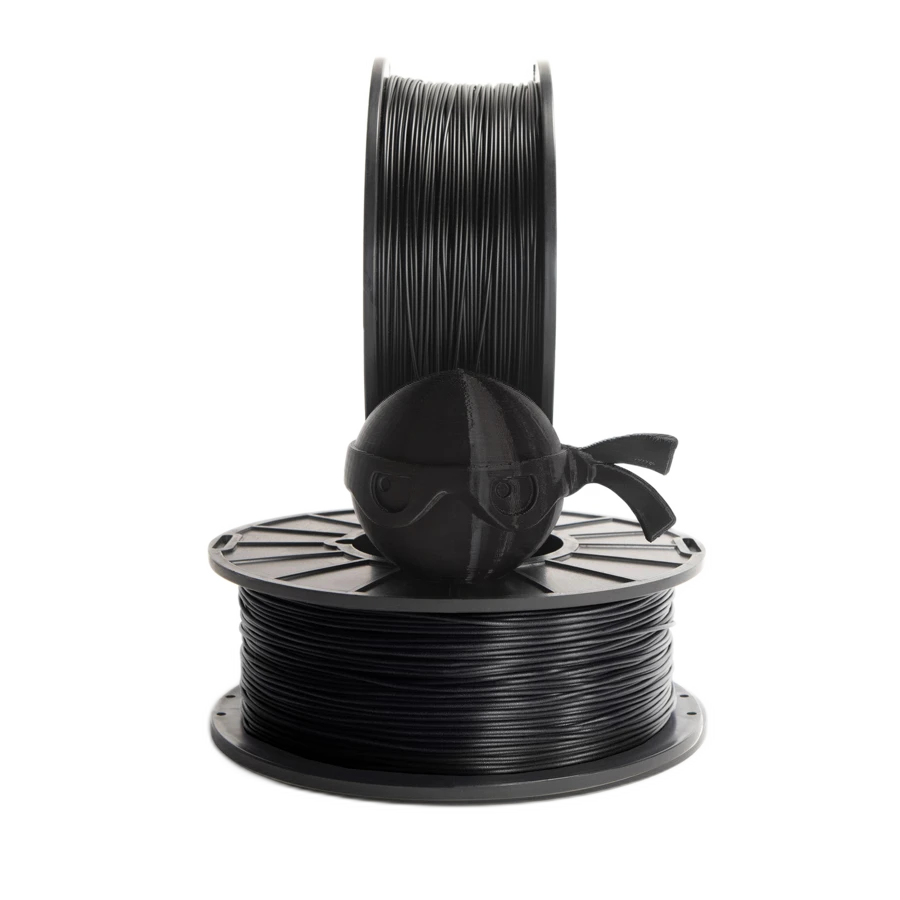
NinjaFlex 85A
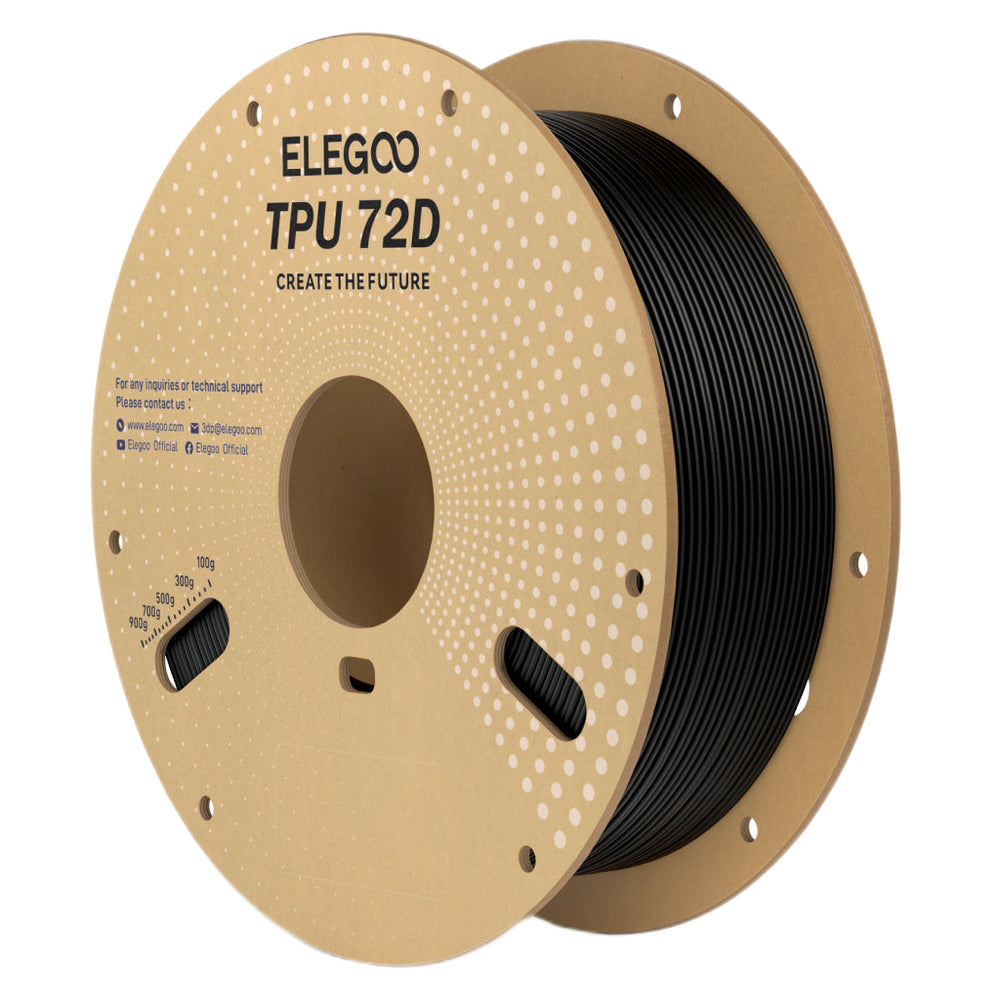
ELEGOO TPU 72D

PolyFlex TPU90