
ELEGOO TPU 72D review: firm flexibility with a practical AMS use case
At a glance
Consider this firmer TPU for shaped parts and compatible automatic feeders; do not buy it expecting the softness of ordinary 95A TPU.
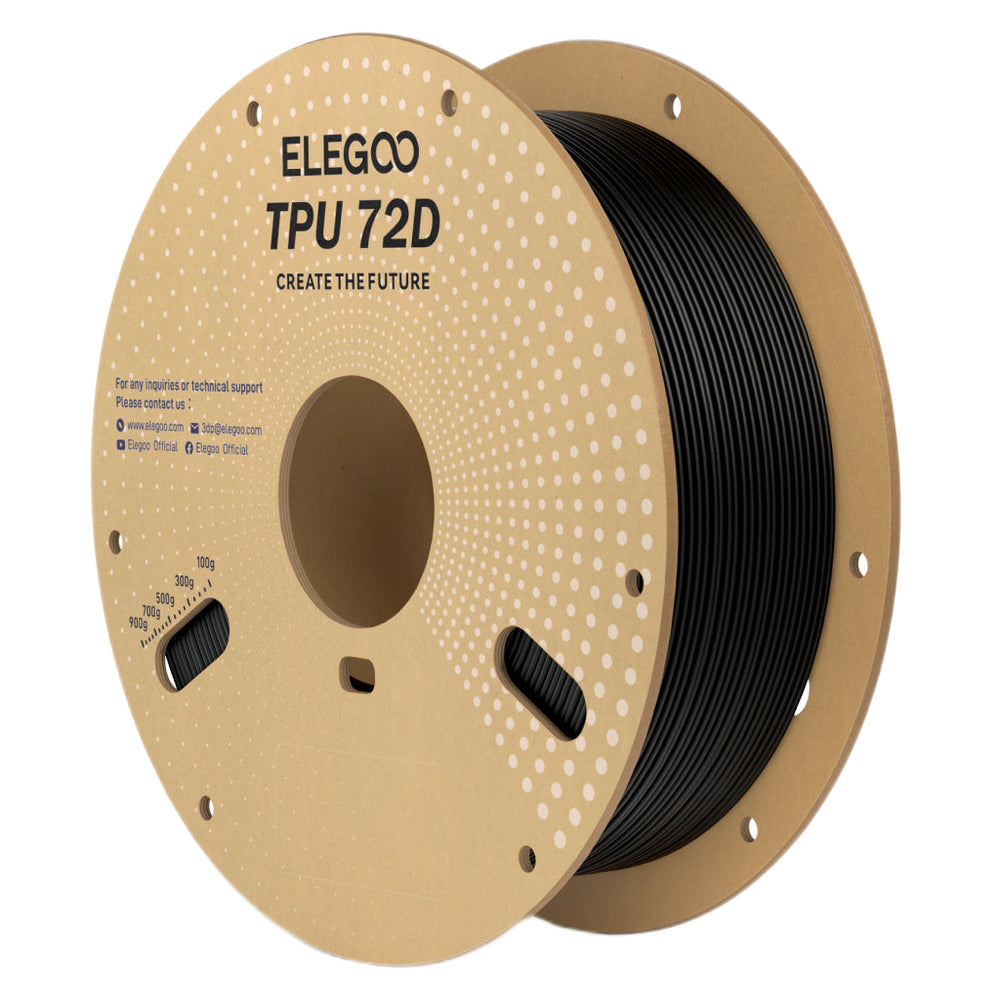
The setup
- Named TPU 72D formulation, distinct from standard and Rapid TPU 95A.
- Selected offer: black 1 kg, 1.75 mm.
- Automatic-feed suitability must be checked for the exact system.
Why consider it
- Successful use reported with specific Bambu AMS setups.
- Firm, shaped parts without the feel of very soft rubber.
What to weigh up
- Drying and profile adjustment can still be necessary.
- Too firm for projects that depend on easy compression.
The reason to choose ELEGOO TPU 72D is the combination of a firmer finished part and successful feeding through some automatic material systems. The first-page feedback includes P1S/AMS and P2S/AMS 2 Pro use. That is more useful than a generic promise that every TPU works in an AMS, but it still applies to the reported setups.
Decide on the feel before the feeder
Your project needs
A firm cover that can bend
How 72D fits: A plausible starting point. Test a thin section with the intended walls.
A soft, easily squeezed bumper
How 72D fits: Compare softer TPU formulations first.
An accurate spring or gasket
How 72D fits: Hardness alone does not establish recovery, compression behavior or sealing.
The finished feel is described as substantial and less rubbery than softer TPU. Reports of pleasing phone cases coexist with a warning not to expect a squashy case. Geometry explains part of that buying decision: a thin lip and a thick block made from the same filament will not feel alike.
Where the convenient workflow needs attention
- Confirm the complete feed route. Match your printer, feeder generation and material profile. An external-spool success does not validate an automatic feeder.
- Keep the roll conditioned. Clean initial results followed by defects after room exposure make storage part of the workflow.
- Check the profile temperature. The feedback includes a default profile that needed adjustment, alongside successful generic TPU-for-AMS profiles.
Does “rapid” mean I should start at maximum speed?
No. The available experiences range from deliberately slow printing to faster direct-drive use. They do not form a controlled speed comparison. Begin with a clean result and raise flow only while the actual nozzle, layer height and line width remain reliable.
One trial can answer three useful questions
This keeps a successful test cube from becoming a promise about a completely different part. Heat-service claims are a separate matter: the reviewed evidence does not establish that this TPU can replace PETG in heated desiccant containers.
Pros & Cons Analysis
Based on supplied customer reviews and verified product documentation
Pros
- A route to enclosed spool feeding. Matched feedback includes completed prints through P1S AMS and P2S AMS 2 Pro systems. This makes those configurations worth investigating, without extending compatibility to every feeder or equating direct-drive reports with AMS tests.
- Flexibility with a more substantial feel. Covers and shaped parts can benefit from the described combination of bend and firmness. The useful check is the intended wall geometry; these experiences do not certify impact protection or repeated-flex life.
Cons
- The material is not preparation-free. Ambient exposure and a default-profile temperature problem appear alongside clean first prints. Budget time to establish dry feedstock and a working profile instead of relying only on the rapid label.
- Harder TPU changes the design brief. A project designed around a soft rubber-like response may need thinner walls or a different material. Do not assume that a shared TPU name makes 72D interchangeable with 95A.
Choose the firmness, then confirm the route
Choose ELEGOO 72D when a firm flexible part is the goal and your feeder supports it. Its strongest practical appeal is avoiding the soft-filament feeding routine on a compatible setup.
I need soft cushioning instead
Compare a softer TPU before committing. Changing infill can alter the part, but it does not turn this formulation into a soft grade.
I want it mainly for AMS convenience
Verify the exact feeder first, then complete a short feed-and-print trial. Keep the working material profile with that configuration.
Frequently Asked Questions
Is 72D softer than 95A because the number is smaller?
No. A and D are different Shore scales; do not compare their numbers directly. The reported 72D parts feel substantially firmer than softer TPU.
Do the reviews prove maximum print speed?
No. The reported setups and speeds differ, and there is no controlled maximum-flow result for your nozzle and part.
Technical Specifications
| Product type | Flexible TPU filament |
|---|---|
| Formulation | ELEGOO TPU 72D |
| Nominal Shore hardness | 72D |
| Filament diameter | 1.75 mm |
| Reviewed package | Black, 1 kg spool |
| Manufacturer nozzle guidance | Not verified in the accessible primary specification; use the supplied TPU72D label |
| Manufacturer bed guidance | Not verified for this exact formulation; use supplied TPU72D guidance |
| Feeding compatibility | Manufacturer markets compatible multicolor feeding; first-page reports include P1S AMS and P2S AMS 2 Pro, not universal compatibility |
| Drying and storage | Exact drying temperature and duration not verified; follow the TPU72D label and spool limits, then store sealed and dry |

colorFabb varioShore TPU

PolyFlex TPU95
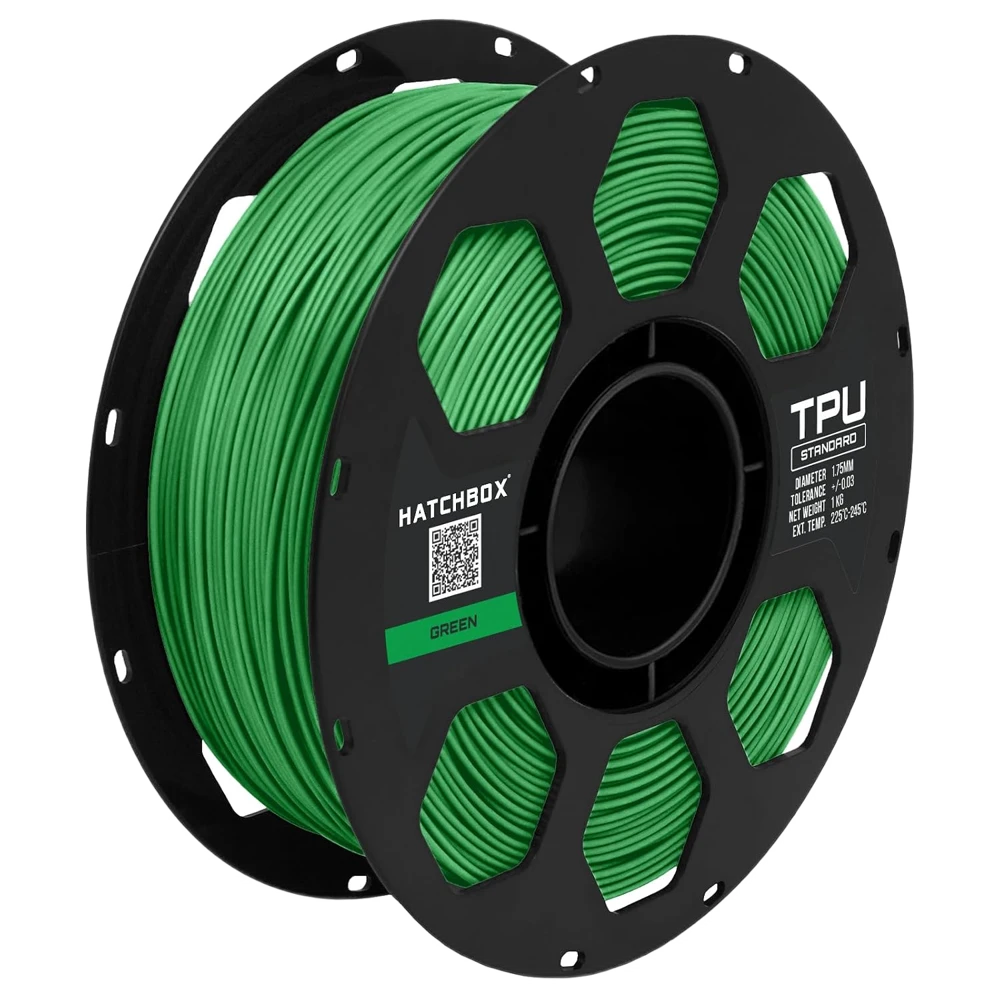
HATCHBOX TPU 95A

eSUN TPU 95A