
Polymaker PolyDryer review: a modular spool workflow that still needs maintenance
At a glance
Consider the standard PolyDryer for individually boxed active spools, with periodic seal and desiccant checks.
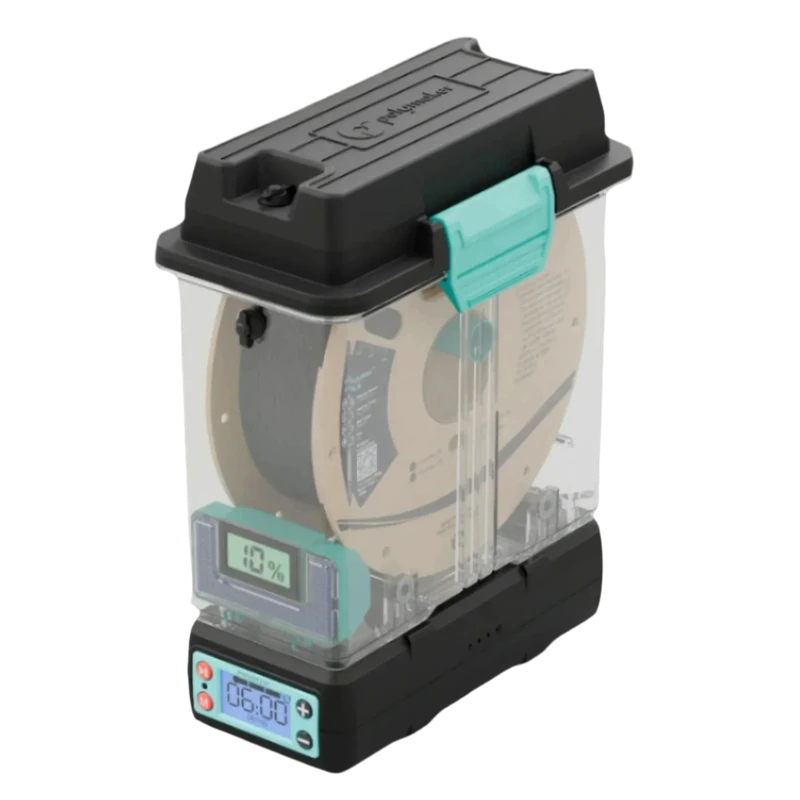
The setup
- Detachable standard storage box and shared drying dock.
- Three drying power levels.
- Box hygrometer and desiccant compartment.
- Separately available boxes; verify whether a selected offer includes the dock.
Why consider it
- Each active spool can stay in its own box between drying and printing.
- One dock can serve a growing collection of separately stored spools.
- Owners value enclosed print-through use without repeated spool transfers.
What to weigh up
- Long-storage accounts challenge a set-and-forget expectation.
- Stiff clips, loose plugs and display angle can complicate handling.
- Fan noise and power-level controls do not suit every workspace.
- One owner reports a spool-support problem in an additional box.
PolyDryer is most useful when a roll spends more time moving between storage and the printer than sharing a drying session with other rolls. Its removable box stays with the filament; the heater can serve the next box. That makes it a different purchase from a large dryer with several positions inside one chamber.
Build the system around the rolls you rotate
For a first purchase, select the dock-and-box package. A spare box adds another enclosed spool; a spare dock adds another drying position. Buying three boxes with one dock still means drying them in turn. This distinction matters when comparing the complete cost and space of a modular setup with an S4.
| Your routine | Where PolyDryer helps | Work that remains |
|---|---|---|
| Alternate materials between jobs | Move boxes without repeatedly transferring bare spools. | Manage the dock queue and identify each box. |
| Feed one enclosed roll | Keep the roll in its box; documented continuous mode also allows printing while drying. | Check the outlet route and the supplied tubing’s reach. |
| Leave a spare unused for months | Separate storage makes that roll easy to identify. | Inspect seals and desiccant before assuming it is ready. |
The box hardware brings its own small jobs: firm latches, removable bottom plugs and displays that can be awkward off-axis. Place the dock where those tasks are accessible. The shared-dock arrangement is less attractive if changing boxes requires moving the printer or reaching behind a shelf.
Run a dock queue without losing track of prepared spools
- Label each box with its filament and the next job that needs it.
- Schedule the next needed spool on the dock using the documented material program; additional boxes do not create simultaneous drying positions.
- After undocking, reinstall the airlocks tightly as the standard PolyDryer manual instructs.
- Record preparation and move the next compatible box into the queue. Before reusing a stored box, inspect closures and desiccant.
If several spools need preparation at the same time, address heating capacity rather than buying boxes alone. Compare that bottleneck with the shared chambers in the dryer shortlist. A “dried” label records an event, not a permanent readiness guarantee.
Storage is a routine, not a one-time promise
Good initial sealing and humidity rising during longer storage both appear in the customer evidence. The useful conclusion is to maintain the boxes, not to assign them a universal storage lifetime. Keep long-idle rolls in the same inspection routine as frequently used ones.
The heater uses power levels rather than a directly selected chamber temperature. Follow Polymaker’s program instructions; do not translate a level into a temperature inferred by touch. The storage guide covers the handoff after drying. This review concerns the standard box and dock, not the XL box.
Pros & Cons Analysis
Based on supplied customer reviews and verified product documentation
Pros
- Separate handling for different materials. Individual boxes let you organize active filaments separately and dry each on its own schedule. That flexibility is useful when materials need different preparation, while seals and desiccant still need attention.
- Expand storage without buying a heater for every roll. Additional boxes can share the same drying dock, making a growing spool collection easier to manage. More boxes increase storage capacity rather than simultaneous drying capacity; include their cost when comparing complete setups.
- Keep a spool enclosed while feeding the printer. The box and filament outlets can reduce transfers between drying, storage and printing. Check that the tubing route reaches your printer comfortably so the enclosure remains useful during everyday jobs.
Cons
- Long-term storage still needs maintenance. Humidity can rise during extended storage, so check the seals and desiccant before returning an idle spool to use. Treat the box as part of a maintained storage routine rather than a guarantee that filament stays ready indefinitely.
- Closures and displays can make handling awkward. Stiff latches, removable sealing plugs and narrow display viewing angles can become tiresome during frequent box changes. Position the dock where the controls are readable and the closures are easy to reach.
- Noise and controls may not suit every workspace. Fan whine or vibration can be distracting near a desk, although the sound is not equally intrusive in every setup. The power-level controls also require checking the documented material program rather than choosing a familiar temperature directly.
- Extra boxes need their own fit check. A loose central spool support can compromise feeding even when another box works well. Check support seating and roll movement in each added box before relying on it for a long print.
Keep the roll boxed. Plan the dock queue.
PolyDryer makes the strongest case when individually boxed, frequently used spools simplify your routine. Budget for the complete dock-and-box setup and keep seal checks in the plan.
Which job are you buying it for?
I rotate several boxed materials
Extra boxes let you move the heater between rolls without transferring bare spools. Inspect each box’s closures and spool support; extra boxes do not add simultaneous drying.
I need several rolls dried together
A shared multi-spool chamber addresses that workload more directly. Compare the S4’s batch arrangement before buying several boxes for one dock.
I leave spare rolls untouched for months
This is the weaker fit. Long storage still needs periodic seal and desiccant checks; a tight initial closure is not a maintenance-free promise. Build a storage routine you will keep.
Frequently Asked Questions
Why does the hygrometer stop at 10%?
Polymaker specifies 10% RH as the hygrometer’s minimum readout. It is a display floor, not proof that the polymer has reached a particular moisture content.
Is this the same as the PolyDryer XL?
No. This review covers the standard box, which Polymaker rates for a spool up to 1 kg. The larger XL box is a separate product and is not covered by this owner-evidence assessment.
Technical Specifications
| Product type | Standalone filament dryer |
|---|---|
| Reviewed configuration | Dryer dock plus standard storage box; excludes box-only and XL offers |
| Drying capacity | One standard box, rated for a spool up to 1 kg |
| Heat control | Three power levels; not a user-selected °C setpoint |
| Printing from the dryer | Supported, including continuous drying while printing |
| Humidity behavior | Box hygrometer; minimum displayed reading 10% RH |
| Fit and measurement basis | Standard box nominal 1 kg; exact dimensional envelope not verified here |
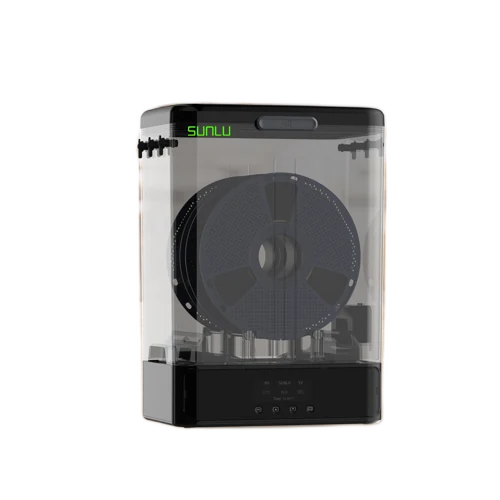
SUNLU SP2
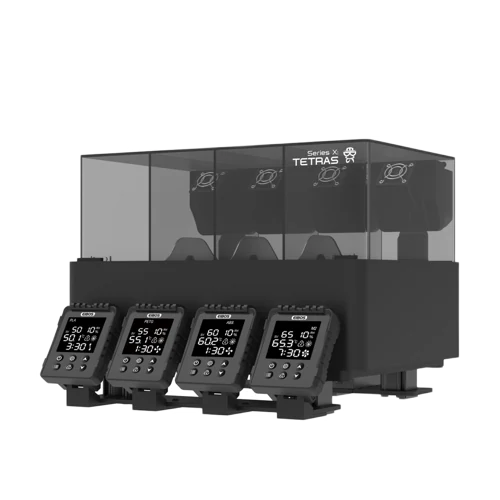
EIBOS Tetras
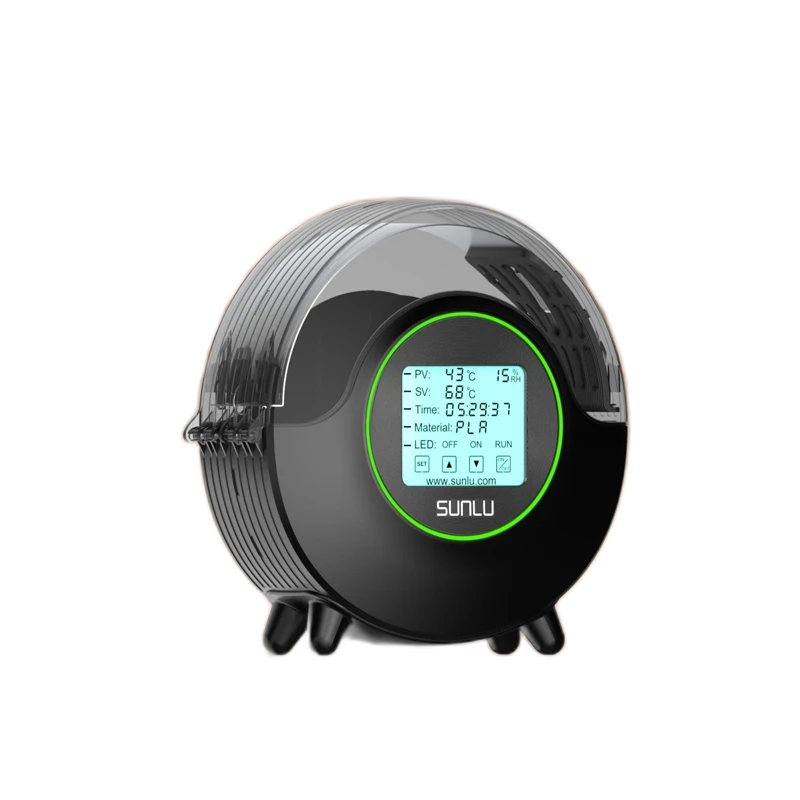
SUNLU FilaDryer S2

Creality SpacePi X4L