
SUNLU FilaDryer S4 review: four-spool convenience, with a desk-space tradeoff
At a glance
A practical candidate for several compatible spools in regular use, provided you have space for the box and its feed routes.
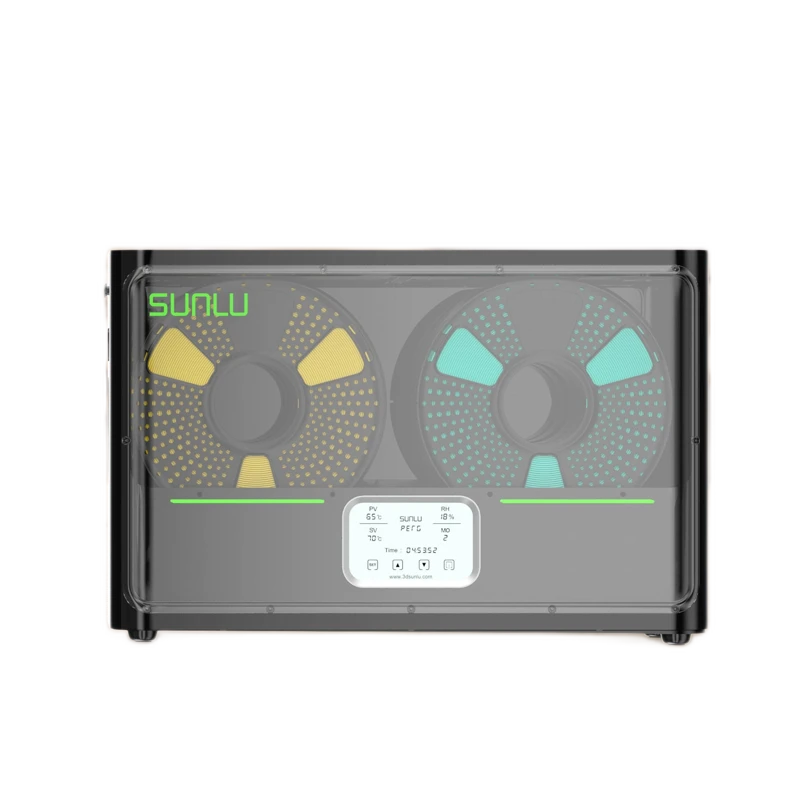
The setup
- Four-spool shared drying chamber.
- Eight filament outlets for supported print-through use.
- Timed drying and humidity-triggered operation.
Why consider it
- Several active rolls can stay in one drying and feeding setup.
- Owners value outlet flexibility when arranging multiple feed paths.
- Humidity-triggered operation can reduce repeated manual starts.
What to weigh up
- The box and its rear connections need a dedicated working area.
- Roller installation and instructions can make first setup frustrating.
- Individual owners report early faults and failures after longer use.
Four positions are useful when they eliminate a job you repeat: unloading one roll to prepare the next. The S4 can keep several active rolls together, but they share a chamber. Its capacity is most relevant when those rolls can use the same documented drying conditions.
Plan a full loading cycle on your bench
Successful multi-roll feeding supports this use, while setup feedback about the cable and rollers explains why nominal capacity is only part of the purchase. A large unit that must be moved for every changeover can give back some of the handling advantage.
What the humidity mode adds
SUNLU documents humidity-triggered operation, and customer feedback values keeping a working set loaded. Treat that as an operating mode, not certification that water has been removed from the center of every spool. The display troubleshooting guide explains what the reading can and cannot tell you.
Keep access to support in the decision. Longer-use feedback includes an updated E2 fault, alongside earlier fault reports in the detailed analysis. There is no defensible failure percentage here, but convenience alone is not enough to dismiss those reservations.
For an occasional single roll, an S2-sized setup may be sufficient. For rolls that should remain separately boxed between jobs, consider the PolyDryer arrangement. Those alternatives solve different handling problems; they are not smaller versions of the same four-roll workflow.
Pros & Cons Analysis
Based on supplied customer reviews and verified product documentation
Pros
- Prepare several compatible rolls together. Four-roll capacity reduces the need to rotate a queue through a single-spool dryer. It is most useful when the loaded materials can share a cycle; it does not provide separate temperature control for each roll.
- Flexible routing for several feeds. Multiple outlets and PTFE routing give a multi-feed station more placement options. The advantage is keeping rolls accessible through the job, provided the chosen paths remain free of drag.
- Automatic humidity management reduces manual restarts. The humidity-triggered mode can restart operation within its documented thresholds. It still needs suitable material settings and periodic checks; it is not a substitute for sealed long-term storage.
Cons
- The working footprint exceeds the enclosure. Rear power access, tubing and lid clearance all need space beyond the box itself. A four-roll layout loses much of its convenience if every change requires moving the dryer.
- Initial assembly can take patience. Roller installation and access to the matching instructions can complicate the first setup. Check the supplied parts and obtain the correct manual before planning the first loaded cycle.
- Capacity does not settle the durability question. Power interruptions, premature faults and objectionable odor remain possible drawbacks alongside successful operation. Their frequency and causes are not established, so check support and return arrangements rather than judging long-term value from the first cycle.
Four positions should save you work
Choose S4 for a recurring group of compatible rolls, with room to load and route them. Its strongest advantage is handling convenience; the customer sample does not establish superior reliability.
Does your normal workload fill the format?
Several compatible rolls are always active
Plan the complete station: lid access, the rear cable and every feed route. Shared capacity helps only when the loaded materials and spools can use the same cycle.
I usually prepare one occasional roll
The larger enclosure may add little to your routine. Start with the S2’s one-roll approach and expand only if the queue justifies it.
Frequently Asked Questions
Can I dry different filament types together in the S4?
Only when the documented drying requirements and spool temperature limits are compatible with one shared cycle. Four-spool capacity does not provide four independent temperature settings.
Technical Specifications
| Product type | Standalone filament dryer |
|---|---|
| Reviewed configuration | S4 / S4-FD; standard four-spool unit |
| Drying capacity | Up to four 1 kg spools |
| Heat control | Up to 70°C; shared chamber |
| Printing from the dryer | Supported; eight outlets |
| Humidity behavior | Selectable 30–50% RH start threshold; stops at 25% RH |
| Fit and measurement basis | 450 × 210 × 211 mm chamber, not a per-spool allowance |
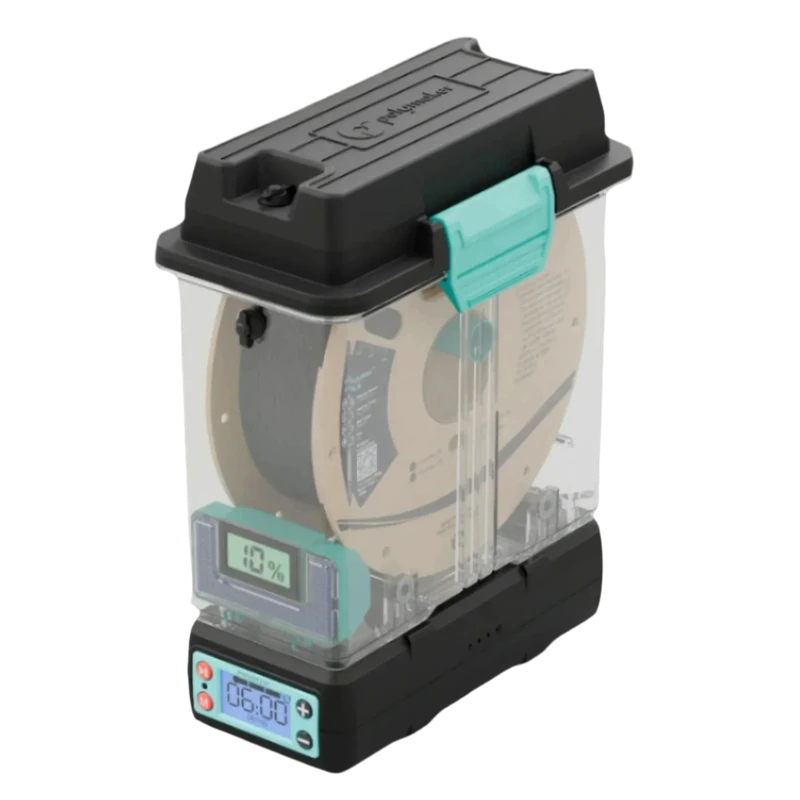
Polymaker PolyDryer
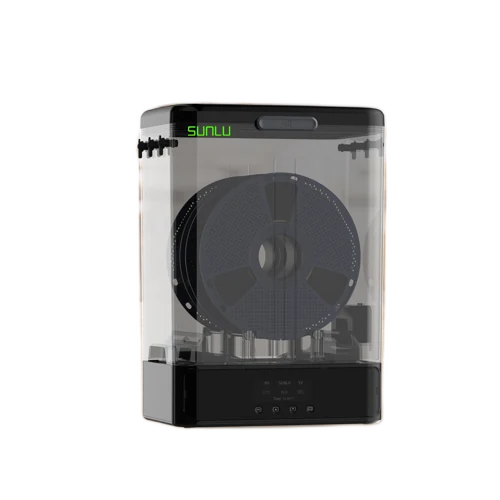
SUNLU SP2
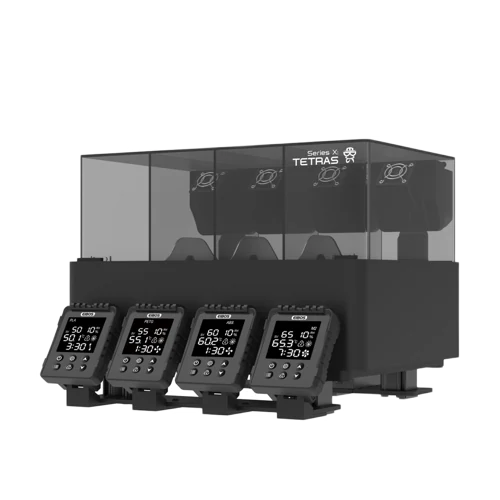
EIBOS Tetras

Creality Space Pi