
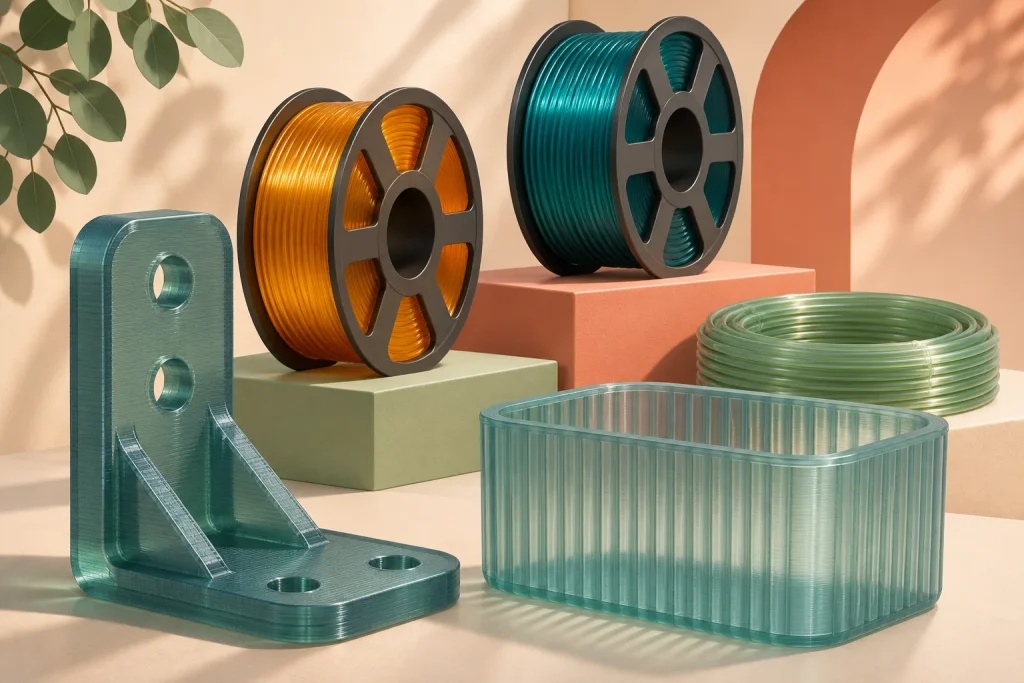
PETG choice is not just a strength question. The surface you want, the plate it releases from and the reel your feeder can turn all affect whether the purchase is useful. These candidates cover different routines without treating pooled ratings as a controlled material test.
Gloss, satin or workflow convenience?
Profile-led standard PETG
Prusament is worth considering with a matched profile and an appropriate release surface. Confirm the actual spool generation in an enclosed feeder.
Bambu PETG HF
Start here when the Bambu workflow is the attraction, but still dry and inspect the roll. Recognition does not confirm that the spool is mechanically sound.
Choose the appearance
Polymaker serves a conventional PETG finish; SUNLU PETG 2.0 black is interesting for its more subdued appearance. Do not assume older and newer formulations match.
Do not spend a whole roll discovering the release problem
A strong first layer is useful only if the finished part can be removed without damaging the surface. Match the plate’s material instructions before increasing adhesion. Test a representative base, let it cool as directed, and check release before printing a large flat object.
If the part will live outdoors, settle the material choice with PETG versus ASA for outdoor parts and then use the outdoor shortlist. For compatible surface options, see the build-plate shortlist.


