
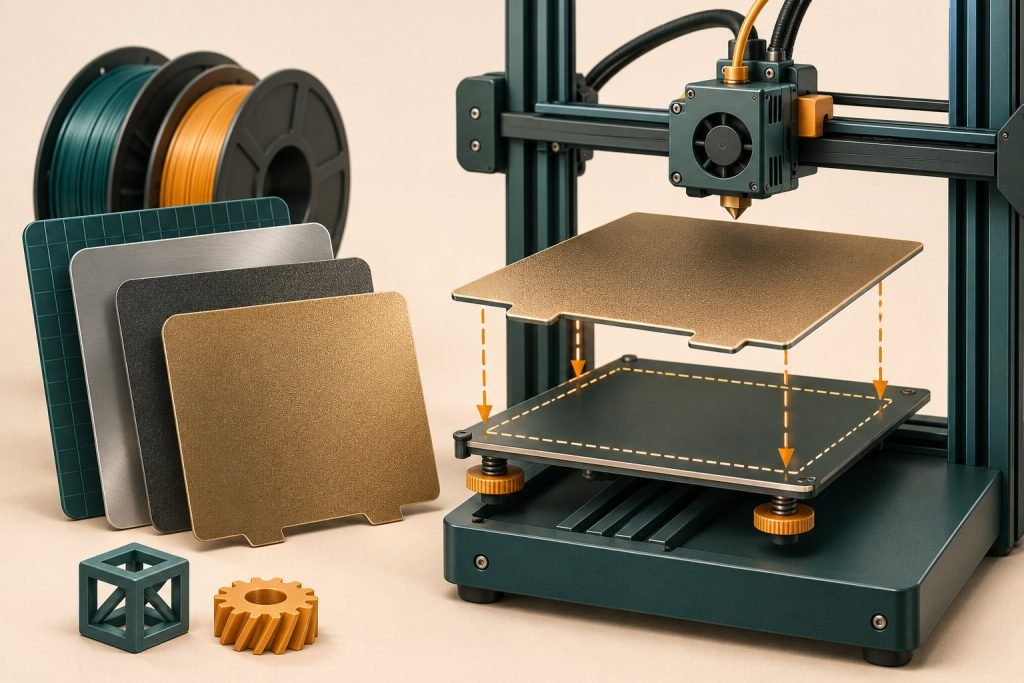
Matching width and depth is necessary but not sufficient. A replacement build plate must also fit the locating features, retention system and printer’s leveling or sensing method.
| Compatibility item | Confirm before purchase |
|---|---|
| Machine | Exact model and bed revision |
| Outline | Dimensions, tabs, notches and clearance |
| Construction | Thickness and intended retention system |
| Calibration | Required plate selection or first-layer procedure |
| Coating | Supported materials, preparation and release method |
Prusa’s satin-sheet documentation illustrates why a named sheet has its own properties and setup guidance. “Flexible steel” is not a universal compatibility standard.
The listing says it fits several printers
Compare the actual drawing and instructions with your model. Confirm the locating features and sensing compatibility instead of relying only on a broad size label.
Can I keep the old first-layer setting?
Follow the printer’s procedure for changing sheet type. Different thickness or surface behavior may require a different stored profile or calibration. Do not blindly reuse an adjustment from another surface.
Check the first small print
- Install the sheet as documented and confirm it sits correctly.
- Select or calibrate the appropriate plate setting.
- Prepare it for the chosen material.
- Print a small first-layer sample and check release.
Use the first-layer interpretation guide to read the result. A replacement is ready when it fits, calibrates and releases correctly—not just when it sticks to the bed.


