
Bambu Lab PETG Basic Review: The Spool Workflow Is the Main Draw
At a glance
A convenient PETG starting point for a matching Bambu workflow, with reusable-spool benefits and remaining preparation and visibility tradeoffs.
The material & format
- Selected black 1 kg PETG with reusable spool.
- RFID material recognition in a matching AMS workflow.
- Current upgraded Basic documentation; separate from HF.
Why consider it
- AMS recognition can simplify setup.
- The reusable spool supports later refills.
- Successful results span several Bambu printers.
What to weigh up
- The remaining filament is awkward to see.
- Stringing and tuning can remain.
- Black is not a guaranteed matte appearance.
If you already use a Bambu printer and want to try PETG, the most persuasive reason to choose PETG Basic is a simpler material workflow. The spool can be recognized by the AMS, the matching profile is readily available, and the reusable reel can stay in service after the first kilogram.
That convenience does not remove PETG preparation. Stringing, profile adjustments and an awkward view of the remaining filament still matter. The current manufacturer documentation describes an upgraded PETG Basic formula; do not substitute settings or durability conclusions from an older roll with the same name.
What the spool adds to the purchase
Identification
Automatic material recognition can reduce manual setup in a matching AMS workflow. Successful recognition and printing are reported with P2S and AMS 2 Pro; other successful prints include A1 mini and X1C use.
Reuse
The spool is designed for compatible refills. Keep it after the material runs out, but compare the next refill’s delivered cost before assuming the saving is worthwhile.
Those are practical benefits for someone moving from PLA to PETG in the same ecosystem. If you feed material externally or use another printer, RFID convenience carries less weight. The filament still needs an appropriate profile; the tag is not an independent test of your model or settings.
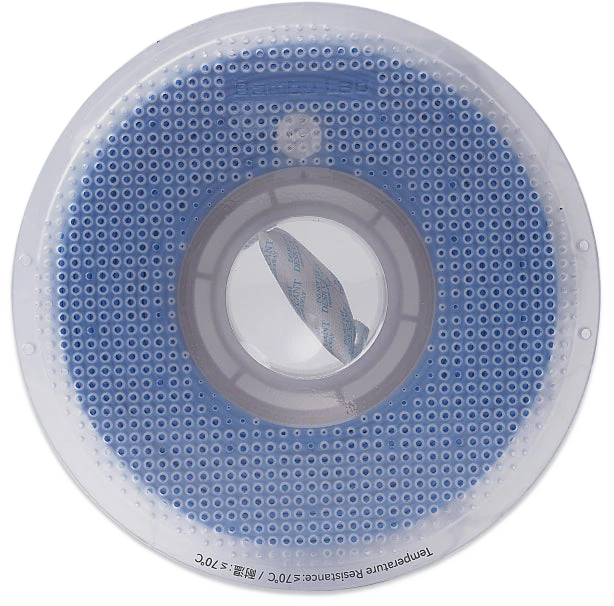
One physical detail works against the convenient setup: the reel’s small viewing holes can make the remaining amount difficult to judge. There is a quantity marking, but seeing the wound material beside it is not as straightforward as a large open window. Allow time to check material availability before a long job instead of judging it from a quick sideways glance.
The first print should answer three questions
A small part with the same corners, holes and travel moves as the intended object is more useful here than an unrelated decorative print. Keep the matched profile as a starting point, then judge the actual finish and adhesion rather than assuming automatic recognition settles everything.
Use the current Basic settings, not an HF shortcut
The current PETG Basic V3.0 technical sheet lists a 230–260°C nozzle range, a 65–75°C bed range and printing below 200 mm/s. These are reference settings, not a speed guarantee for every geometry. PETG HF is a separate formulation.
For preparation, that sheet specifies 65°C for eight hours in a forced-air drying oven or in AMS 2 Pro/AMS HT, with sealed storage using desiccant below 20% RH. Follow the instructions for the actual equipment and spool. The sheet rates its ABS reel for 70°C, so do not transfer a hotter drying recipe from another filament.
The product page still recommends drying before use despite its reduced-moisture-sensitivity marketing. A convenient profile cannot undo poor storage. If you are choosing a feeder as well, the AMS compatibility guide separates material support, reel fit and preparation.
Where the recommendation stops
Bambu markets the upgraded material for practical and outdoor objects. Its laboratory figures are useful material references, but they do not establish the safe load of a particular hook or the service life of a garden part. The available customer detail mainly supports printing convenience and spool handling; it does not settle long-term outdoor performance.
For a first PETG roll on compatible Bambu equipment, the with-spool package is a reasonable route to try. For a repeat purchase, the refill installation sequence matters as much as the price difference: keep the winding restrained until the refill is properly seated and locked.
Pros & Cons Analysis
Based on supplied customer reviews and verified product documentation
Pros
- Less manual material selection. A matched AMS workflow can identify the material and support a straightforward first slice. Successful printing does not make the profile a guarantee for every plate or object.
- Keep the reel for the next compatible roll. The reusable format gives a practical reason to start with a complete spool. Check the refill fit and delivered cost; reuse alone does not prove a particular saving.
- A credible starting point for a first PETG trial. A1 mini, X1C and P2S experiences support trying a small representative print. The limited detail does not establish a comparative reliability ranking.
Cons
- Small viewing holes limit a quick stock check. Quantity markings help only when the winding is visible beside them. Inspect the reel carefully before assigning a long print rather than relying on a glance.
- Automatic recognition does not eliminate finishing work. Wisps appear even alongside successful adhesion and attractive results, and a novice setup needed adjustment. Leave room for a small calibration print and cleanup.
- Surface sheen can change the buying decision. The black finish has been described as glossy or between matte and glossy. Confirm the look on a sample when matching existing objects matters.
Is the integrated spool workflow useful to you?
PETG Basic is most convincing as an accessible first PETG roll for a compatible Bambu setup. The choice is less distinctive when RFID and spool reuse offer little value; compare the actual package with a material you already know.
I am moving from PLA on a Bambu printer
Start with a complete spool, prepare it as instructed and run a small relevant model. Expect the matched profile to simplify setup, while still checking wisps, adhesion and plate release.
I already have the reusable reel
Compare the matching refill offer and install it with the winding controlled. Reuse is useful only if the package fits and the actual saving makes sense.
I need proven outdoor or load-bearing performance
This evidence does not establish a service-life or safe-load rating for your part. Resolve that requirement before selecting material on printing convenience alone.
Frequently Asked Questions
Does RFID mean I can skip drying PETG Basic?
No. Recognition supplies material information; it does not remove moisture. Follow the current material and equipment drying instructions.
Should I buy the refill for my first roll?
Only if you already have a compatible reusable spool. A refill is not a complete reel and must be installed correctly before feeding.
Can I use PETG HF settings for Basic?
Use the matching formulation profile. Basic and HF are separate products, and the current Basic documentation also differs from older-generation guidance.
Technical Specifications
| Product type | PETG filament |
|---|---|
| Reviewed formulation | Current upgraded Bambu PETG Basic documentation; not PETG HF or PETG-CF; supplied revision to confirm |
| Nominal filament diameter | 1.75 mm ±0.03 mm (manufacturer product page) |
| Manufacturer diameter tolerance | ±0.03 mm — 1.75 mm ±0.03 mm (manufacturer product page) |
| Package format | Selected black 1 kg with reusable spool; TDS reel 200 mm diameter ×67 mm height |
| Nozzle guidance | TDS V3.0: 230–260°C; bed 65–75°C; speed below200 mm/s; supported nozzle sizes0.2/0.4/0.6/0.8 mm |
| Material care | 65°C8h forced-air drying or AMS2Pro/HT; sealed with desiccant below20%RH; ABS reel rated70°C |
| Variant / handling limit | Current upgraded formula separate from historical Basic; black/gray foreign-market feedback; exact supplied revision to confirm |
Bambu Lab PETG Translucent

eSUN PETG Basic
eSUN PETG

SUNLU PETG 2.0