
SUNLU TPU 90A review: soft model tires, shiny surfaces and manual feeding
At a glance
A useful candidate for soft model parts when manual feeding is acceptable; the glossy black appearance may not match a matte-rubber goal.

The setup
- Selected black 1 kg TPU 90A offer.
- Current manufacturer 90A guidance: 220–240°C, ≤40 mm/s.
- Manual-feed success does not establish AMS support.
Why consider it
- Good compressibility and detail in a model-tire application.
- Successful manual feeding after suitable setup.
What to weigh up
- The black surface can be shinier than expected.
- A surface-powder report has no verified explanation.
- Automated feeder compatibility is not demonstrated.
A small tire is a more useful example than a hardness claim
The detailed black-90A experience describes a model tractor tire with pleasing compressibility, visible detail and supports that removed easily. It fed through the X1C manual route without reported plugging. That is a specific model-making result, not evidence for real-vehicle tires or a certified elastomer application.
Decide whether the shine is acceptable
The same successful model was shinier than desired. If a matte-rubber look is important, print a small visible section before a full set. Do not assume a proposed paint treatment has already been tested for adhesion or flexibility.
Decision
Soft model detail
What the evidence suggests: Worth a trial using the intended shape and wall construction.
Automated feeder use
What the evidence suggests: Not established by a successful manual route.
Unexpected surface powder
What the evidence suggests: A P1S account reports it without a print problem; composition and long-term effect remain unknown.
Pros & Cons Analysis
Based on supplied customer reviews and verified product documentation
Pros
- The softness has an identified practical use. The model-tire result combines a pleasing feel with fine detail and easy support removal. Evaluate your own construction before assuming every wall or infill pattern will behave the same way.
- Manual routing has a concrete success case. The X1C result and other tuned-print feedback show that the material can work well. They do not remove the need to establish a suitable extruder and route first.
Cons
- Finish can be the limiting factor for scale realism. A shiny tire may not match a matte display model even when printing succeeds. Check appearance before committing to several matching pieces.
- Unidentified residue should remain unidentified. The P1S report describes white powder without a print-quality loss. There is no basis here to label it harmless, identify its chemistry or guarantee the same outcome on another system.
- Manual success is not AMS approval. The detailed account did not test AMS use. Check the exact feeder’s material support rather than treating speculation as compatibility evidence.
A targeted trial for soft model-making parts
Try SUNLU TPU 90A when model-part flexibility matters and a supported manual route suits the workflow. Check gloss as carefully as dimensional fit.
I need a matte black tire finish
Print a small section first. The useful customer example found the surface too shiny for its intended appearance.
Frequently Asked Questions
Was the successful model tire printed through AMS?
No. The detailed account identifies the manual feed tube; AMS suitability was speculation rather than a test.
Does the white powder prove the spool is defective?
The account reports powder but no print-quality loss. Its identity and cause are not established, so inspect an unexpected shipment and consult support rather than assuming either outcome.
Technical Specifications
| Product type | Flexible TPU filament |
|---|---|
| Formulation | SUNLU TPU 90A; not 95A |
| Nominal Shore hardness | Marketed as 90A; current web table lists inconsistent hardness data, not independently verified |
| Filament diameter | 1.75 mm |
| Reviewed package | Black 1 kg |
| Manufacturer nozzle guidance | 220–240°C current 90A page; older document differs |
| Manufacturer bed guidance | 30–60°C current 90A page |
| Feeding compatibility | Verify exact feeder; detailed success used manual X1C route |
| Drying and storage | TDS lists 60–70°C without a verified duration here; confirm roll instructions |

ELEGOO TPU 95A
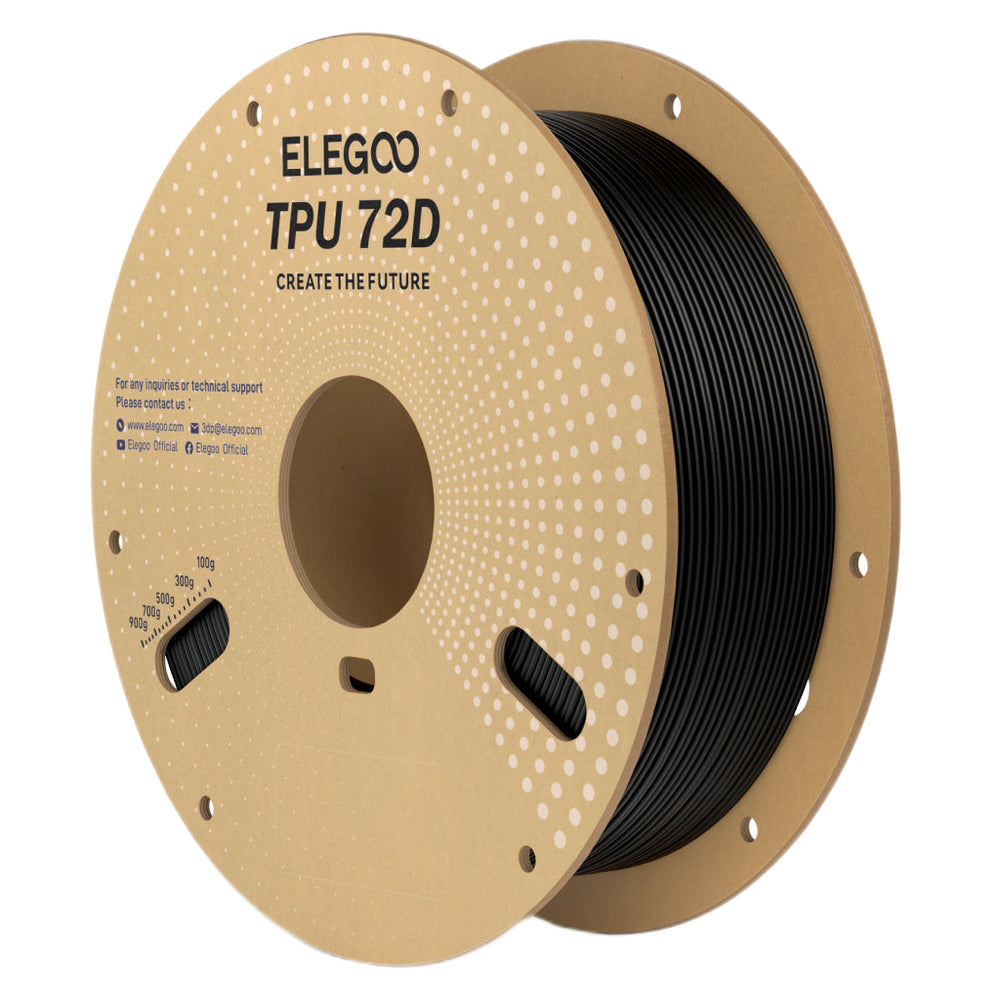
ELEGOO TPU 72D
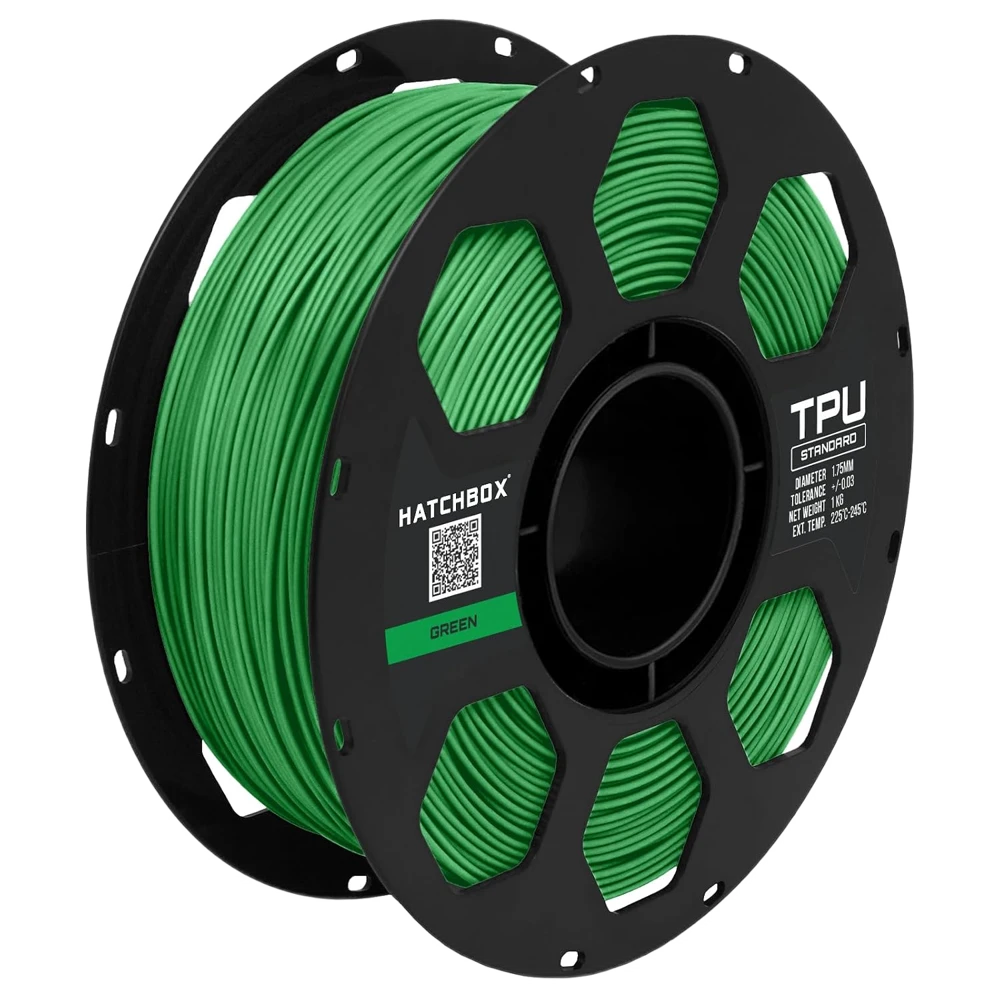
HATCHBOX TPU 95A

PolyFlex TPU95-HF