
PolyFlex TPU95-HF review: detail first, high-flow potential second
At a glance
A convincing clear-HF small-part experience supports careful setup trials; it does not demonstrate a universal high-speed result.

The setup
- PolyFlex TPU95-HF high-flow formulation, nominal Shore 95A.
- Exact offer and clear-HF evidence remain distinct in the source ledger.
Why consider it
- Clear-HF feedback demonstrates fine small-part detail.
- Successful feeding on a specifically modified Bowden setup.
What to weigh up
- The detailed customer result is not a maximum-flow test.
- Batching and color-specific finish need their own trials.
TPU95-HF is the PolyFlex formulation designed for higher flow. The most detailed matching first-page experience, however, earns its recommendation through clean small-part detail at modest speed. That is a useful distinction: the formulation’s intended advantage and the customer’s demonstrated result are not the same measurement.
The strongest evidence is a carefully configured feed path
The clear-HF account describes successful Bowden feeding with upgraded tubing and a different nozzle. Small embossed text and single-part prints came out well in that setup. It would be misleading to present that as an untouched stock-printer test or as proof that every Bowden path handles flexible filament equally well.
What is supported
Detailed small parts on the described modified setup.
What remains unproven: Identical results on a stock or different feed path.
Cleaner results when printing individual parts in that experience.
What remains unproven: A universal batching rule for all geometries.
A manufacturer high-flow formulation.
What remains unproven: The maximum usable flow on your nozzle and layer geometry.
Try a single part before filling the plate
The clear-HF feedback draws a strong distinction between individual parts and batches. Use that as a practical experiment: compare one representative part with a small batch, keeping the profile and geometry fixed. If travel between objects affects the finish, the larger plate may save less time than expected after cleanup.
Can I use the clear-spool transparency claims for black HF?
No. The detailed record concerns clear HF. It does not establish black-part appearance, and its explanation of molecular structure was not verified. Assess the selected color’s finish directly.
Define what “faster” would improve
- For a one-off flexible detail, prioritize a clean surface and predictable feeding.
- For repeat production, compare complete cycle time including failed starts and cleanup.
- For a functional part, verify fit and the intended deformation before increasing throughput.
Manufacturer guidance allows faster flexible printing on suitable hardware. The captured customer account used a modest speed, so it is not a benchmark against standard TPU95. That leaves a sensible buying position: HF is a candidate for a controlled throughput trial, with detail already demonstrated only on a bounded setup.
Pros & Cons Analysis
Based on supplied customer reviews and verified product documentation
Pros
- Flexible material can retain visible fine features. The clear-HF experience includes legible embossed detail and crisp individual parts. This supports a small trial for intricate flexible geometry without claiming dimensional certification.
- A non-direct route can work under the right conditions. The successful account specifies upgraded tubing and a different nozzle. It is evidence for that configuration, not permission to ignore a printer’s flexible-material limitations.
Cons
- The high-flow name is not a measured speed advantage here. The strongest account runs at modest speed. Evaluate actual throughput on the intended hardware before paying for a production benefit that has not yet been demonstrated.
- A good single part may not predict a full plate. The same experience reports a marked quality difference when batching. Compare the intended production layout, and keep the clear-variant appearance separate from other colors.
Prove the detail, then measure the throughput
Try TPU95-HF when fine flexible parts or higher-flow potential justify a controlled setup experiment. Start with one representative part, then test a small batch.
My only goal is faster production
Measure completed usable parts per session, including cleanup. The first-page evidence does not supply a speed multiplier over standard TPU95.
I have a stock Bowden printer
Check its material guidance and feed path. The favorable HF account used modified tubing and a different nozzle.
Frequently Asked Questions
Does this review show that HF prints faster than standard TPU95?
No. The detailed matched customer result used modest speed and was not a controlled comparison.
Can the clear-HF review prove white-HF appearance or finish?
No. Color-specific optical and appearance claims are not transferred between variants.
Technical Specifications
| Product type | Flexible TPU filament |
|---|---|
| Formulation | Polymaker PolyFlex TPU95-HF; not standard TPU95 |
| Nominal Shore hardness | 95A |
| Filament diameter | 1.75 mm |
| Reviewed package | White 1 kg selected offer; substantive qualified account is clear 1 kg HF |
| Manufacturer nozzle guidance | 200–220°C |
| Manufacturer bed guidance | 25–50°C |
| Feeding compatibility | Suitable direct drive permits higher throughput; modified Bowden success is setup-specific |
| Drying and storage | Manufacturer detailed guidance: 70°C for 8h if moisture absorbed; check supplied roll |
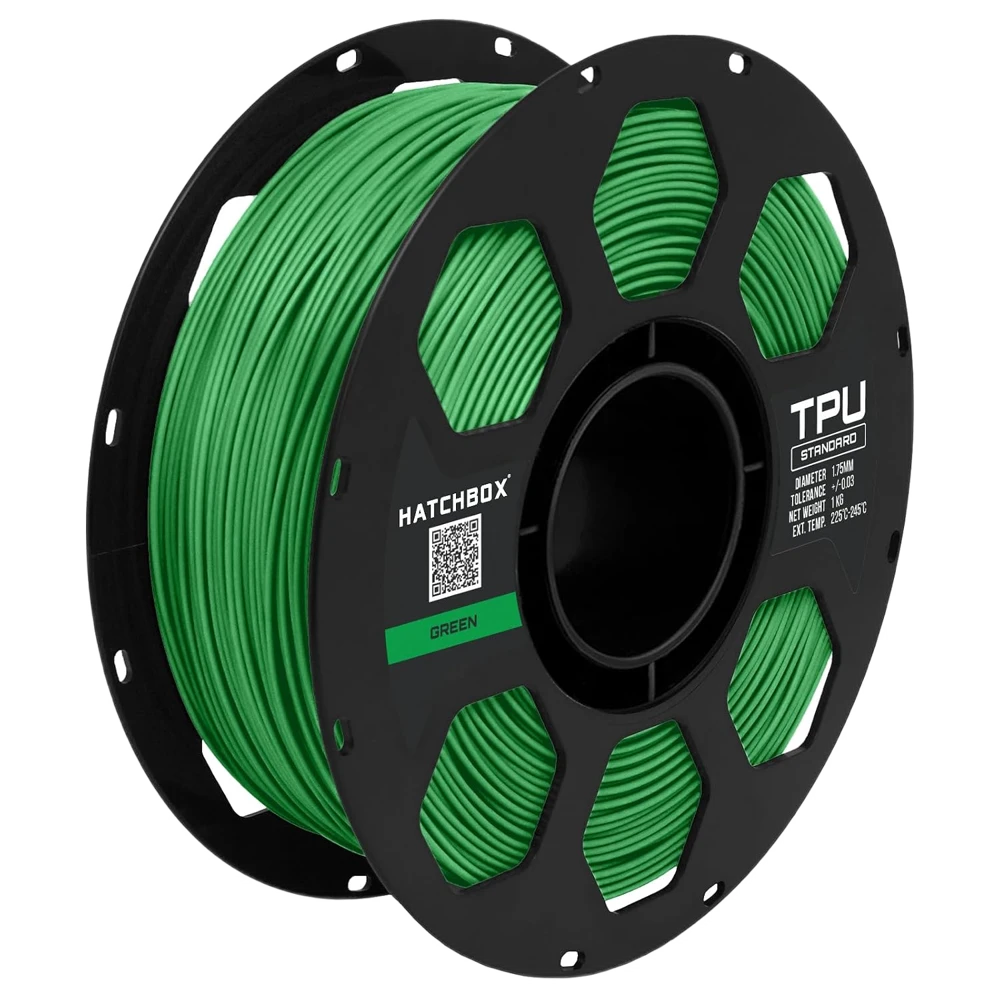
HATCHBOX TPU 95A
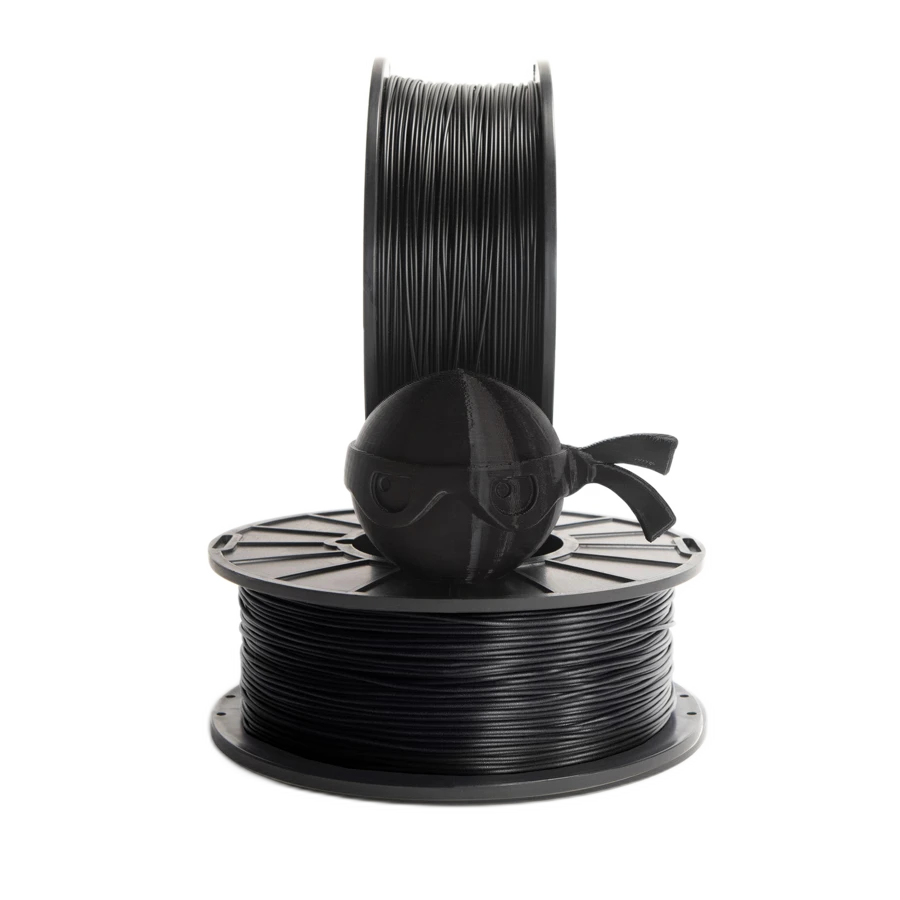
NinjaFlex 85A

PolyFlex TPU95

colorFabb varioShore TPU