
SUNLU FilaDryer S4 Pro Review: Two Drying Recipes on One Bench
At a glance
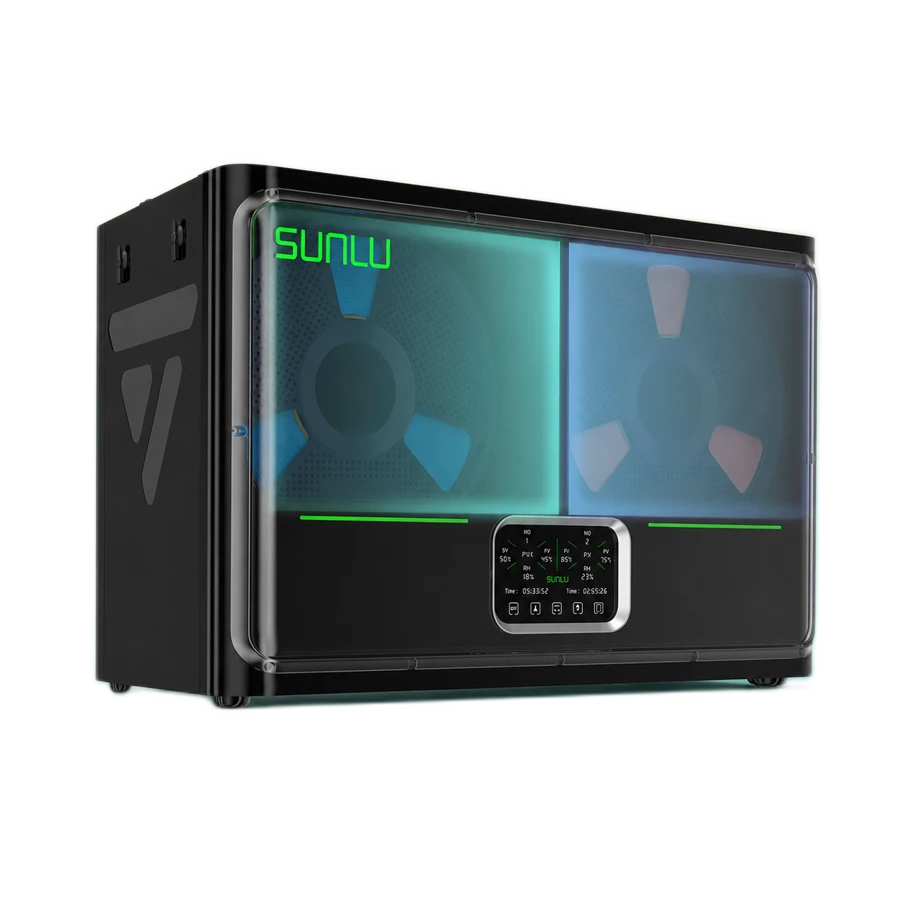
The S4 Pro earns consideration when two material groups need different drying settings at once. Its four-spool capacity is useful, but bench space, timer management and initial odor remain practical considerations.
The setup
- S4 Pro dual-zone model, not standard S4
- Manufacturer capacity: four 1 kg spools
- Manufacturer maximum temperature: 85 °C
Why consider it
- Separate settings can serve two material groups at once.
- Four positions reduce frequent roll swaps.
- Feed openings and desiccant holders suit an active station.
What to weigh up
- Large body needs loading and tube clearance.
- Initial odor and timer-management complaints appear in feedback.
Two zones solve a different problem from four positions
The useful upgrade is independent temperature and time control for each side. You can group rolls by compatible drying requirements instead of choosing one compromise cycle for the whole box. Four loaded rolls still share two zones, not four independent recipes.
Mixed-material preparation
Matched S4 Pro feedback values separate settings and fewer swaps. That is most useful when the two groups genuinely need different treatment.
Loaded rolls beside the printer
Sealable feed openings and desiccant holders support an active station. Check the actual printer route; direct feeding is not universal automatic-feeder compatibility.
Measure the station before upgrading
The manufacturer lists a 458 × 218 × 310 mm body. Leave additional space for loading, cables and tube bends. The size concern in customer feedback is relevant even if four rolls fit the product specification.
A long timer is not a maintenance-free installation
Positive feedback includes sustained use, but also a wish to disable the timer entirely. Confirm how the supplied timer and humidity modes work instead of assuming that a long cycle means indefinite operation.
Strong initial plastic odor is another reported drawback. Follow the manual’s installation and ventilation instructions, and stop if odor or operation seems abnormal. An owner’s suggestion to run it outside is not a verified operating procedure.
Pros & Cons Analysis
Based on supplied customer reviews and verified product documentation
Pros
- Independent zones remove a real compromise. S4 Pro comments specifically value different times and temperatures on each side. Group compatible rolls together rather than treating every position as independently controlled.
- Capacity can simplify a busy printing routine. Multi-roll use reduces repeated loading and leaves commonly used materials accessible. The benefit depends on actually using the capacity.
- The box can participate in printing rather than only preparation. Positive feedback describes feeding through sealable openings and appreciates the desiccant holders. Verify the route to your printer and maintain the storage components.
Cons
- The station needs more than the body footprint. Size is a direct customer concern. Check loading access and tube bends before making the dryer a permanent fixture.
- Startup and ongoing operation need attention. A strong first-use odor and a desire for an unlimited timer appear despite positive drying impressions. These are practical limitations, not proof that every unit has the same behavior.
Buy the second zone when you will actually use it
The S4 Pro is most compelling for two regularly used material groups that need separate treatment. If all your rolls share one routine, weigh the extra space and controls against how often they save a cycle.
I alternate PLA with more demanding materials
Check each filament and spool’s temperature limits, then group compatible pairs. The 85 °C maximum is a ceiling, not a recommended setting for every material.
I need a permanent drying station
Confirm timer and humidity behavior, leave loading clearance and plan routine desiccant checks.
Frequently Asked Questions
Are all four spools independently controlled?
No. The dryer has two zones. Each pair needs compatible settings within its chamber.
Does a low humidity reading prove the spool is dry?
No. Chamber relative humidity is not a direct measurement of moisture inside the filament. Follow the material instructions and evaluate the print result.
Technical Specifications
| Product type | Standalone filament dryer |
|---|---|
| Reviewed configuration | SUNLU FilaDryer S4 Pro; black, US version |
| Drying capacity | Manufacturer: four 1 kg spools across two chambers |
| Heat control | Two independent zones; up to 85 °C; timer: Independent time control; exact supplied timer modes require manual check |
| Printing from the dryer | Feed openings supported; confirm printer routing |
| Humidity behavior | Chamber humidity readings do not directly measure water inside filament; no independently verified humidity accuracy |
| Fit and measurement basis | Manufacturer chamber capacity: 220 × 210 × 211 mm per side; check individual spool fit; US 110 V / 60 Hz; 380 W; 458 × 218 × 310 mm |
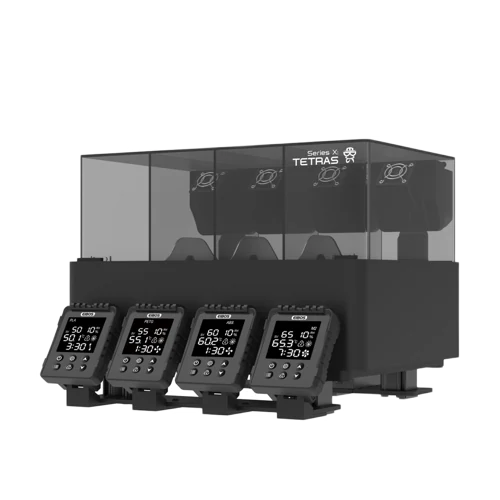
EIBOS Tetras
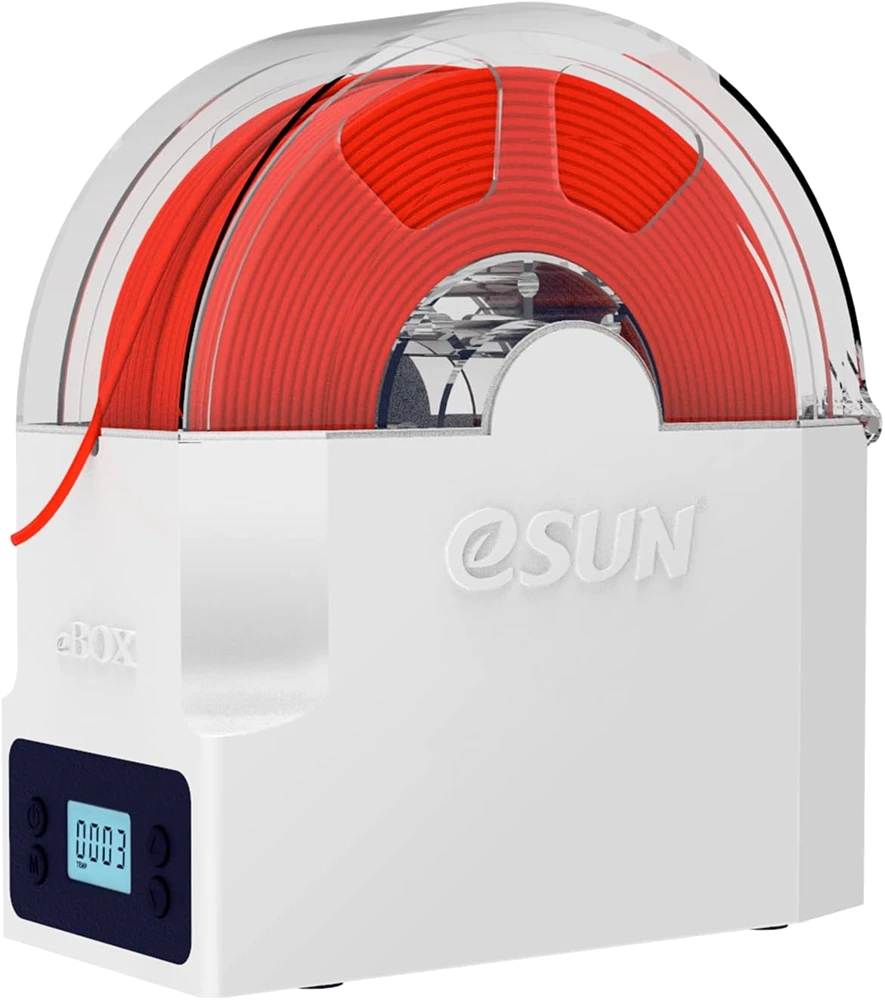
eSUN eBOX Lite

EIBOS Dyas

EIBOS Cyclopes