
Magigoo PP review: a targeted aid, not a shortcut around polypropylene setup
At a glance
Matching PP successes are balanced by large-part lifting and applicator fuss; the exact surface and thermal setup remain decisive.
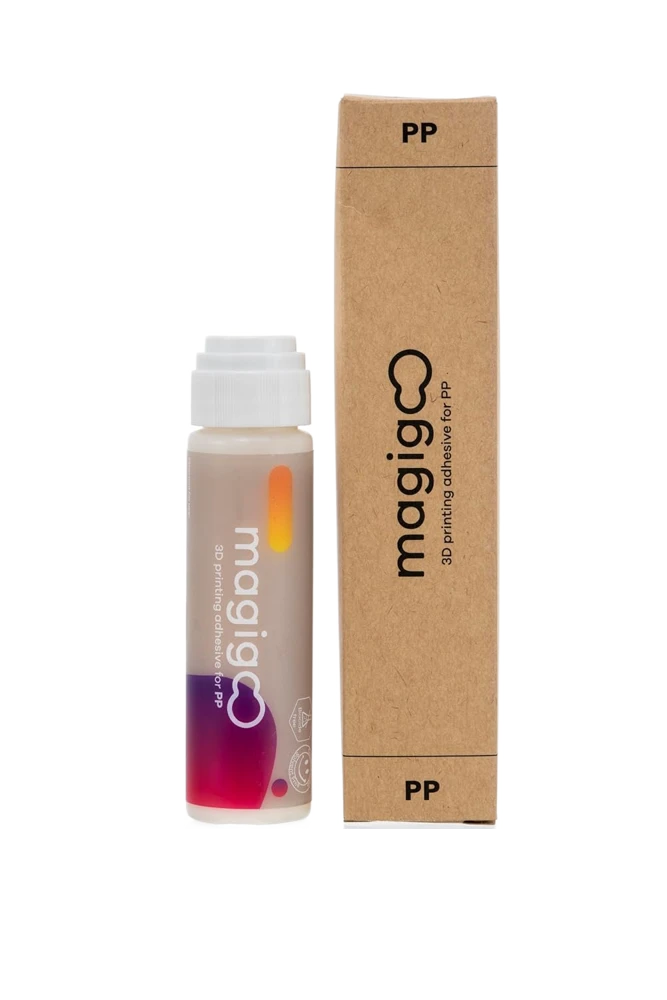
The setup
- Magigoo PP for polypropylene build-plate adhesive
- Selected 50 ml bottle
- Match formula and build surface
Why consider it
- Can make a suitable PP workflow usable.
- A reusable coating can be more convenient than disposable surface preparation.
What to weigh up
- Large parts can still lift, especially on an unsuitable surface.
- The dauber can become awkward after the first use.
Magigoo PP can help a difficult polypropylene setup, but its matching feedback makes one point unusually clear: the glue does not replace the rest of the process.
Three variables to settle together
- Surface: confirm the current adhesive and plate compatibility.
- Thermal conditions: use the exact filament’s permitted setup.
- Footprint: test the long edge or broad base most likely to lift.
A detailed successful account reached good results after adjusting the full setup. A detailed negative account still had large parts peel away on several surfaces. Both are more informative than a blanket claim that PP either always sticks or never works.
Choose PP, not simply the strongest-sounding bottle
The manufacturer distinguishes standard PP from its reinforced-PP formulation. Match the actual material, and follow the bottle’s handling precautions. This review does not transfer a reinforced-material success into a universal recommendation.
Use the adhesion-versus-release distinction to check the purpose of this coating on the intended PP setup.
Pros & Cons Analysis
Based on supplied customer reviews and verified product documentation
Pros
- The success is material-specific. Matching accounts describe PP holding after the bed, chamber and brim setup was resolved. The adhesive contributes to the system rather than replacing those conditions.
- There is a workflow benefit when the combination works. Matching feedback describes repeat use before reapplication and straightforward cleaning. Exact reuse life remains dependent on the job.
Cons
- The strongest contrary account is consequential. It describes repeated lifting on textured PEI and continued trouble on other surfaces. Its reported percentages are not generalized into a product-wide failure rate.
- Application consistency needs attention. A successful PP user still reports dried material slowing the tip on later uses. Follow the bottle-care instructions rather than assuming effortless dispensing forever.
Make the surface-and-material pair pass first
Try Magigoo PP on the exact approved surface and polypropylene you intend to use. A small easy part is not enough qualification for a broad, warp-prone production component.
Frequently Asked Questions
Can it compensate for unsuitable chamber or bed conditions?
No. Matching successful feedback explicitly depends on resolving the wider setup.
Does this review cover Magigoo PP-GF?
No. The manufacturer separates the reinforced-polypropylene formula from the selected PP product.
Technical Specifications
| Product type | Build-plate adhesive |
|---|---|
| Formulation | Magigoo PP for polypropylene |
| Reviewed bottle | 50 ml |
| Intended surfaces | Glass, Kapton and PEI per manufacturer; not bare iron, copper or zinc. |
| Listed materials | Magigoo PP for polypropylene |
| Application | Shake, activate the nib on a cold plate and spread an even thin coat. Follow PP handling precautions. |
| Release and cleanup | Current PP instructions say to cool completely; use a little water beneath a stuck brim. Do not substitute another formula’s release cycle. |
| Compatibility limits | Does not replace appropriate material and printer conditions |

BIQU CryoGrip Pro Glacier
Magigoo Flex
Magigoo Original
Magigoo Supergrip