
Magigoo Supergrip review: extra hold without treating every print as an adhesion problem
At a glance
Extra hold for compatible flex plates, with cooling and cleanup central to the buying decision.
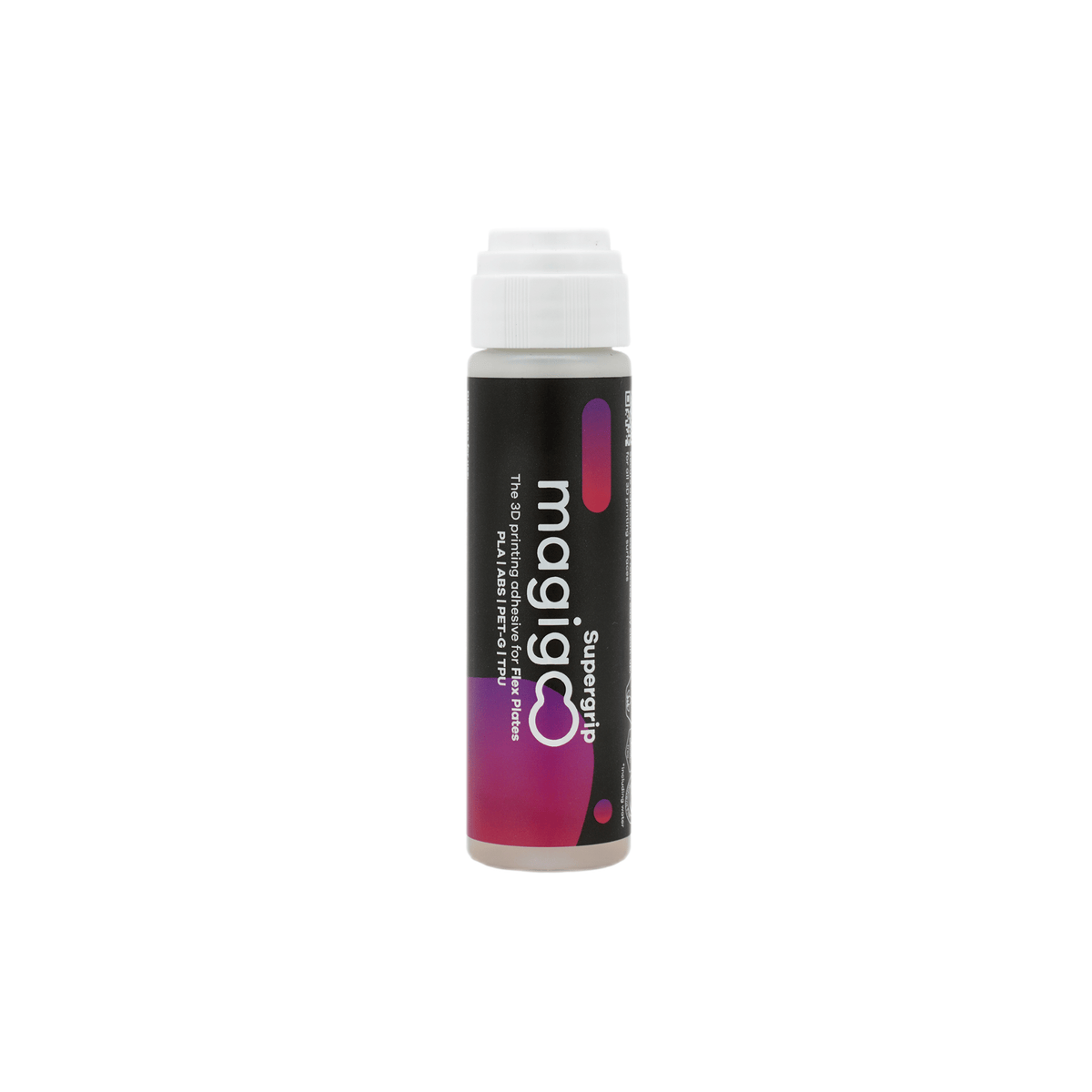
The setup
- Supergrip formulation for compatible flexible build plates.
- Reviewed Amazon offer: 50 mL bottle.
- Valved application and water cleanup.
Why consider it
- Encouraging hold on difficult PLA and ASA prints.
- Convenient part removal after cooling.
- Water cleanup and potential reuse of a coating.
What to weigh up
- Better hold does not guarantee flat ASA corners.
- The small applicator may feel slow across a broad area.
Magigoo Supergrip makes the most sense when a flexible build plate needs extra hold and you still want the finished part to come off without a fight. Its strongest buying case is a troublesome print on a compatible surface—not adding another coating to a setup that already works reliably.
Holding on is only half the job
During the print
The feedback includes improved hold for difficult PLA and ASA jobs. That makes Supergrip a plausible troubleshooting tool when a part keeps detaching.
After the print
Easy removal after cooling is a separate benefit. A coating that helps the first layer but leaves a struggle at the end would solve only half the problem.
Keep a distinction between a print staying attached and a print staying flat. ASA feedback includes a straight-sided bin whose corners still lifted even though the part remained on the bed. That is a useful boundary: better adhesion can help a job survive without producing the shape you actually need.
What would justify buying a bottle?
| Your current problem | What to check next |
|---|---|
| A difficult part releases during printing | Confirm plate compatibility, then compare the same troublesome geometry before and after a thin application. |
| ASA corners curl but the part stays attached | Inspect the final shape. More hold alone has not established that the distortion is solved. |
| Good adhesion, difficult removal | Evaluate the complete heat-and-cool routine on a small part before a large flat model. |
| Routine prints already succeed | Keep the current process. Consider Supergrip for an occasional difficult job rather than making it a compulsory extra step. |
Will the applicator suit your workload?
Application is generally described as straightforward, but the narrow tip is a practical consideration. Covering a broad surface can feel more laborious than touching up a small area; the feedback specifically asks for a wider, squarer applicator. This is a handling tradeoff, not evidence that the adhesive itself fails.
Keep the routine simple
- Start with a compatible cold plate. Apply a thin, even coating with the valved tip; follow the bottle instructions.
- Run a representative part. Check both adhesion and the finished geometry.
- Let the part cool before judging release. Avoid turning a successful print into a removal problem.
- Clean with water when needed. Easy cleanup is part of the appeal, so assess the whole cycle rather than just the first layer.
The most useful result is a repeatable improvement on your own difficult part. A bottle that rescues that job may earn its place on the bench even if you do not need it for ordinary prints.
Pros & Cons Analysis
Based on supplied customer reviews and verified product documentation
Pros
- A targeted aid for troublesome first layers. Successful difficult-print experiences support trying Supergrip when detachment is the actual problem. Keep the trial tied to the same geometry and plate; these results do not establish universal adhesion.
- Release can be easier to manage. Cooling followed by straightforward removal appears in the feedback. That matters when you want to reduce prying, but it is not a promise that every material and plate will release unaided.
- Maintenance need not dominate the workflow. Water cleanup and multiple jobs from a coating can reduce the effort between prints. Refresh based on the condition of the surface rather than assigning an unsupported print count.
Cons
- A surviving job can still be distorted. The ASA bin experience separates staying attached from keeping corners flat. Inspect dimensions and shape before deciding that additional hold solved the problem.
- Coverage has a small ergonomic cost. A wider tip would suit the broad-area application described in critical feedback. Frequent users should consider the time spent coating, even when the adhesive result is satisfactory.
Give Supergrip a specific job to solve
Buy it for a troublesome compatible-plate workflow where both hold and removal matter. Keep expectations narrower than a cure for every warped print.
My prints detach before finishing
A small bottle is a reasonable trial after confirming the plate and material match. Compare a representative difficult part, including its final shape.
My ASA stays attached but curls
Do not use adhesion alone as the success test. Check whether the finished part is flat enough for its intended job.
My everyday prints already work
Skip the extra routine for now. Keep adhesive as an option for a specific difficult project.
Frequently Asked Questions
Will Supergrip stop all ASA warping?
No such guarantee is supported. The feedback includes improved hold alongside a bin whose corners still lifted. Judge the finished shape, not only whether the job stayed on the plate.
Is a fresh coat needed for every print?
Multiple prints from one application are reported, but there is no dependable universal count. Inspect the surface and first layer rather than assuming every coat lasts the same number of jobs.
Technical Specifications
| Product type | Build-plate adhesive |
|---|---|
| Formulation | Magigoo Supergrip |
| Reviewed bottle | 50 mL |
| Intended surfaces | Flexible and polymer-based plates, including PEI, PC and satin sheets |
| Listed materials | PLA, PETG, ABS/ASA, TPU and HIPS |
| Application | Thin coating on a cold plate using the valved tip |
| Release and cleanup | Allow cooling; flex gently where appropriate; water cleanup |
| Compatibility limits | Check the plate and filament instructions; not every adhesive suits every surface |
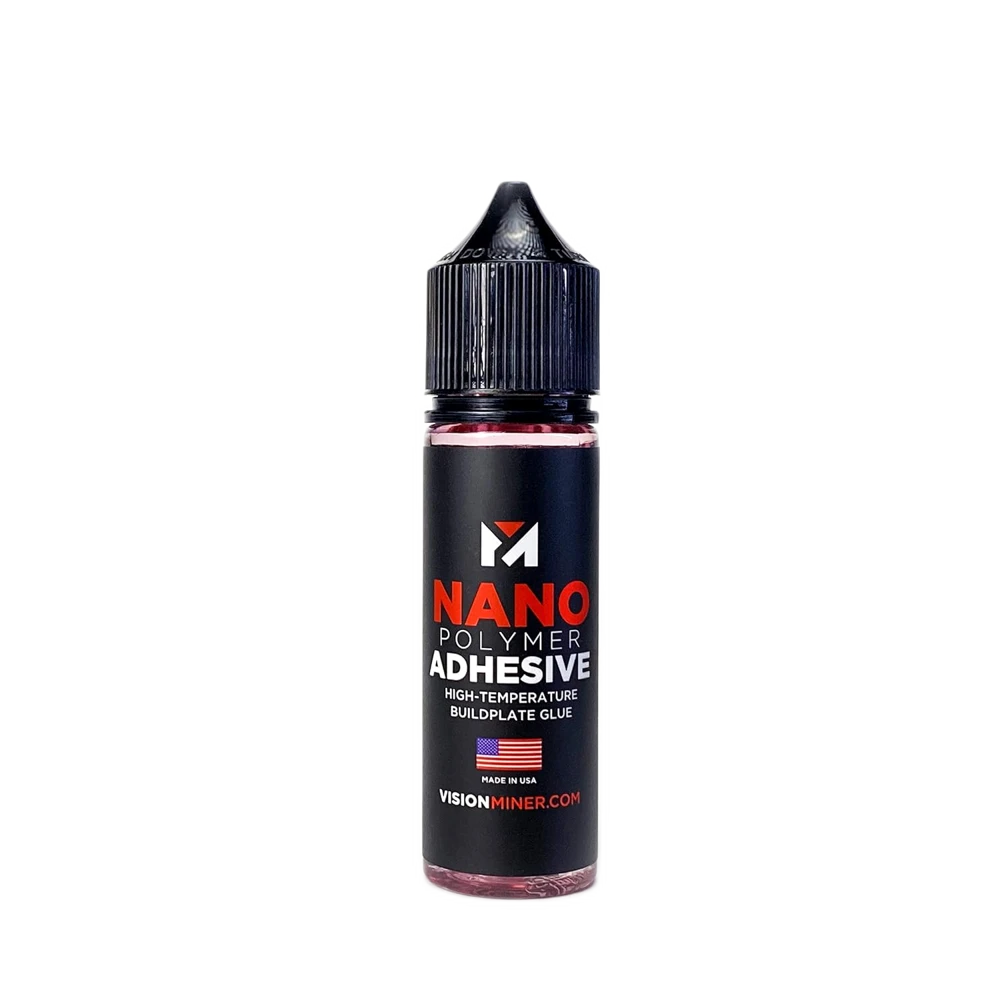
Vision Miner Nano Polymer Adhesive
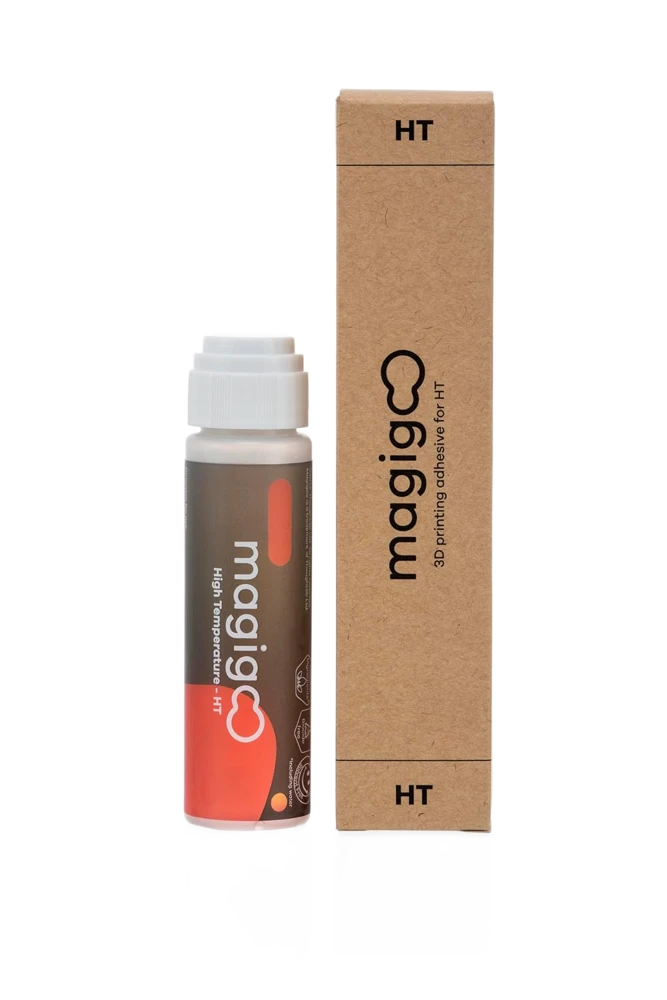
Magigoo HT
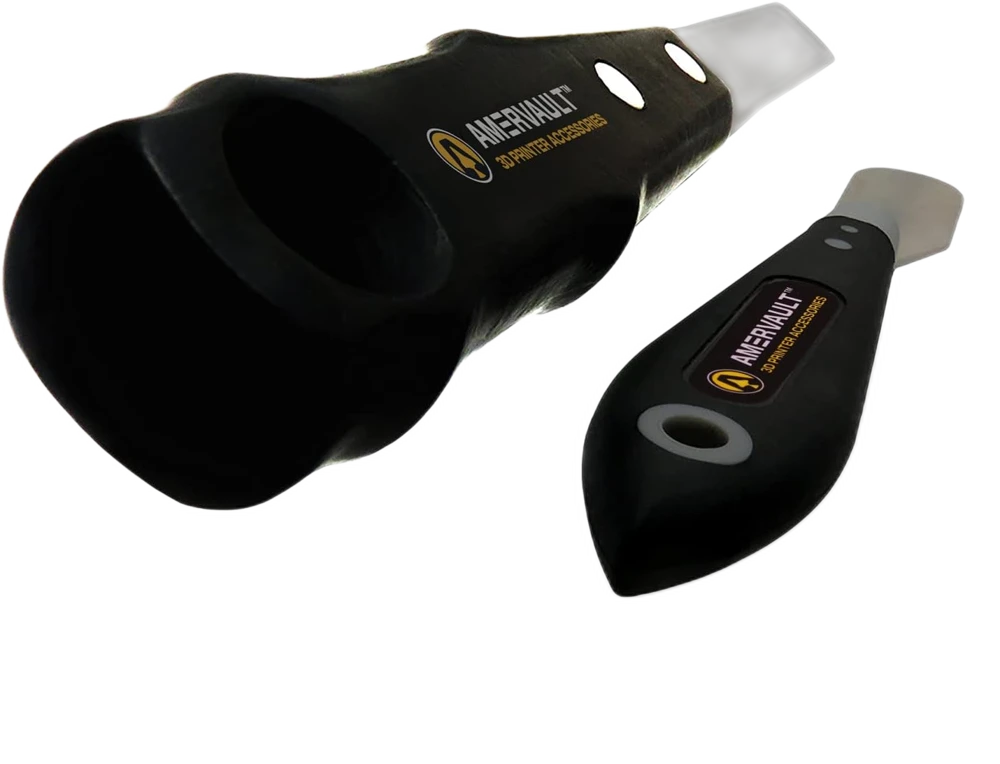
AMERVAULT Print Removal Tool Kit
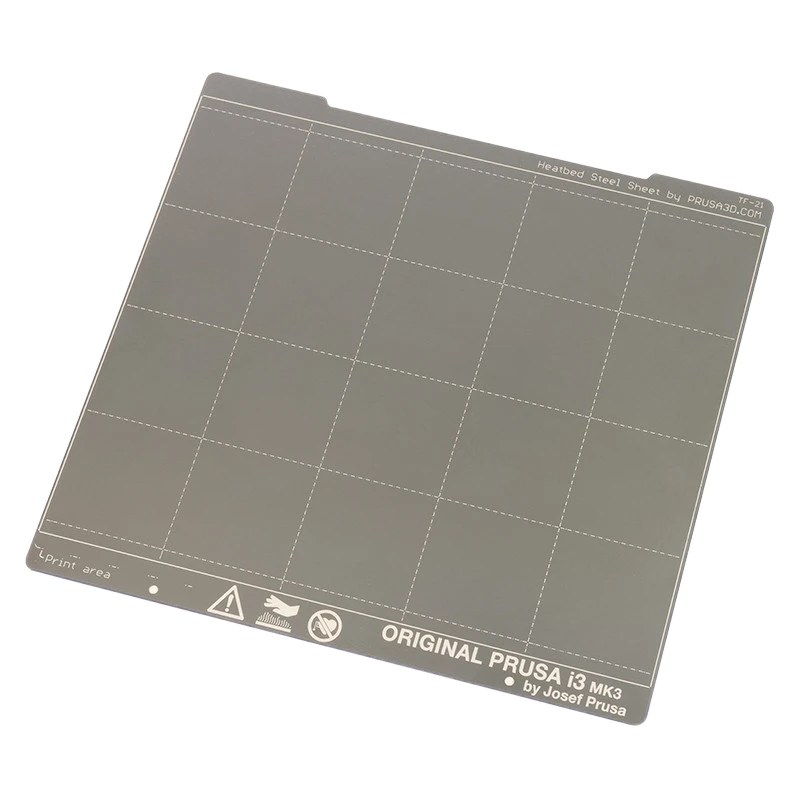
Prusa Smooth PEI sheet