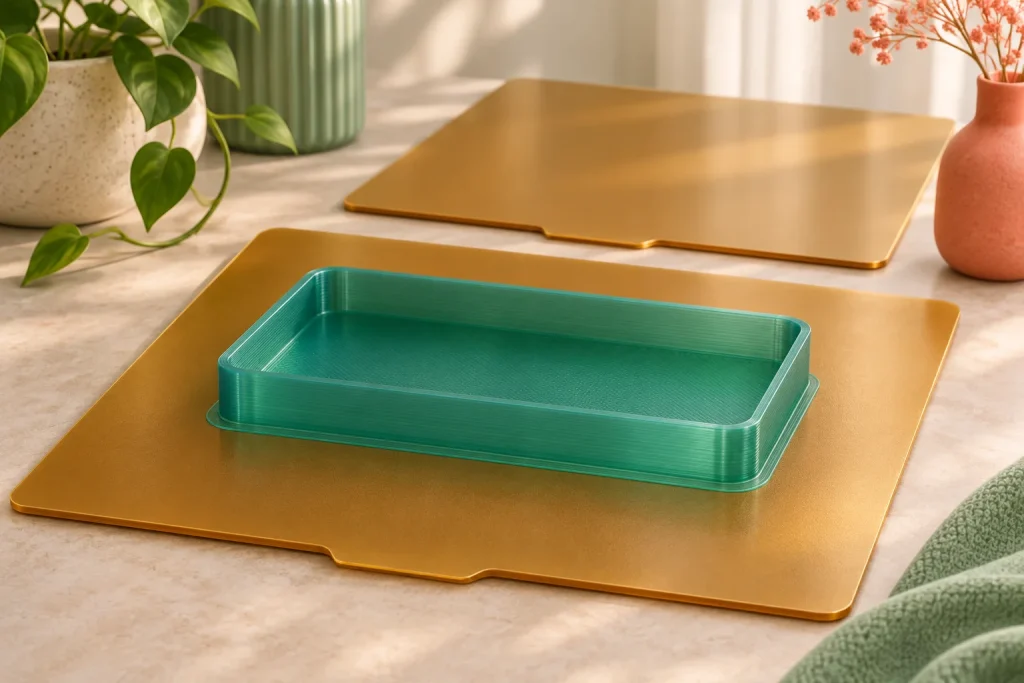
PETG can bond too strongly to bare smooth PEI. If the print is stuck, stop pulling harder: first identify the plate and let it cool according to its removal instructions. The aim is to release the object without lifting the coating, not to win a contest of force.
If the coating starts lifting with the print, stop. Do not continue peeling to see whether it improves. Photograph the affected area and consult the plate supplier’s recovery or replacement guidance.
Choose the branch that matches your plate
A removable spring-steel sheet
Once cool, use only the gentle flexing allowed by the sheet maker. Prusa’s removable-sheet system is designed around release from flexible steel. That does not make a rigid plate bendable, nor does it promise release from every over-bonded material.
A Prusa textured sheet
Prusa expects prints to release after cooling and explicitly prohibits putting this sheet in a freezer. It also warns against metal spatulas on the coating. If ordinary release does not work, follow its textured-sheet instructions rather than improvising with a blade or freezer.
An unknown or rigid surface
Find the manufacturer and model before applying a recovery trick. “PEI” in the listing does not tell you the backing, adhesive or coating construction. Do not assume a procedure for removable spring steel applies to a bonded sheet on glass or another rigid base.
Why more grip became a problem
Prusa describes PETG bonding to clean smooth PEI strongly enough to peel the surface during removal. Its prevention advice is a suitable alternative sheet or a PVA separation layer. Here, glue is serving a release function, despite the apparently contradictory word “glue.”
Applying that layer now cannot retroactively place it beneath an attached print. Treat prevention and recovery as separate decisions. If the maker has no approved recovery procedure for your situation, asking for one is preferable to sacrificing the sheet through repeated force.
Change one thing before printing the same file again
- Record the pairing: exact PETG formulation and plate side.
- Check suitability: confirm whether the supplier approves that pairing and requires a release layer.
- Inspect the released area: distinguish removable residue from coating damage before reuse.
- Prepare a modest next print: verify the documented setup before repeating a large footprint.
The next purchase may be a more suitable surface rather than another bottle of cleaner. Use the build-plate choice guide to weigh that change. If the sheet is intact, return to its approved cleaning routine before applying any required separator.
Leave the sheet in a usable state
A successful recovery ends with an intact surface and a changed preparation plan. A damaged coating calls for supplier guidance, not another identical print.
What happened after the approved release attempt?
The print released and the coating is intact
Clean as instructed, then verify the PETG–surface pairing and required separator before the next job.
It remains stuck or the coating is lifting
Stop forceful removal. Keep the product identity and photographs ready for the manufacturer’s advice.