
SUNLU PLA review: try one spool before the bulk order
At a glance
A sensible everyday PLA candidate once its profile and spool handling work on your printer.

The material & format
- Standard PLA formulation in a checked black 1 kg offer.
- 1.75 mm diameter with stated ±0.02 mm tolerance.
- Manufacturer guidance pairs temperature with printing speed.
Why consider it
- A practical candidate for frequent prototypes and everyday prints.
- Deep black can suit unpainted parts.
- Successful use across several familiar hobby printers.
What to weigh up
- Some setups need profile and first-layer adjustments.
- Tangling and inconsistent roll behavior remain possible.
- Package changes can affect spool handling and feeder fit.
SUNLU’s standard black PLA is worth trying when you print enough prototypes and everyday objects for filament cost to matter. Its strongest case is straightforward, clean printing after you establish a suitable profile. The reservation is consistency: a good first spool does not guarantee that the next will feed or adhere in exactly the same way.
Start with one spool and a job you know
Successful results span ordinary hobby printers and Bambu machines, including the A1, A1 mini and P1S. That makes this a credible candidate for regular use rather than a material tied to one printer ecosystem. It does not mean every default profile works without adjustment.
Before buying a large bundle, repeat a small model whose first layer, fit and finish you already understand. You will learn more from that comparison than from a complex new print with unfamiliar supports and geometry. Keep the successful settings with the spool identification so a replacement roll can be checked against them.
A useful role: iteration
Test brackets, mock-ups and ordinary household objects are a good reason to consider this PLA. Reliable results can make repeated revisions less costly.
A poor shortcut: untested bulk buying
A lower price per roll helps only if the material works on your machine. Reprints and troubleshooting can outweigh the saving on a spool.
The black is appealing; the sheen is less predictable
Deep, consistent black is a distinct positive in the customer experience. It matters for objects you intend to leave unpainted, where a washed-out shade would remain visible. Reports describe both subdued and glossier finishes, however. Do not select standard PLA as a guaranteed substitute for a dedicated matte formulation.
Surface appearance also needs to be judged on the actual object. If a replacement roll looks different, use the color and finish checks before changing the whole profile. A calibration piece with a curved wall and a flat face gives you a useful preview before committing to a visible display part.
Clean prints and stubborn first layers both appear
Some setups produce smooth parts with little tuning. Others need changes to temperature, speed or first-layer setup, and there are reports of lifting or stringing persisting after drying. That is why “dry it” should not be the only response to a failed print.
What you notice
A new roll behaves differently from the last
A useful check before the next long job: Check the exact formulation and spool label, then compare a short print using the saved profile.
Feeding becomes intermittent
A useful check before the next long job: Inspect the winding, free rotation and feed path. Stop if the strand binds rather than letting the extruder pull harder.
Edges lift or fine strings remain
A useful check before the next long job: Review the plate preparation and material profile as well as moisture condition. A single symptom does not identify its cause.
A spool does not sit correctly in an automatic feeder
A useful check before the next long job: Check its actual dimensions and package format. Filament compatibility does not establish spool compatibility.
Use the instructions as a starting range
The current SUNLU PLA page pairs 200–210°C with 50–100 mm/s and 210–240°C with 100–200 mm/s, with a 50–60°C bed range. The checked Amazon offer instead lists 200–230°C, 50–100 mm/s and a 50–65°C bed. Follow the supplied spool’s instructions and your printer’s limits; these are starting recommendations, not proof of identical performance across machines.
Pros & Cons Analysis
Based on supplied customer reviews and verified product documentation
Pros
- Useful output without a premium-material requirement. Successful daily printing and repeat purchases support using this PLA for iterative models and ordinary objects. Its value depends on your actual reprint rate and current offer, not a guaranteed saving against every alternative.
- A convincing black for visible surfaces. Deep, uniform color is described independently of general praise. It is useful when painting would add unnecessary work. Sheen varies across experience, so standard black is not a guaranteed matte finish.
- There is a credible path to a repeatable profile. Successful results on A1-family, P1S and other hobby machines show the material can work in established routines. They do not establish every feeder combination or high-speed setting.
Cons
- Default settings are not a dependable promise. Clean first prints coexist with lifting, stringing and a need to slow down or adjust the profile. Start with a familiar small model; drying alone did not resolve every adhesion complaint.
- Winding deserves attention throughout the spool. Long trouble-free runs are reported, but so are knots, binding and tangles near the end. Secure the free end and check that the roll can turn; neither a neat-looking outer layer nor a good first print settles the whole spool.
- One successful roll does not certify the next. Reports of differing adhesion and feeding between rolls justify a short check when replacing stock. A reported diameter problem is a useful warning to inspect a binding strand, not a measured failure rate for the product line.
Let the first spool earn the bulk order
Make this a repeat purchase after it earns a place in your own printing routine. The appeal is ordinary usable output at an acceptable total cost, not a promise that every roll needs no attention.
I print frequent mock-ups and everyday objects
Try one spool with a known model. If the profile, winding and finish work for you, then compare equivalent multipack offers.
I need a specific surface finish or a trouble-free deadline
Validate the finish and a full job before committing. A material you have already qualified may be better value than switching just to reduce the spool price.
Frequently Asked Questions
Is this the same as SUNLU PLA+ 2.0?
No. This review covers standard PLA. Keep the formulation name on the spool and listing matched to the profile and review you use.
Is the black finish always matte?
No. Customer experience includes subdued and glossier surfaces. Print a small sample if the finish matters, or choose a specifically documented matte formulation.
Should I buy a bundle before trying it?
A single matching spool is the more useful first check when you have no established profile. Compare the current bundle price only after verifying print quality and spool fit on your setup.
Technical Specifications
| Product type | PLA-based filament |
|---|---|
| Reviewed formulation | Standard SUNLU PLA; evidence centered on black; not PLA+, Silk or High Speed |
| Nominal filament diameter | 1.75 mm; manufacturer-stated tolerance ±0.02 mm |
| Manufacturer diameter tolerance | ±0.02 mm — 1.75 mm; manufacturer-stated tolerance ±0.02 mm |
| Package format | Checked Amazon offer: black, 1 kg spool; other packages need separate fit checks |
| Nozzle guidance | Manufacturer: 200–210°C at 50–100 mm/s; 210–240°C at 100–200 mm/s. Check supplied spool instructions |
| Material care | Protect unused material from moisture; exact drying cycle should follow supplied material/spool instructions |
| Variant / handling limit | 1 kg spool fit is not transferable to 3 kg or multipack offers; actual feeder fit must be checked |
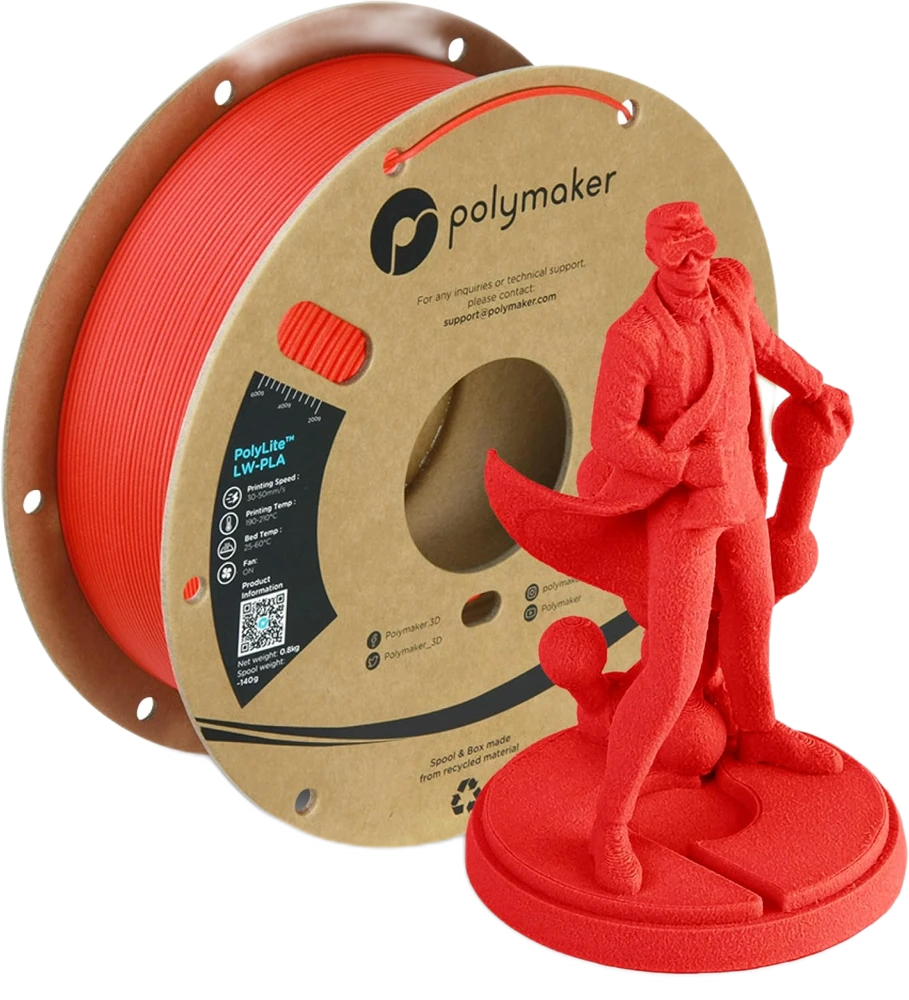
PolyLite LW-PLA
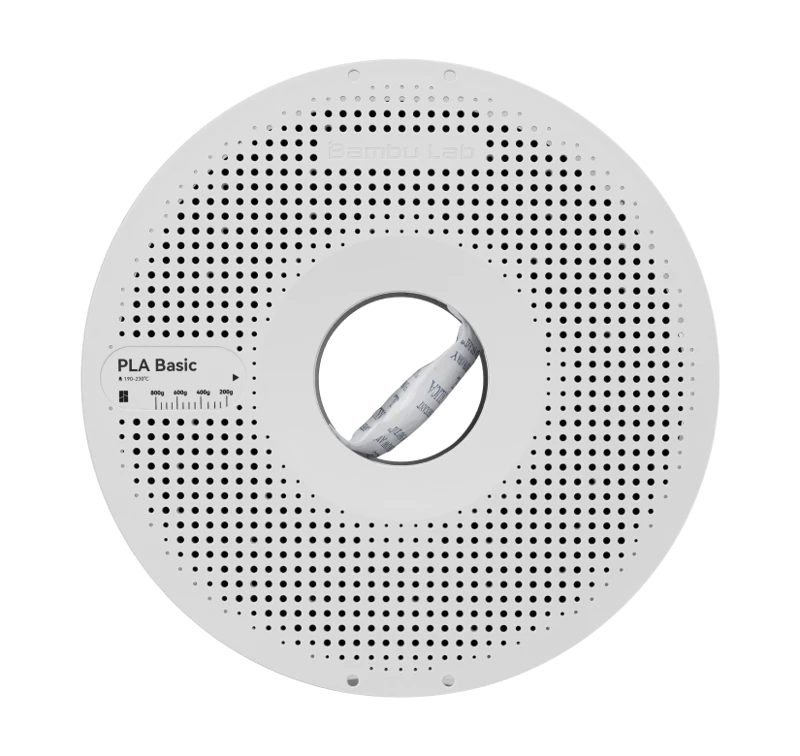
Bambu Lab PLA Basic

ELEGOO Rapid PLA Plus

PolyLite CosPLA Version A