
ELEGOO Rapid PLA Plus review: useful speed after setup
At a glance
A useful candidate for a calibrated fast-printing routine; qualify the color, surface and spool feeding before a long job.

The material & format
- Rapid PLA Plus formulation in a one-kilogram cardboard spool.
- Single colors and multi-roll packs.
- Manufacturer provides a spool-ring resource for feeder adaptation.
Why consider it
- Established setups can produce dependable long prints.
- Clean everyday surfaces are achievable after calibration.
- Black-and-white bundles have useful lithophane applications.
- Successful support resolutions appear after troublesome rolls.
What to weigh up
- The speed headline is not a guaranteed working speed.
- Stringing and weak line joining can require extra setup.
- A displayed color may differ from the finish you expect.
- Winding or a retained tail can interrupt feeding.
- Supports and painted finishes need their own trial.
- Some white rolls have shown brittleness or visible dark marks.
The useful measure of ELEGOO Rapid PLA Plus is a finished job, not the largest speed shown in the slicer. Its strongest feedback comes from repeat printing: long prototypes, consistent black rolls and projects that keep using the same material. That is a better reason to buy it than expecting every printer to reach the advertised ceiling.
What does “Rapid” buy you?
Successful experiences span ordinary print speeds and much faster Neptune setups. They support trying it in a faster workflow, but they are not a controlled benchmark. A small decorative object, a large prototype and a supported part do not ask the same thing of the printer.
The manufacturer’s material page lists 30–600 mm/s, a 200–230°C nozzle range and a 40–60°C bed. Use the instructions that match the supplied roll and your printer. Start with the quality you need, then increase speed only while that quality holds. The speed-versus-flow guide explains why a travel-speed number alone cannot describe the material demand.
One important correction to the failure story: an initially poor experience later improved after drying, recalibration and replacement of a faulty printer. That history cannot fairly be reduced to either “bad filament” or “drying fixes everything.”
Choose the color for the job
| Project | Reason to consider it | Check before buying more |
|---|---|---|
| Regular black parts | Repeat-use feedback describes useful black parts, with differing shade impressions. | Check the printed shade as well as the profile and reel. |
| Lithophanes and their boxes | Black-and-white bundle use is encouraging for this specific pairing. | Print a small panel at the intended thickness and lighting. |
| Light neutral models | Beige can give a less glossy-looking appearance. | Check visible stringing and the actual surface you want. |
| Color-matched display pieces | The available colors offer useful choices. | Compare a physical sample; red and silver appearance have disappointed buyers. |
The color question is separate from print quality. A roll can produce a sound object and still be wrong for a matching set. Do not buy a large color bundle solely from the listing image if the shade is central to the project.
Before leaving a long job running
These are reasons to qualify a new roll, not evidence that every bundle has a problem. Successful long-print use and repeat purchases remain part of the picture. If a reel is troublesome, document the issue and contact the seller; favorable replacement experiences do not guarantee a particular resolution.
Give the finished surface its own trial
If the job will be painted, print a small finishing sample first. Good extrusion does not guarantee that your usual primer or putty will adhere well. Likewise, a supported model can have attractive detail but still demand careful support removal. Include those operations when judging the time saved by faster printing.
For white display pieces, inspect both the surface and the filament condition. Reports of brittle rolls and dark marks coexist with clean, dependable white output. A successful replacement can resolve a purchase problem without recovering the time already lost.
Buying the smaller eight-color pack?
The pooled reviews include 250 g mini spools as well as one-kilogram reels. Fit complaints about the mini spools cannot establish that the selected full-size roll fails in the same feeder. Check the exact pack dimensions against your feeder before ordering.
Support outcomes also need a careful reading. Some replacements worked well; another resolution involved switching to standard PLA, while Rapid PLA Plus remained unsuitable for that setup. Good service is a benefit, not proof that the original material became dependable.
Pros & Cons Analysis
Based on supplied customer reviews and verified product documentation
Pros
- Long jobs are a credible use case. Repeat users describe substantial prototypes and extended prints that finish successfully. This supports buying for an established routine; it does not remove the need to check a new roll before committing a large job.
- Useful surfaces can justify a repeat order. Clean black projects and successful white output make this a plausible everyday supply after qualification. Some black prints look grayish rather than deeply black, so inspect a printed sample instead of relying on the color name.
- The bundle can suit two related tasks. Positive use for lithophanes and their boxes gives the black-and-white pairing a practical purpose. Evaluate the actual panel thickness and lighting, since the feedback does not establish a universal optical result.
- A bad roll need not end the buying relationship. Updated experiences include replacements, follow-up and satisfactory later printing. Keep records when something goes wrong, while recognizing that service outcomes are individual and do not substitute for dependable material.
Cons
- Fast settings still depend on the machine and part. Reported success ranges across very different speeds and setups. Choose a stable working profile rather than expecting the maximum advertised speed to apply to every outer wall, support or long job.
- Preparation remains part of the workload. Wispy white prints and poor line fusion contrast with clean results elsewhere. A slower or adjusted job may be necessary; neither a sealed bag nor the Rapid label eliminates calibration or moisture checks.
- Color choice can disappoint even when printing succeeds. Red has been described as faded, and silver as gray plastic rather than the expected metallic look. Inspect a printed sample before producing matching parts or purchasing a large color bundle.
- Reel interruptions are a separate weakness. Tangles and a filament end that stayed attached have stopped or threatened jobs. Inspect loading and plan spool changes; do not infer that a smooth first layer establishes reliable feeding to the last meter.
- Finishing may add work after a successful print. Detailed models can come out well while their supports take effort to remove. A separate coating experience describes primer and putty that did not adhere as expected. Test the planned finishing system on a small piece before a large prop or painted assembly.
- White appearance and feedability are not assured by the Plus label. Brittle filament and dark surface marks appear in contrary white-roll feedback. Support replacements are encouraging, but they do not erase the lost print or make an affected roll suitable.
Let a finished job earn the next bundle
Rapid PLA Plus makes sense when a trial produces the finish you want at a useful speed. Keep the choice tied to that result, not the largest number on the package.
My priority is repeat black or white projects
Start with a representative long-job feature and inspect the reel. Once the setup works, a matching bundle can simplify restocking.
My priority is an exact display color
Order a sample quantity first. A reliable print in the wrong shade still fails the project.
My priority is maximum speed immediately
Leave room for calibration. The evidence supports useful faster printing, not an instant guarantee at the advertised ceiling.
Frequently Asked Questions
Will Rapid PLA Plus print every job at 600 mm/s?
No. That is the advertised upper figure, not a guarantee for your machine, geometry or quality target. Qualify a representative job before increasing speed.
Is the silver finish metallic?
Do not rely on the color name alone. Feedback includes disappointment that it resembles gray plastic. Check a physical sample when finish matters.
Can I use the black-and-white bundle for lithophanes?
There is encouraging use for lithophanes and their boxes. Test a small panel with the intended thickness and light source before a larger project.
Technical Specifications
| Product type | PLA-based filament |
|---|---|
| Reviewed formulation | ELEGOO Rapid PLA Plus; not regular PLA Plus or PLA Pro |
| Nominal filament diameter | 1.75 mm; manufacturer tolerance ±0.02 mm |
| Manufacturer diameter tolerance | ±0.02 mm — 1.75 mm; manufacturer tolerance ±0.02 mm |
| Package format | Selected Black 1 kg cardboard spool; multi-roll bundles also listed |
| Nozzle guidance | Manufacturer range 200–230°C; bed 40–60°C |
| Material care | Keep dry; follow the current roll-specific drying instructions |
| Variant / handling limit | Color finish and reel behavior require separate checks; advertised 600 mm/s is not a universal result |

ELEGOO PLA-CF

PolyLite PLA-CF
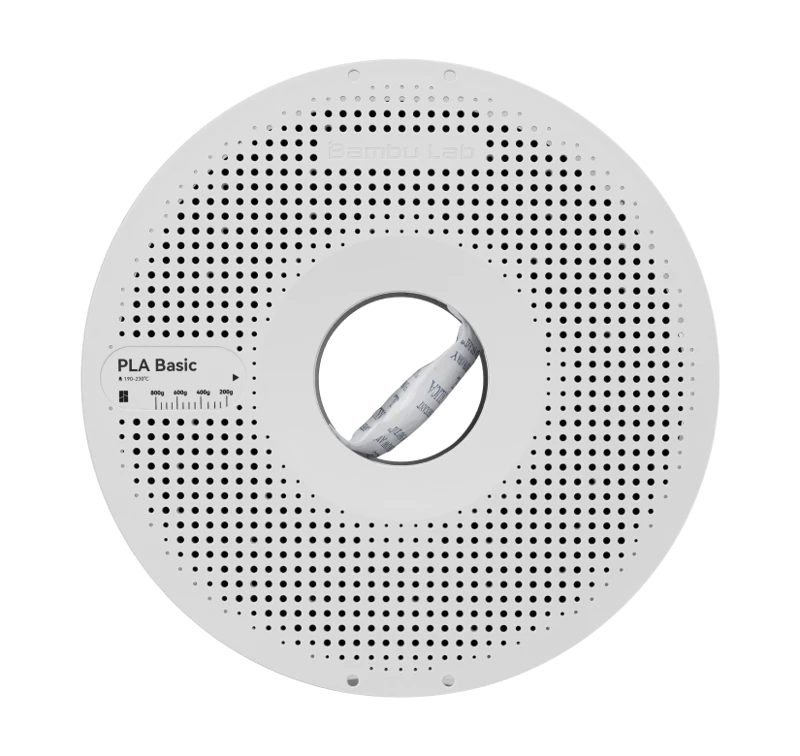
Bambu Lab PLA Basic

eSUN PLA-Matte