
Fiberon PET-GF15 review: textured functional parts, with a plate-release catch
At a glance
A convincing finish and useful workshop applications; distinguish PET from PETG and plan both adhesion and release.
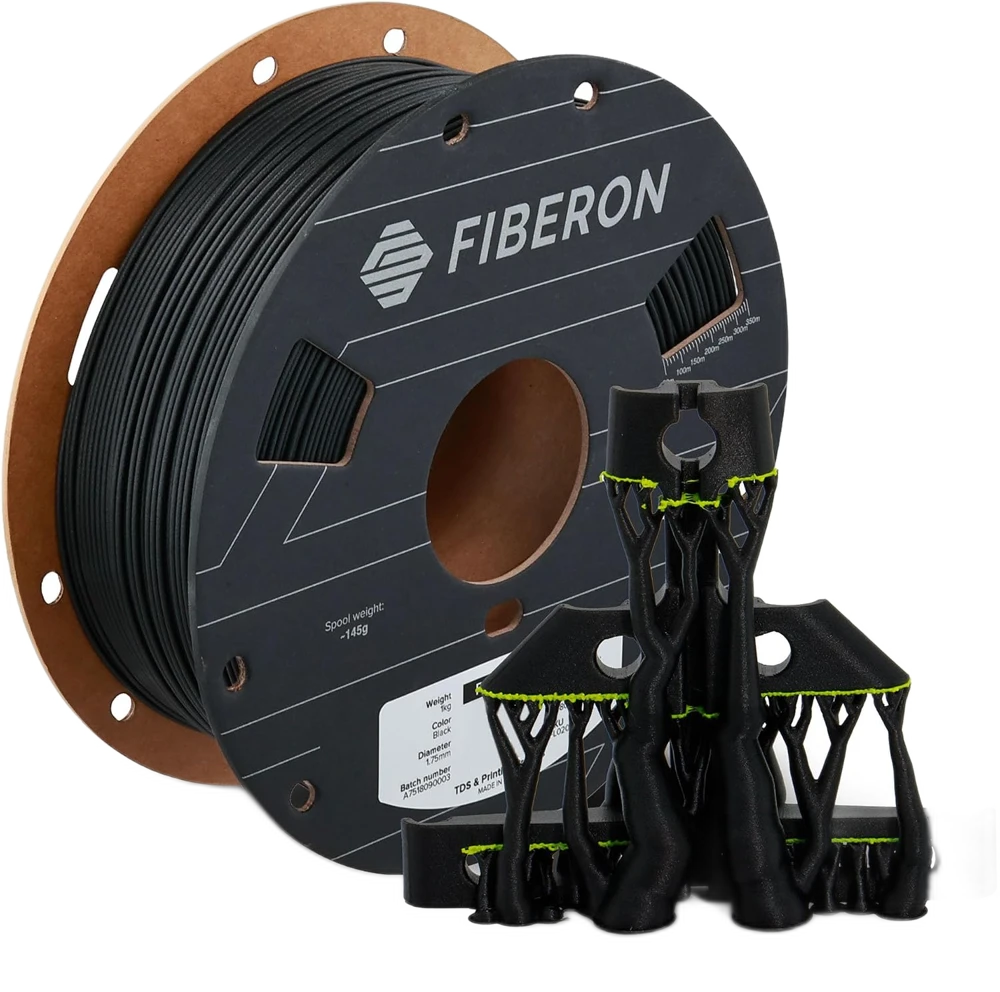
The setup
- PET with 15% glass fiber
- Selected black, 1.75 mm, 1 kg spool
- Confirm abrasive-material hardware and current care guidance
Why consider it
- A refined texture for visible functional parts.
- Useful results with appropriate material profiles.
What to weigh up
- It is PET, not ordinary PETG.
- Strong plate adhesion can complicate removal.
- Oozing and feeding complaints remain in the evidence.
PET-GF15 is a candidate for workshop parts that should look finished as well as feel rigid. Its textured appearance is repeatedly praised, but two buying details deserve prominence: it is PET rather than PETG, and a strong bond to the plate can become a removal problem.
Two checks before the first large part
Confirm PET in the profile
A matched customer initially mistook this for PETG. Use the exact formulation’s settings and requirements.
Plan how the part releases
The manufacturer warns about strong adhesion to textured PEI. Check the plate’s release guidance before a broad footprint.
Keep the workshop use case specific
Accounts describe jigs, brackets and modified parts, plus attractive visible texture. They do not certify an electrical enclosure, a hot component or an arbitrary structural load. Manufacturer annealed heat-deflection data also should not be applied to an unqualified as-printed part.
The same compatibility questions used for abrasive composite nozzle selection are useful here; confirm the requirements for this glass-filled formulation.
Pros & Cons Analysis
Based on supplied customer reviews and verified product documentation
Pros
- Finish is a repeated practical benefit. Matched accounts describe workshop jigs and parts that look presentable without extensive finishing. Their strength impressions do not establish a load rating.
- Prepared workflows can be manageable. Successful accounts include an enclosed printer and supplied profiles, while another needed careful calibration. Treat the profile as a starting point.
Cons
- The name changes the preparation. One successful account first corrected this exact misunderstanding. Confirm the material profile and hardware before using familiar PETG settings.
- Plan release as well as grip. Polymaker warns about strong bonding to textured PEI. Follow the surface guidance and allow appropriate cooling rather than forcing a large part off.
- Good profiles do not guarantee every roll. A contrary account reports oozing and a tangled arrival. Inspect the reel and qualify extrusion before committing a long workshop component.
Choose the texture, prepare the PET workflow
Consider PET-GF15 for a defined workshop component when the PET profile, hardware and plate release are understood. Test the difficult footprint before scaling up.
Frequently Asked Questions
Can I treat PET-GF15 as glass-filled PETG?
No. PET is the base material here. Its documented printing and drying ranges differ from ordinary PETG profiles.
Should stronger bed adhesion always be the goal with PET-GF15?
No. Polymaker warns about excessive bonding. Check both holding and release on the permitted surface before committing a large footprint.
Technical Specifications
| Product type | Reinforced PET filament |
|---|---|
| Reviewed formulation | PET with 15% glass fiber |
| Nominal filament diameter | 1.75 mm |
| Manufacturer diameter tolerance | Not verified for this exact formulation |
| Package format | 1 kg spool |
| Nozzle guidance | Manufacturer starting range: 280–310°C nozzle; 70–80°C bed. Match the printer and build surface. Hardened nozzle required; confirm the filament’s minimum orifice. |
| Material care | Manufacturer drying guidance: 100°C for 10 hours; verify the supplied spool tolerates the cycle, then store dry. |
| Variant / handling limit | Not interchangeable with other Fiberon PET/PETG grades |
Fiberon PET-CF17