
Fiberon PET-CF17 review: satin-black rigidity with a demanding feed path
At a glance
Excellent-looking rigid parts are the draw; brittle filament handling, drying and a half-kilogram roll shape the real workflow.
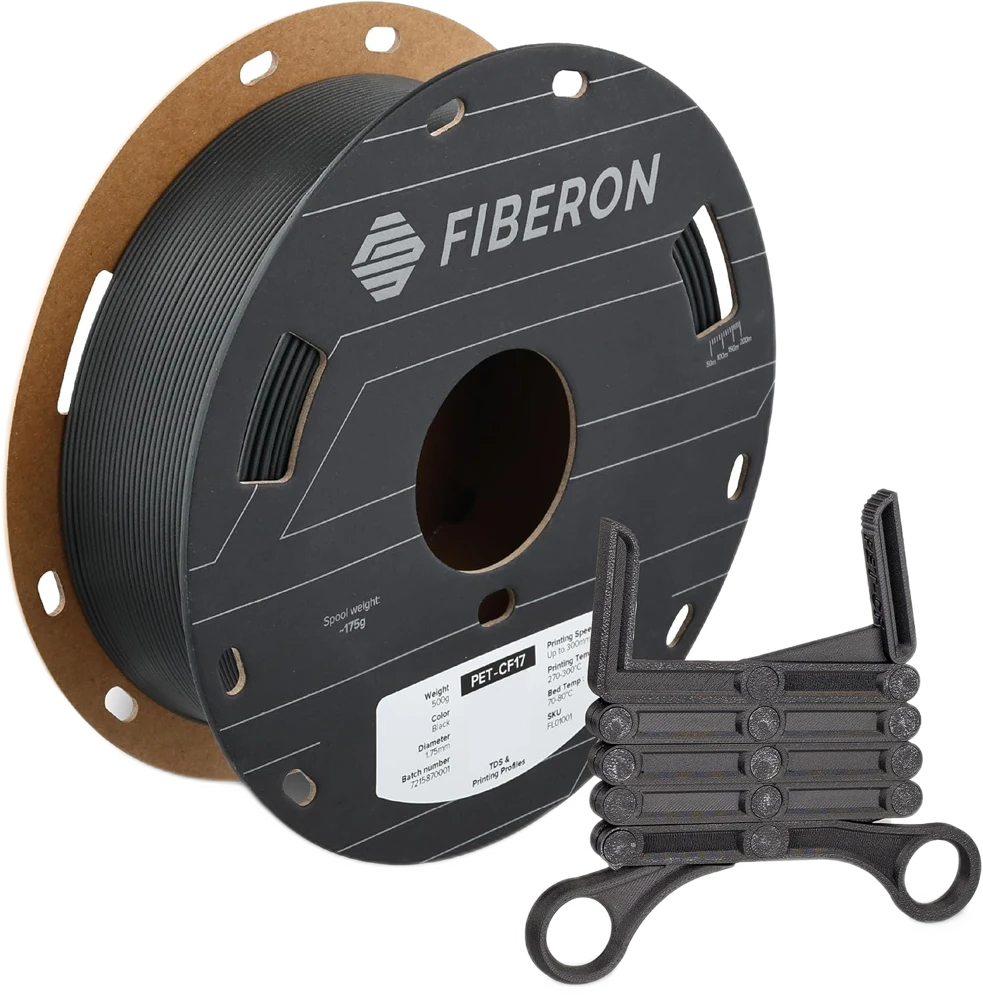
The setup
- PET with 17% carbon fiber
- Selected black, 1.75 mm, 0.5 kg spool
- Confirm abrasive-material hardware and current care guidance
Why consider it
- A clean satin-black surface on rigid components.
- Successful functional-part printing after preparation.
What to weigh up
- Brittle filament needs a gentle feed path.
- Drying and abrasive wear add ownership effort.
- Durability feedback is not uniformly favorable.
- The selected roll is only 500 g.
PET-CF17 is attractive when a rigid black part should also look clean straight from the printer. Its satin finish is a recurring strength in matching feedback. The purchase is less straightforward if your setup assumes flexible feedstock, ordinary nozzles or one-kilogram rolls.
Follow the filament from storage to the part
- Prepare it using current material-care guidance. An updated account changed from poor to excellent results after drying.
- Inspect the route. Avoid treating a successful feeder anecdote as permission to ignore hardware compatibility.
- Check the actual component. Rigidity and a beautiful surface do not establish every kind of durability.
- Count the remaining mass. The captured offer is a 0.5 kg spool.
Annealed properties need an annealed process
Polymaker explicitly ties higher heat resistance to annealing. Do not transfer that claim to an as-printed part or use a customer’s automotive project as a rated operating limit.
Make carbon-fiber nozzle compatibility part of the purchase decision before buying several rolls.
Pros & Cons Analysis
Based on supplied customer reviews and verified product documentation
Pros
- Appearance is consistently persuasive. Multiple matched accounts describe very clean surfaces and useful rigidity. A polished result does not independently establish fatigue or impact performance.
- The application extends beyond display models. Accounts include small CNC components and prepared high-temperature workflows. These are trial evidence, not load certification.
Cons
- Loading is part of compatibility. A favorable account still warns of brittle feedstock. Check allowed feeder use and smooth routing; one successful AMS run is not manufacturer approval.
- The clean result may require preparation. An updated account improved substantially after drying and also noticed extruder wear. Use current care guidance and compatible hardware rather than copying its exact schedule.
- Finish is better established than comparative toughness. One account liked the appearance but found lower durability than another PET-CF. The uncontrolled comparison does not rank the materials, but prevents a strongest-material conclusion.
- Plan material before the long job. A half-kilogram offer changes both project quantity and price-per-mass comparisons.
A finish-and-rigidity purchase with preparation included
Choose PET-CF17 when the satin surface and rigidity serve the design and your hardware can handle the material. Include drying, feed-path checks and 500 g quantity planning in the decision.
Frequently Asked Questions
What should I check before feeding PET-CF17 through a long tube?
Inspect for brittle strand behavior and keep the route within the feeder’s guidance. A successful printed part does not prove the unprinted filament tolerates every bend.
Is annealing PET-CF17 the same step as drying the spool?
No. Drying prepares filament; annealing treats the printed object and can change dimensions. Use the separate material instructions and recheck critical fits afterward.
Technical Specifications
| Product type | Reinforced PET filament |
|---|---|
| Reviewed formulation | PET with 17% carbon fiber |
| Nominal filament diameter | 1.75 mm |
| Manufacturer diameter tolerance | Not verified for this exact formulation |
| Package format | 0.5 kg spool |
| Nozzle guidance | Manufacturer starting range: 270–300°C nozzle; 70–80°C bed. Match the printer and build surface. Hardened nozzle required; confirm the filament’s minimum orifice. |
| Material care | Manufacturer drying guidance: 100°C for 10 hours; verify the supplied spool tolerates the cycle, then store dry. |
| Variant / handling limit | Not interchangeable with other Fiberon PET/PETG grades |
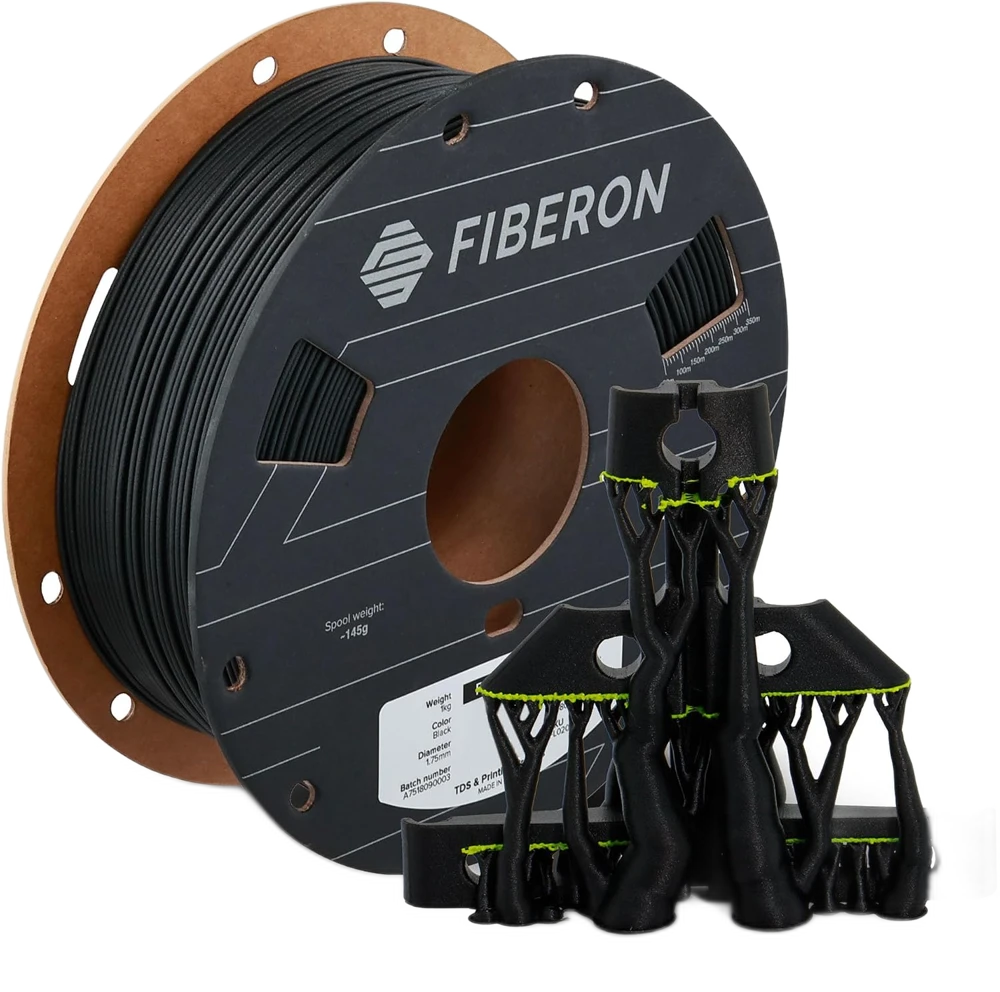
Fiberon PET-GF15