
Micro Swiss FlowTech CHT 0.4 mm review: useful flow headroom for a printer that can use it
At a glance
Matching flow-test accounts show headroom over standard nozzles, but extrusion drive, geometry and profile tuning decide the practical gain.
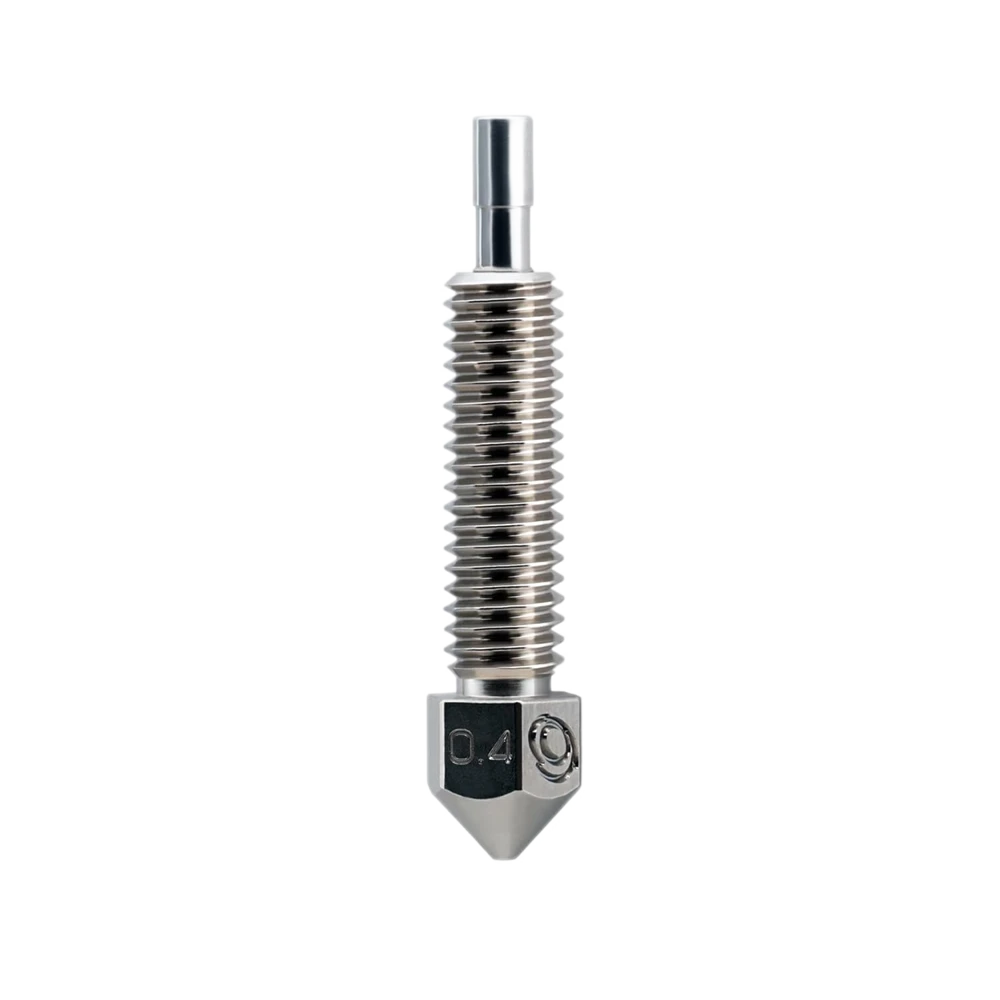
The setup
- FlowTech CHT multi-channel design
- Selected 0.4 mm nozzle
- Separate from hardened CHT CM2
Why consider it
- Matching comparisons support additional flow headroom.
- The FlowTech swap process suits changing tasks.
What to weigh up
- The extrusion drive may become the next limit.
- Small models may gain little from the added capacity.
The 0.4 mm FlowTech CHT is a plausible upgrade when material throughput is limiting a compatible printer. Matching accounts include actual before-and-after flow trials, but the results differ enough that none should be copied straight into another profile.
What is limiting your job?
| Limit | Would more melt capacity help? |
|---|---|
| Long lines demanding more material | Potentially; qualify flow and surface together. |
| Small details and short moves | Possibly little practical benefit. |
| Extruder slipping | Resolve the permitted feed setup first. |
Keep the improvement meaningful
Test the real material and model at a pace that preserves the required result. A flow-test endpoint is not automatically the best production setting. Keep the standard CHT distinct from the hardened CM2 version when choosing for filled filament.
If choosing a larger orifice, weigh 0.4 versus 0.6 mm detail requirements separately from the CHT melt-path design.
Pros & Cons Analysis
Based on supplied customer reviews and verified product documentation
Pros
- The benefit has more specific evidence than a speed slogan. Two 0.4 mm accounts compare standard and CHT output in their setups and report higher usable flow. Different results show why the figures are not universal settings.
- Service convenience can matter independently of speed. A matching SV08-conversion account values changing the nozzle without repeating its old heater-and-sensor transfer process. That benefit presumes the compatible hotend is already installed.
Cons
- A larger melt allowance does not push filament by itself. One matching high-flow test required attention to extruder grip. Follow the printer’s permitted adjustment process and qualify feeding before a long job.
- Spend for the bottleneck you have. Matching feedback notes that the strongest benefit is in flow-demanding geometry. Detail, cooling and short moves can prevent a higher flow limit from shortening the job.
Buy headroom for a flow-demanding job
Choose the CHT 0.4 mm nozzle when a compatible FlowTech printer can benefit from greater throughput. Confirm extrusion grip and final part quality before raising the production profile.
Frequently Asked Questions
Is a customer’s maximum flow my safe profile value?
No. The material, heater, extruder and acceptance criteria differ. Qualify your own combination.
Is this the hardened CHT CM2?
No. That is a separate nozzle; match wear requirements to the exact product.
Technical Specifications
| Product type | High-flow nozzle |
|---|---|
| Interface | Micro Swiss FlowTech |
| Selected orifice | 0.4 mm |
| Filament diameter | Not verified for the selected offer |
| Material / coating | Hardened CM2 tip: Not the selected version |
| Flow design | Melt path: CHT multi-channel; Published maximum: Up to 50 mm³/s; setup dependent |
| Package / components | One nozzle |
| Temperature guidance | 300°C manufacturer nozzle limit; the installed hotend, heater, sensor and printer may impose a lower limit. |
| Installation / limits | Qualify hotend, extruder and material together |
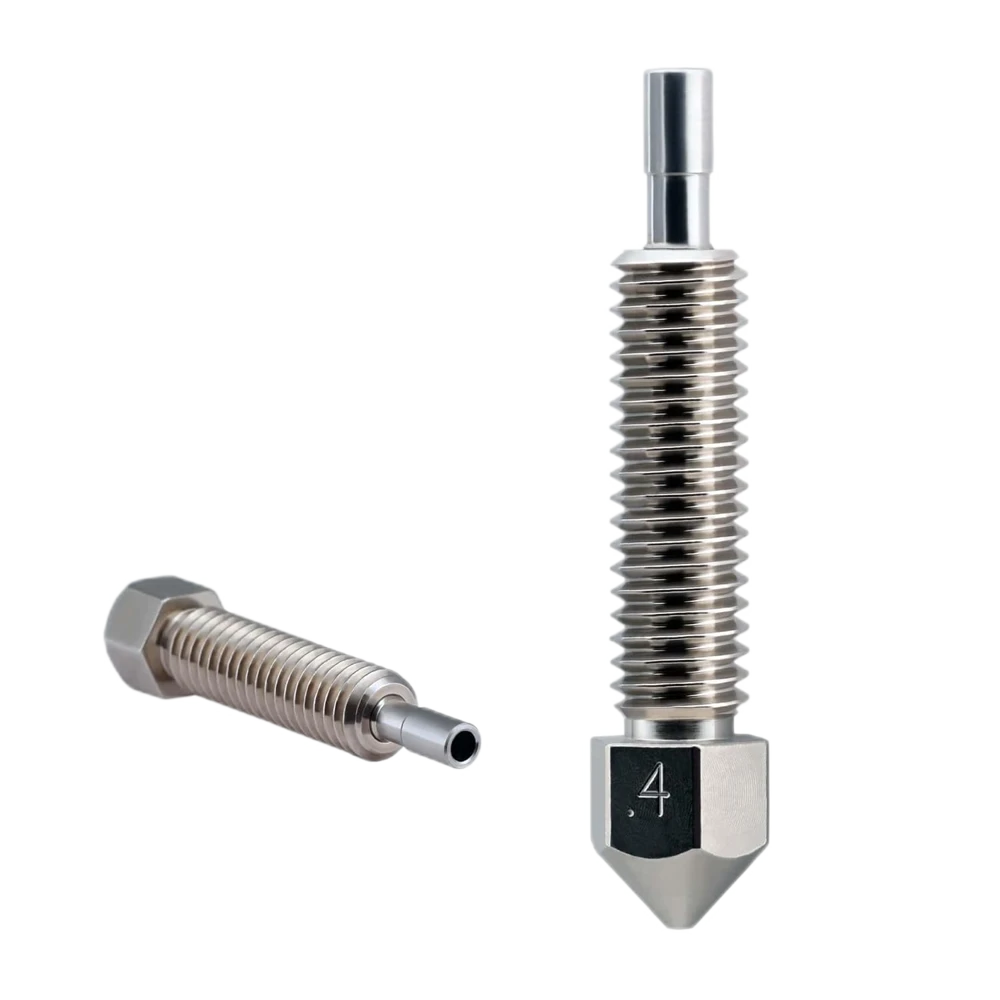
Micro Swiss FlowTech Brass 0.4 mm
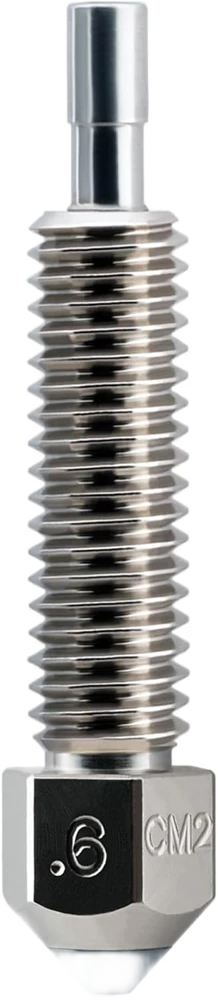
Micro Swiss FlowTech CM2 0.6 mm

E3D Revo High Flow ObXidian 0.4 mm
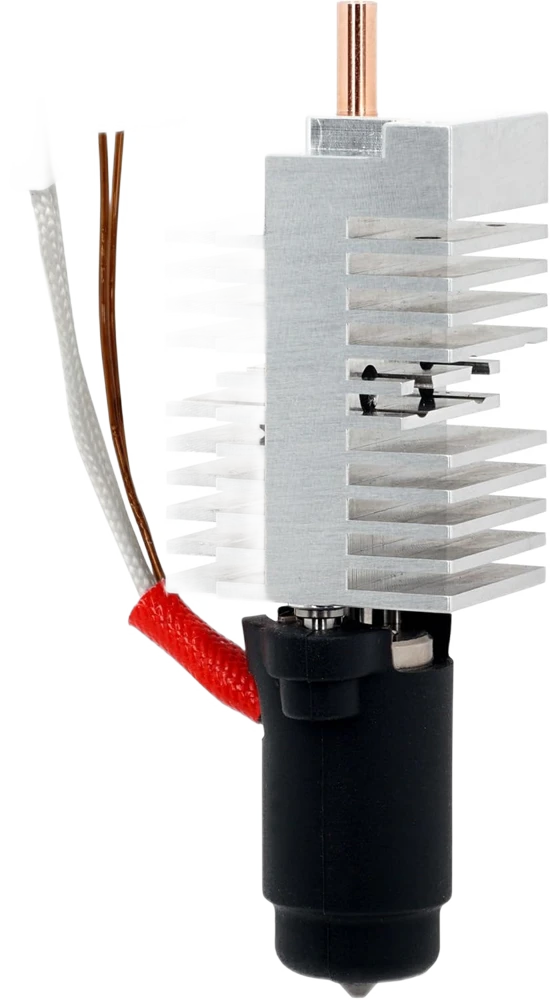
Micro Swiss FlowTech K2 Plus