First ask when the bag loosens. A bag that never contracts points toward pumping or closure; a bag that tightens and later relaxes needs a retention check.
Start with the zipper, not a stronger pump
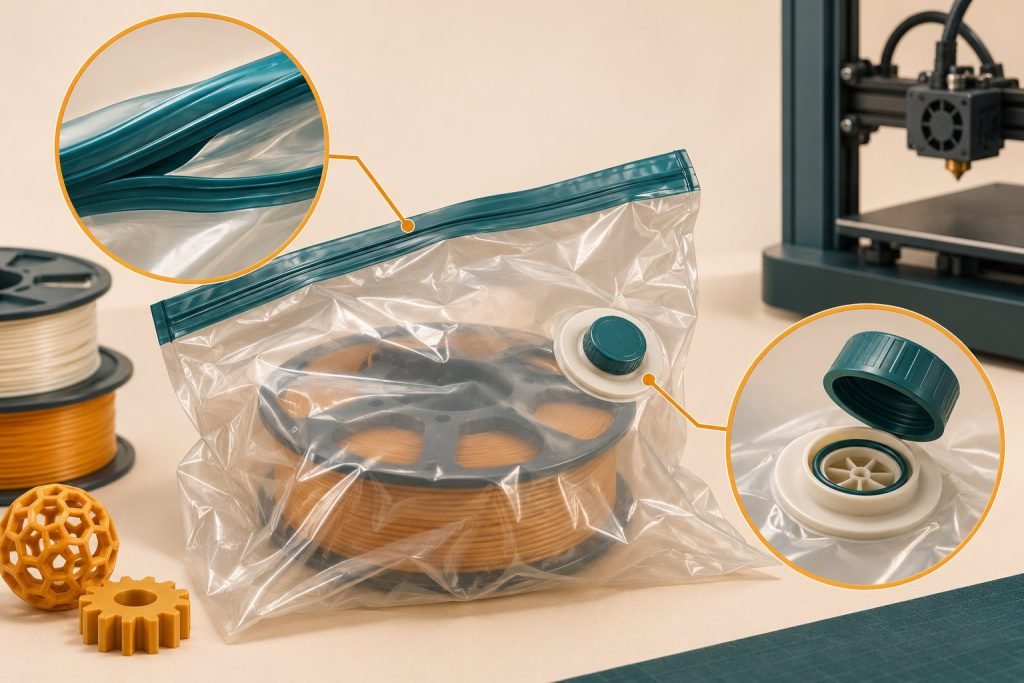
- Remove any filament end or packing material caught across the closure.
- Open and reseal the zipper with the supplied sealing tool.
- Lay the valve flat and seat the matching pump as its instructions show.
- Complete the valve-closing step required by that bag design.
- Record the condition after sealing and check again before relying on it for storage.
These checks follow the troubleshooting logic in eSUN’s original eVacuum Kit instructions. Other valves and electric-pump kits may use a different closure sequence.
It does not tighten at all
Check full contact between the pump and valve, the valve’s flatness, and the zipper. Excessive pressure is not automatically helpful. Try an intact matching bag to separate a pump problem from a single damaged bag.
It tightens, then loosens
Inspect the seams, creases and areas touching sharp spool edges. Reseal once using the correct procedure. If the problem repeats, replace the suspect bag rather than increasing suction or adding an improvised repair near the valve.
What a successful check tells you
Retaining a visible vacuum is a useful closure check. It does not measure water inside the filament or prove indefinite moisture protection. Put prepared filament into storage with the appropriate desiccant, and keep the label visible so you know what you sealed.
If several bags repeatedly fail, use the filament-storage shortlist to compare kit closures, pump connections and replacement supplies. For a specific powered kit, the eSUN eVacuum Kit Pro 2 review separates pump convenience from bag-seal reservations. Replacing a whole pump is not automatically the answer to a leaking bag.