
Polymaker PLA Pro review: recheck the formula before you reorder
At a glance
Promising finished output, but the new formula deserves a fresh profile and color trial before replacing familiar stock.
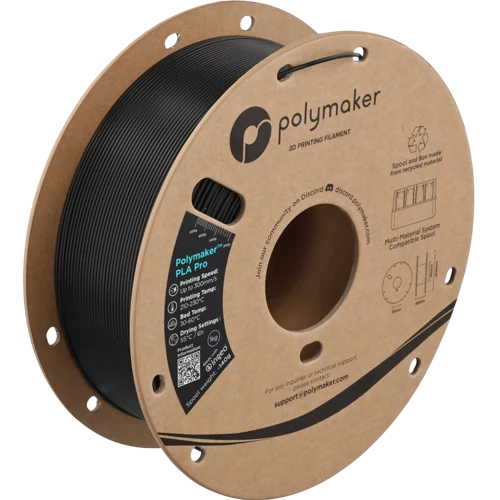
The material & format
- Current PLA Pro formulation; legacy names require separate checks.
- Selected one-kilogram, 1.75 mm black spool.
- Current manufacturer instructions and technical sheet available.
Why consider it
- Smooth finished output is achievable with a matched profile.
- Current-formula success makes a small trial worthwhile.
- Useful color choices for visible indoor projects.
What to weigh up
- Changing formulas can mean substantial retuning or interrupted jobs.
- A familiar color name may not preserve the old shade.
- Reel damage and winding can complicate automatic feeding.
- Support removal needs its own trial.
- The supplied bag may not offer reusable sealed storage.
If you are replacing an old PolyLite PLA Pro spool, stop before running the same saved job. Polymaker PLA Pro is sold as a new formula, and the shared product history includes several generations. The useful question is whether the current roll works for your parts—not whether an older roll earned a good reputation.
A familiar name, a fresh qualification
The new formula has favorable feedback, including successful printing despite a changed shade. It also has detailed accounts of repeated nozzle jams after switching from the older material. Both outcomes matter: this is a candidate for a small trial, not an automatic bulk replacement for a dependable existing supply.
What you are replacing
A saved PolyLite profile
What to check first: Use the instructions on the supplied formula and run a representative part before repeating an old job.
A visible part in a matching set
What to check first: Compare a printed color sample beside the old part under the same light, using the replacement-roll color checks.
A supported model
What to check first: Include a supported feature in the trial; a clean unsupported print does not establish easy support removal.
A roll in an automatic feeder
What to check first: Inspect the reel edges and free rotation as well as the filament output.
The best reason to try it is the finished part
Recent feedback describes smooth black output, useful prototypes and attractive colored objects. That makes PLA Pro worth considering for indoor projects where appearance and workable printing behavior matter. The most persuasive positive is not the Pro name: it is a representative part that finishes cleanly on your own printer.
Do not assume every attractive color behaves identically. Metallic finishes have both successful repeat use and clogging complaints. The black spool selected here is not evidence that a metallic bronze or chrome roll will need the same adjustments.
Where the transition becomes expensive
Repeated interruptions are the strongest reason for caution. Some new-formula complaints describe extensive troubleshooting without a dependable result, while favorable experiences show that failure is not inevitable. These accounts cannot identify a universal cause. They do justify limiting the first purchase and avoiding a deadline-critical first job.
Feeding deserves its own inspection. Smooth AMS use appears alongside damaged cardboard edges and winding snags. A reel that does not turn freely can interrupt a job even when the material itself extrudes well. Check the complete route rather than diagnosing every stoppage as a temperature problem.
Keep the return to production simple
Use the current instructions, not an old label
The current product page and V6.0 technical sheet specify 210–230°C at the nozzle, a 30–60°C bed and drying at 55°C for six hours. Confirm that these instructions match the roll received. A published maximum speed is not a guarantee for every geometry or hotend.
The technical sheet reports reference test values, not a design rating for your finished part. Choose a different material when the job needs separately established heat, outdoor or load performance; do not let the Pro label make that decision.
Pros & Cons Analysis
Based on supplied customer reviews and verified product documentation
Pros
- Good output supports practical projects. Clean black prints and useful prototypes make this a plausible everyday material after qualification. These experiences support trying the material, not a load rating or a promise that every printer will behave the same.
- The new version is not uniformly unsuccessful. Explicit new-formula praise provides an important counterweight to the transition complaints. A limited purchase lets you check the actual material without relying on legacy PolyLite or PolySonic feedback.
- Appearance can justify a particular color. Successful colored and metallic prints offer a reason to choose the finish for a visible object. Qualify that color separately; a beautiful surface on one roll does not establish another color’s feeding or extrusion behavior.
Cons
- Replacing old stock can disrupt a working routine. Detailed new-formula experiences include repeated jams despite attempts to adjust the setup. Keep the original profile available, but do not assume it transfers. A poor trial is a reason to reassess before a large purchase.
- Shade matching needs a physical sample. A favorable new-formula experience still describes a darker blue-green. For replacement panels or sets, the printed comparison matters more than the shared color name.
- Material and reel quality are separate checks. Damaged edges and winding snags can stop feeding, while other reels work in an AMS. Inspect the supplied spool and its clearance instead of treating automatic-feeder compatibility as unconditional.
- A clean surface does not settle support behavior. Black-material feedback includes good unsupported results but more difficult support removal. Include the intended supports in the first trial rather than discovering the problem on a finished large model.
- Plan where the opened roll will live. New-packaging feedback describes a bag without the previous resealable closure. Check the actual package and have suitable dry storage available; do not assume the shipping bag remains a reusable storage solution.
Qualify the new roll before replacing the old routine
Polymaker PLA Pro earns consideration for indoor parts with a finish you like. It does not earn an automatic bulk reorder from the reputation of an older formula.
I am replacing a dependable PolyLite roll
Buy a limited amount and compare the actual job, supports and color. Keep the old material for time-sensitive work until the new setup proves useful.
I want a particular visible finish
Trial that exact color. Successful metallic prints and clogging complaints coexist; black-material results cannot settle the choice for you.
I need production to resume immediately
A formula change is a poor moment to assume continuity. Use a material and profile already established for the job while evaluating the new roll separately.
Frequently Asked Questions
Can I reuse my PolyLite PLA Pro profile?
Treat it as an unverified starting point. Match the current formula instructions, then check a representative part before repeating a long saved job.
Will the new color match an older printed part?
Do not assume so. Compare physical samples; changed shade appears even in otherwise favorable new-formula feedback.
Does a smooth test cube establish easy support removal?
No. Include the support interface and overhangs used by your actual model in the trial.
Is PLA Pro a high-temperature material?
The name does not establish that. Use the exact technical data and the requirements of the finished part; do not infer a hot-service rating from toughness claims.
Technical Specifications
| Product type | PLA-based filament |
|---|---|
| Reviewed formulation | Polymaker PLA Pro; new formula distinguished from legacy PolyLite/PolySonic |
| Nominal filament diameter | 1.75 mm |
| Manufacturer diameter tolerance | Not verified — no exact-variant tolerance adopted in this review |
| Package format | Selected Amazon Black, 1 kg spool |
| Nozzle guidance | Current V6.0: 210–230°C; bed 30–60°C |
| Material care | Current V6.0: dry at 55°C for 6 hours; confirm supplied formula |
| Variant / handling limit | Colors, spool formats and older formulas are not interchangeable |

Polymaker Matte PLA

Overture Silk PLA

eSUN PLA+
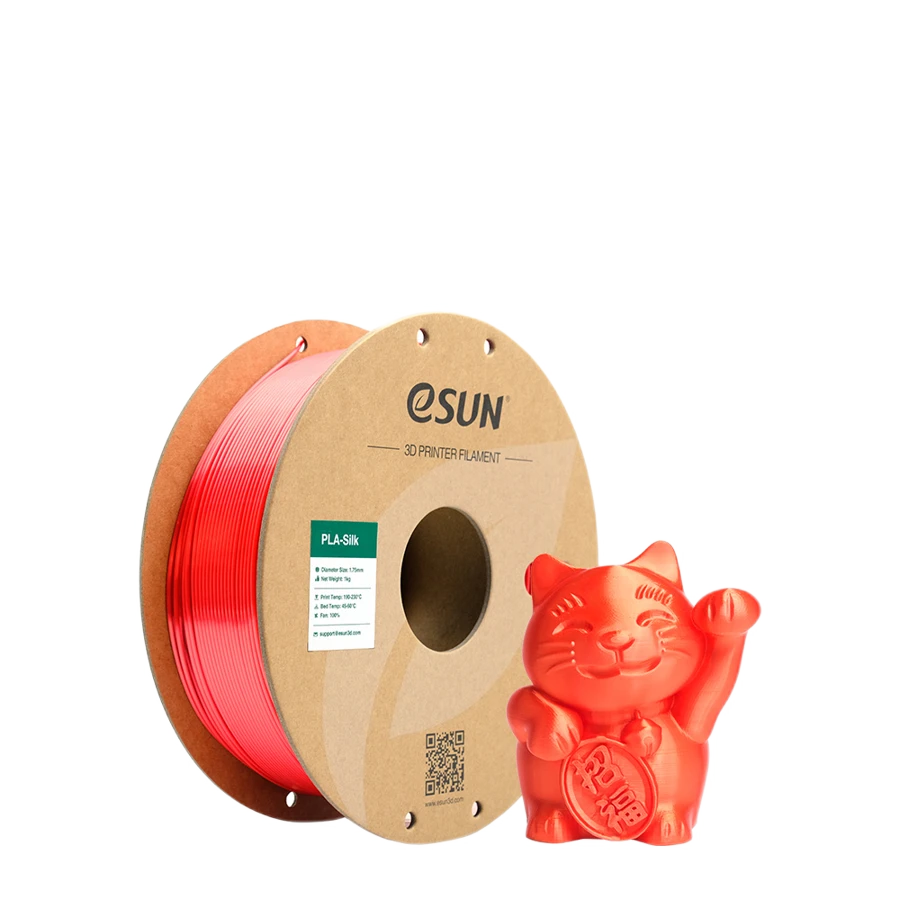
eSUN PLA-Silk