
eSUN PLA Basic Review: Simple Prints, Spool Checks Still Matter
At a glance
eSUN PLA Basic suits everyday models and organizers, with encouraging printing results but enough winding and spool-fit concerns to justify checking the roll before a long job.
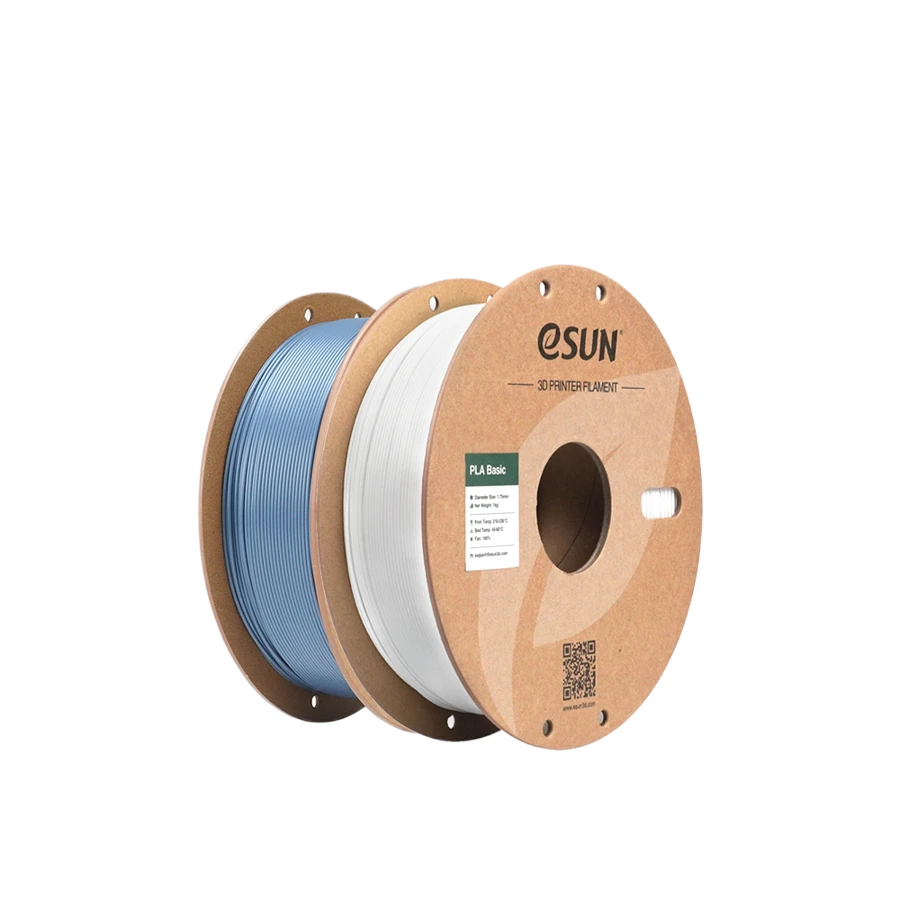
The material & format
- PLA Basic formulation
- Black 1 kg selected offer
- Separate spool-fit checks for AMS and AMS Lite
Why consider it
- Useful for everyday accessories and detailed models.
- Black-spool feedback includes successful AMS Lite use.
What to weigh up
- Winding may need attention.
- Enclosed-AMS spool clearance is not settled by AMS Lite results.
With eSUN PLA Basic, the filament and the spool can lead to different verdicts. Black material feedback describes clean printing and a successful AMS Lite fit. A separate account likes the filament but finds its cardboard reel troublesome in an enclosed AMS. Decide on the complete feed setup, not just the surface of a finished model.
Match the feeder before comparing bundle prices
| Setup | What the feedback resolves | What it does not |
|---|---|---|
| AMS Lite | The black two-pack has a favorable fit and printing report. | Compatibility with every reel revision or package. |
| Enclosed AMS | Reel clearance and cardboard-edge friction can undermine otherwise good printing. | That rings or another owner’s workaround will fit your system. |
| Ordinary spool holder | Everyday print quality is encouraging. | Freedom from a trapped strand or holder drag on the delivered reel. |
Useful print quality, uneven winding experiences
The black feedback includes a successful mid-print material substitution and clean release after the textured bed cooled. That demonstrates one workable combination, not universal brand interchangeability. Olive-green feedback adds detailed household printing with a standard preset.
Does a good print settle the winding question?
Light-grey and cold-white experiences raise winding concerns. Keep these separate from the black offer, but inspect actual rotation and strand release before committing a reel to a long run. The favorable print reports do not cancel a physical feeding problem.
Pros & Cons Analysis
Based on supplied customer reviews and verified product documentation
Pros
- A practical general-printing option. Successful black accessories and detailed olive-green parts point toward ordinary decorative and household work. Color-specific successes support a trial, not a promise that every pigment shares a profile.
- Open-feeder compatibility has a concrete example. Black PLA Basic has worked on AMS Lite. Buyers with that arrangement have a relevant starting point, while still needing to inspect the supplied spool.
Cons
- Good extrusion does not eliminate winding problems. Light-grey feedback criticizes winding even with a favorable star label, and cold-white feedback describes partial respooling. Inspect feeding rather than judging the written experience from stars alone.
- Cardboard fit can change the workflow. Enclosed-AMS feedback describes catching and rattling. Exact dimensions were not established, so this supports checking clearance rather than claiming every roll is incompatible.
Choose Basic for the job, then check the roll
The spool can decide the value. Basic fits an everyday PLA purchase when the actual reel works with your holder. For an enclosed AMS, confirm fit before buying a bundle; repeated handling trouble can outweigh savings on the material.
Frequently Asked Questions
Does AMS Lite success mean it fits every AMS?
No. The support and feeding arrangements differ. Check the supplied spool on your exact system.
Is this a waterproof material?
Successful household prints do not establish water tightness or suitability for continuous exposure. Those depend on the part and application.
Technical Specifications
| Product type | PLA filament |
|---|---|
| Reviewed formulation | eSUN PLA Basic; black |
| Nominal filament diameter | 1.75 mm |
| Manufacturer diameter tolerance | Not verified for the selected offer |
| Package format | 1 kg spool |
| Nozzle guidance | Manufacturer: 210–230 °C; bed 45–60 °C |
| Material care | Manufacturer drying guidance: 50 °C for 8–12 hours; verify spool heat limit |
| Variant / handling limit | Other-color feedback is qualified; no general AMS approval |

Bambu Lab PLA Matte

Polymaker HT-PLA Pro

Prusament PLA

Polymaker Panchroma Silk PLA